Resumen rápido
- Una válvula de pie tiene un filtro incorporado y está diseñada para la elevación de succión para mantener su bomba cebada; una válvula de retención estándar sólo impide el reflujo en líneas presurizadas.
- Nunca sustituya una válvula de pie por una válvula de retención en una línea de aspiración: perderá cebado y dejará que los residuos dañen su bomba.
- Elija una válvula de pie cuando extraiga agua de fuentes abiertas (pozo, estanque, depósito). Elija una válvula de retención para sistemas cerrados y presurizados.
Cuando estás mirando fijamente un sistema de bombeo, tratando de averiguar por qué su cebado sigue desapareciendo. O tal vez esté construyendo algo desde cero y necesite saber qué válvula corresponde a cada lugar.
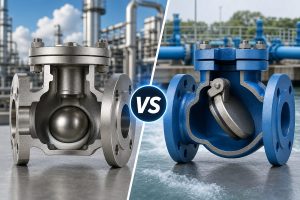
Válvula de retención frente a válvula de pie es uno de esos debates que parecen confusos al principio. Pero una vez que entiendes cómo funciona cada uno, la elección se vuelve más clara que el agua.
He consultado a docenas de ingenieros y técnicos de bombas a lo largo de los años. Y sigo viendo el mismo error una y otra vez: la gente utiliza la válvula equivocada para su aplicación.
Así que hoy, como profesional fabricante de válvulas de retención, Voy a desglosar la comparación entre válvula de retención y válvula de pie de forma que tenga sentido.
Vamos a sumergirnos.
¿Qué es exactamente una válvula antirretorno?
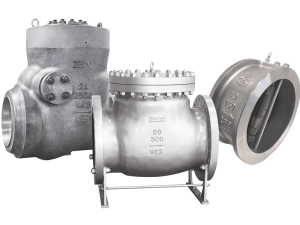
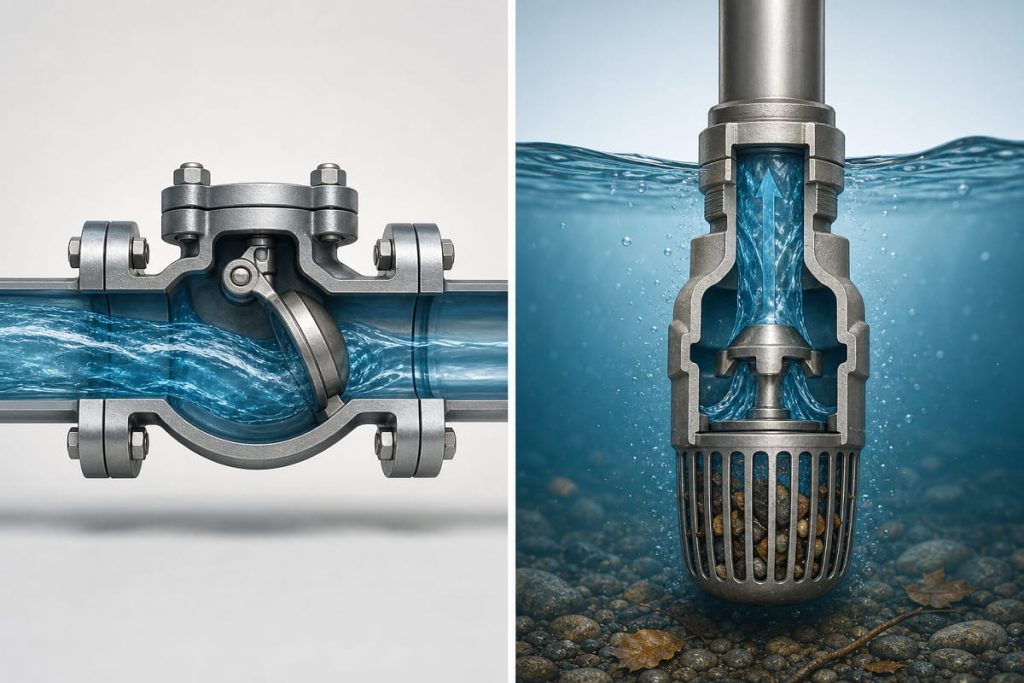
Una válvula de retención es un dispositivo sencillo pero brillante. Permite que el fluido fluya en una dirección. Y bloquea automáticamente el flujo para que no retroceda.
Imagínatelo como un portero digital en una discoteca. La gente puede entrar. Pero nadie sale hasta que el portero lo dice.
El mecanismo interno varía según el diseño. Algunos utilizan un disco con bisagras que se abre. Otros utilizan una bola o un obturador accionado por resorte. Pero la función es siempre la misma: evitar el flujo inverso.
Encontrará válvulas antirretorno por todas partes en los sistemas presurizados. Líneas de suministro de agua. Sistemas de calefacción. Tuberías de procesos industriales. Incluso la fontanería de su casa las tiene.
¿En resumidas cuentas? Si necesita detener el reflujo en una tubería cerrada, una válvula antirretorno estándar es la solución.
¿Qué diferencia a una válvula de pie?
Una válvula de pie es técnicamente un tipo de válvula de retención. Pero con dos mejoras importantes:
1. Tiene un colador incorporado - Esta malla bloquea la entrada de residuos en la bomba. Arena, hojas, piedras pequeñas... nada de eso puede pasar.
2. Está diseñado para la elevación por succión - Las válvulas de pie se encuentran en la parte inferior de la línea de aspiración, totalmente sumergidas en la fuente de agua. Se abren con muy poca presión (lo que es fundamental cuando una bomba extrae agua de un pozo o estanque).
He aquí por qué es importante:
Cuando su bomba se apaga, la válvula de pie se cierra y mantiene la línea de succión llena de líquido. Esto significa que la bomba imprimado y listo para funcionar. Sin recebado manual. Sin funcionamiento en seco. Sin daños.
Sin una válvula de pie, el agua volvería a la fuente. Y tu bomba aspiraría aire la próxima vez que intentara arrancar.
No es bueno.
Válvula de retención frente a válvula de pie: Las principales diferencias de un vistazo
| Característica | Válvula de pie | Válvula antirretorno estándar |
|---|---|---|
| Colador incorporado | Sí | No |
| Ubicación principal | Sumergido en el fondo del conducto de aspiración | En cualquier punto de una tubería presurizada |
| Trabajo principal | Mantener el cebado de la bomba + filtrar los residuos | Prevenir sólo el reflujo |
| Presión de apertura | Muy bajo (funciona con succión) | Varía según el diseño |
| Acceso para mantenimiento | Difícil (debe extraerse de la fuente de agua) | Fácil (normalmente sobre el suelo) |
He visto cómo esta confusión le costaba dinero a la gente. Un cliente instaló una válvula de retención estándar en la línea de aspiración de la bomba de su pozo. Sin filtro. Sin retención de cebado. Su bomba se quemó en tres meses.
No dejes que seas tú.
Cómo funciona cada válvula
El mecanismo de la válvula de retención
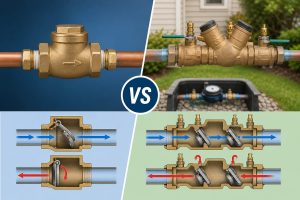
Cuando el fluido fluye hacia delante, la presión empuja el disco interno o la bola fuera de su asiento. El fluido pasa. Simple.
Cuando el flujo se detiene o intenta invertirse, ese disco o bola es empujado de nuevo hacia el asiento. El sello se cierra. Y el reflujo se detiene inmediatamente.
La mayoría de las válvulas antirretorno se basan en presión aguas arriba para abrirse. Por eso funcionan muy bien en sistemas presurizados. ¿Pero en el lado de succión de una bomba? No tanto.
El mecanismo de la válvula de pie
Una válvula de pie funciona de forma similar, pero con una diferencia crucial: está diseñada para abrirse por succión, no por presión.
Cuando su bomba crea un vacío, esa fuerza de succión levanta el disco. El agua sube por el filtro, pasa por la válvula y llega a la bomba.
Cuando la bomba se detiene, la gravedad y el peso de la columna de agua empujan el disco hasta cerrarlo. El colador sigue atrapando residuos todo el tiempo.
Consejo profesional: Coloque la válvula de pie al menos 0,75 veces el diámetro de la válvula por encima del fondo de la fuente de agua. Esto minimiza la entrada de sedimentos y mantiene su bomba feliz.
Cuándo utilizar una válvula de pie (y cuándo evitarla)
Utilice una válvula de pie cuando:
- Estás extrayendo agua de una fuente abierta (pozo, estanque, lago, depósito)
- Su bomba se sitúa por encima del nivel del agua (bombas de chorro, bombas centrífugas)
- Podrían entrar residuos en su sistema
- Necesitas que la bomba permanezca cebada automáticamente
Aplicaciones en el mundo real:
- Sistemas de agua de pozo - Mantiene la tubería de bajada llena entre ciclos de bombeo
- Riego - Extracción de agua de estanques o ríos
- Bombas de sumidero - Protegen contra la suciedad a la vez que mantienen el cebado
Hace unos años, ayudé a un agricultor de Iowa a solucionar los problemas de su sistema de riego. Su bomba perdía carga cada noche. ¿El culpable? La falta de una válvula de pie. Instalamos una con un filtro de acero inoxidable. Problema resuelto al instante.
Evite una válvula de pie cuando:
- Su sistema está totalmente presurizado (utilice en su lugar una válvula antirretorno estándar)
- El acceso para el mantenimiento es imposible
- El fluido no contiene residuos (el colador es innecesario)
Cuándo utilizar una válvula antirretorno estándar
Utilice una válvula de retención cuando:
- Estás trabajando con un sistema de tuberías presurizado
- La prevención del reflujo es su único objetivo
- La válvula debe instalarse en línea (no sumergida)
- Estás protegiendo las bombas en el lado de descarga
Aplicaciones habituales:
- Distribución municipal de agua - Evita la contaminación por reflujo
- Sistemas HVAC - Mantiene la dirección correcta del flujo
- Procesos industriales - Protege los equipos del flujo inverso
- Bombas de pozo sumergibles - Instaladas sobre el suelo en la línea de descarga
La versatilidad de la válvula de retención es su superpoder. Puede instalarlas en horizontal, vertical o en ángulo (dependiendo del diseño). Las válvulas antirretorno oscilantes son ideales para tuberías horizontales. Las versiones con muelle se instalan fácilmente en vertical.
El factor colador: Por qué importa más de lo que crees
No me canso de repetirlo:
El filtro integrado es lo que diferencia una válvula de pie de una válvula antirretorno estándar.
He aquí por qué es importante:
Las fuentes de agua abiertas están sucias. Los pozos tienen arena y arenilla. Los estanques tienen hojas y algas. Los ríos tienen limo y piedras pequeñas.
Sin un filtro, todos esos residuos van directamente a la bomba. Y una vez dentro, puede..:
- Obstruir el mecanismo de la válvula
- Dañar el impulsor de la bomba
- Causa cavitación
- Provocar el fallo completo de la bomba
He visto facturas de reparación de miles de euros porque alguien se saltó la válvula de pie y utilizó una válvula de retención estándar en su lugar.
No cometas ese error.
Consejo profesional: Incluso con un colador, es necesario limpiarlo periódicamente. ¿Con qué frecuencia? Depende de la fuente de agua. ¿Agua limpia de estanque? Quizá una vez al año. ¿Río fangoso? Compruébalo cada pocos meses.
¿Puede una válvula antirretorno sustituir a una válvula de pie?
Respuesta corta: No.
Respuesta larga: Una válvula antirretorno carece de dos características críticas que tienen las válvulas de pie:
- 1. Sin colador - Los residuos entrarán y dañarán su bomba
- 2. No está diseñado para la aspiración - Muchas válvulas antirretorno ni siquiera se abren bajo presión de vacío
Yo mismo lo he probado. He instalado una válvula de retención oscilante estándar en una línea de aspiración. La bomba funcionó durante unos 30 segundos antes de perder completamente el cebado. La válvula no se abría de forma fiable sin presión positiva.
Así que no, no son intercambiables. Utiliza la herramienta adecuada para cada trabajo.
Problemas comunes y cómo solucionarlos
“Mi bomba sigue perdiendo cebado incluso con una válvula de pie”
Esta es la queja #1 que oigo. Esto es lo que probablemente está pasando:
Fugas en la válvula de pie - El disco no está sellando correctamente. Podría estar desgastado u obstruido por residuos.
Fuga de aire en el conducto de aspiración - Incluso una pequeña grieta puede dejar entrar aire. Y el aire mata el cebado más rápido que nada.
Colador obstruido - Si los residuos bloquean el filtro, el agua no puede entrar. La bomba funciona en seco y pierde el cebado.
Solución: Tire de la tubería de aspiración. Inspeccione la válvula de pie. Limpie el filtro. Compruebe la junta del disco. A continuación, compruebe la presión de las conexiones.
“Mi válvula de retención hace ruido”
Es el golpe de ariete. Ocurre cuando la válvula se cierra bruscamente.
Solución: Cambie a una válvula de retención de muelle o silenciosa. Estas se cierran más gradualmente y absorben la onda de presión.
“El colador de mi válvula de pie sigue obstruyéndose”
Su fuente de agua puede estar demasiado sucia para un colador estándar.
Solución: Instale un prefiltro más grande aguas arriba. O cambie a una válvula de pie con un tamiz de malla más gruesa. Algunas aplicaciones necesitan ambas cosas.
Válvula de retención vs Válvula de pie: ¿Cuál elegir?
Permítanme hacer esto muy simple:
Elija una válvula de pie si:
- Su bomba está situada sobre una fuente de agua abierta
- Necesitas mantener el prime automáticamente
- La protección contra los escombros es esencial
Elija una válvula de retención estándar si:
- Estás trabajando con un sistema cerrado presurizado
- La prevención del reflujo es su único objetivo
- La válvula se instala en el lado de descarga de una bomba
He aquí un ejemplo real de mi propia experiencia:
Cuando instalé el sistema de riego en mi propiedad, utilicé una válvula de pie en la línea de aspiración desde el estanque. Mantenía la bomba cebada. Filtraba las hojas y las algas. Funcionaba perfectamente.
¿En el lado de descarga de esa misma bomba? Válvula de retención estándar. Eso impidió que el agua fluyera hacia atrás a través de la bomba cuando se apagó. Sin golpes de ariete. Sin daños.
Dos válvulas diferentes. Un sistema. Ambas necesarias.
Consejos de instalación que debe conocer
Para válvulas de pie:
Sumérjalo completamente - Si entra aire, pierdes el cebado. Fin de la historia.
Dejar espacio desde abajo - Al menos 0,75 veces el diámetro de la válvula. De este modo se evita la aspiración de sedimentos.
Utilizar sellador de roscas - Todas las conexiones deben ser herméticas. Cinta de teflón o cinta adhesiva para tuberías funciona muy bien.
Considere los climas helados - Instale una válvula de retención adicional por encima de la línea de congelación. Esto permite que la tubería vertical drene hacia atrás, evitando daños por congelación.
Para válvulas antirretorno:
Comprobar la orientación - La mayoría de las válvulas de retención tienen una flecha que indica la dirección del flujo. Instálela al revés y no fluirá nada. Nunca.
Adapte el tipo al ángulo de su tubería - Las válvulas antirretorno oscilantes necesitan una instalación horizontal. Las versiones con muelle pueden ir en vertical.
Dejar espacio para el mantenimiento - No lo entierres detrás de paredes o equipos. Luego me lo agradecerás.
Reflexiones finales
En válvula de retención vs válvula de pie decisión no tiene por qué ser complicada.
Recuerde: las válvulas de pie son herramientas especializadas para líneas de aspiración y fuentes de agua abiertas. Mantienen la bomba cebada y filtran los residuos.
Las válvulas antirretorno estándar son válvulas antirretorno de uso general para sistemas presurizados. Son versátiles, sencillas y muy utilizadas.
Ambos son esenciales. Pero no son lo mismo.
Así que la próxima vez que vaya a diseñar un sistema de bombeo, hágase dos preguntas:
- 1. ¿Esta válvula va en el lado de aspiración o en el de descarga?
- 2. ¿Contiene mi fluido residuos que puedan dañar la bomba?
Responda con sinceridad y sabrá exactamente qué válvula elegir.
Ahora sal ahí fuera y construye algo que funcione.