Resumo rápido
As válvulas de retenção oscilantes utilizam a gravidade para fechar e funcionam melhor em tubos horizontais com fluxo constante, oferecendo uma baixa queda de pressão a um custo 30-50% inferior. As válvulas de retenção de mola fecham rapidamente com um mecanismo de mola, evitam o golpe de aríete e funcionam em qualquer orientação, incluindo tubos verticais.
Escolha as válvulas de batente para grandes sistemas municipais e de drenagem; escolha as válvulas de mola para linhas de descarga de bombas, sistemas de alta pressão e ambientes sensíveis ao ruído. A seleção errada da válvula pode causar danos no equipamento, tubagens ruidosas e reparações dispendiosas.
Já alguma vez esteve em frente a uma parede de válvulas na loja de ferragens a pensar se precisa de uma válvula de retenção de balanço ou de uma válvula de retenção de mola?
Não está sozinho.
Como profissional fabricante de válvula de retenção, e depois de instalar centenas destas válvulas (e de corrigir muitos erros), posso dizer-vos que uma escolha errada pode levar a tubos ruidosos, danos no equipamento e reparações dispendiosas.
A principal diferença? Válvula de retenção oscilante vs válvulas de mola resume-se à forma como fecham. As válvulas de retenção oscilantes utilizam a gravidade e um disco articulado, enquanto as válvulas de retenção de mola utilizam - adivinhou - um mecanismo de mola. Mas isto é apenas um arranhão na superfície.
Vou explicar exatamente quando utilizar cada tipo, para que possa fazer a escolha certa à primeira.
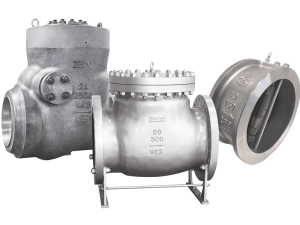
O que é uma válvula de retenção oscilante?
A válvula de inspeção é basicamente uma porta de sentido único para os seus tubos.
Eis como funciona:
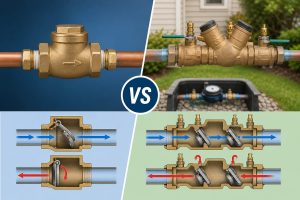
Um disco (ou “flapper”) está pendurado numa dobradiça no interior da válvula. Quando a água flui para a frente, empurra o disco para abrir. Quando o fluxo pára ou se inverte, a gravidade fecha o disco.
Simples, não é?
Pense nisso como uma porta para animais de estimação que só abre num sentido. O fluido pode passar na direção certa, mas não pode voltar.
Os principais componentes são:
- Corpo (a caixa principal)
- Disco (o portão basculante)
- Dobradiça (sobre o que o disco gira)
- Assento (onde o disco veda quando fechado)
Descobri que estes funcionam muito bem em:
- Sistemas municipais de água
- Linhas de esgoto
- Grandes condutas industriais
- Sistemas de drenagem
Mas há uma questão: não são perfeitos para todas as situações.
O que é uma válvula de retenção de mola?
Falemos agora das válvulas de retenção com mola (também designadas por válvulas de retenção com mola).
Estes utilizam uma abordagem totalmente diferente:
Em vez da gravidade, utilizam uma mola para manter um disco, uma esfera ou um poppet contra a sede da válvula. Quando a pressão a montante se torna suficientemente elevada, ultrapassa a força da mola e empurra a válvula para abrir.
No momento em que a pressão cai? SNAP-a mola fecha-se.
As partes principais incluem:
- Corpo (semelhante às válvulas de balanço)
- Primavera (a estrela do espetáculo)
- Disco/Bola/Poppet (o elemento de vedação)
- Assento (superfície de vedação)
Recomendo-os para:
- Linhas de descarga da bomba
- Sistemas HVAC
- Tubagem vertical
- Aplicações de alta pressão
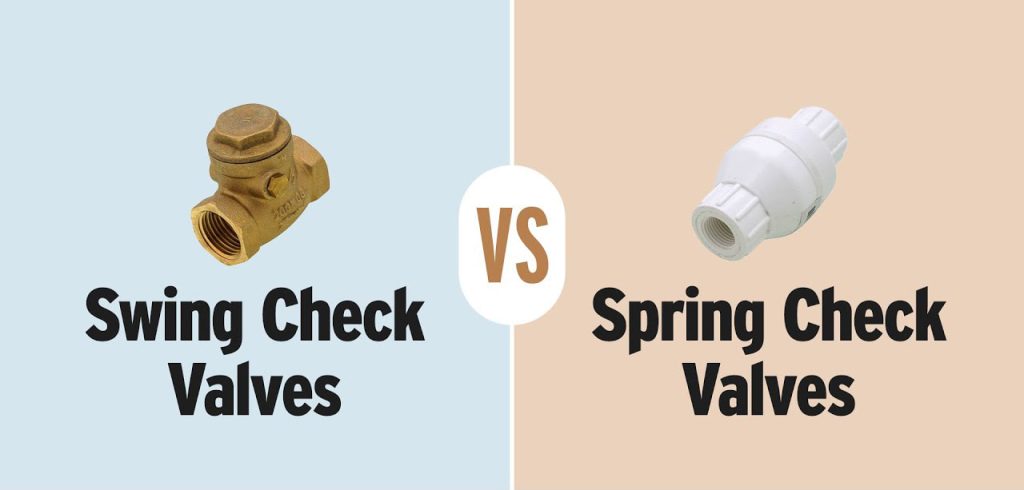
Válvula de retenção oscilante vs. mola: Principais diferenças
Deixe-me poupar-lhe algumas dores de cabeça com esta comparação:
Orientação da instalação
Válvulas de retenção oscilantes: Principalmente limitados a tubagens horizontais. PODEM funcionar na vertical, mas apenas se o caudal for ascendente. A gravidade não os fechará corretamente com um fluxo descendente.
Válvulas de retenção com mola: Funciona em QUALQUER orientação. Horizontal, vertical para cima, vertical para baixo - não importa. A mola faz o trabalho, não a gravidade.
Queda de pressão
Isto é muito importante para a eficiência do sistema:
Válvulas de retenção oscilantes: Queda de pressão super baixa. O disco oscila quase completamente fora do trajeto do fluxo.
Válvulas de retenção com mola: Maior perda de carga. O fluxo luta constantemente contra a tensão da mola.
Num sistema industrial em que trabalhei, a mudança de válvulas de mola para válvulas de batente reduziu a queda de pressão em 40%. Isto é uma verdadeira poupança de energia.
Velocidade de fecho e golpe de aríete
Já ouviu os canos a fazer barulho quando fecha uma torneira? Isso é o golpe de aríete.
Válvulas de retenção oscilantes: Lento a fechar. Isto pode amplificar os golpes de aríete porque o disco fecha-se quando o caudal inverte.
Válvulas de retenção com mola: Fecham RAPIDAMENTE. Frequentemente designadas por válvulas “silenciosas” ou “anti-bloqueio” porque a mola fecha-as antes da inversão do fluxo.
Considerações sobre os custos
Falemos de dinheiro:
Válvulas de retenção oscilantes: Geralmente 30-50% mais barato à cabeça.
Válvulas de retenção com mola: Custo inicial mais elevado, mas pode poupar dinheiro a longo prazo ao evitar danos provocados pelo golpe de aríete.
Quando escolher uma válvula de retenção oscilante
As válvulas de retenção oscilantes brilham em situações específicas:
1. Tubos de grande diâmetro
Para tubos com mais de 4 polegadas, as verificações de balanço fazem frequentemente mais sentido. Quanto maior for o tubo, mais importante é a queda de pressão.
2. Sistemas de baixa pressão
As condutas de água municipais, os sistemas alimentados por gravidade e as aplicações de drenagem são perfeitos para as válvulas de baloiço.
3. Aplicações de fluxo contínuo
Se o seu caudal não variar muito, as válvulas oscilantes funcionam muito bem. Pense em sistemas de irrigação ou fluxos de processos contínuos.
4. Projectos que se preocupam com o orçamento
Quando o custo inicial é crítico e o golpe de aríete não é uma preocupação, as válvulas de batente ganham.
Dica profissional: Instale sempre as válvulas de retenção de balanço com o pino da dobradiça na horizontal. Já vi muitas instaladas de lado que não vedam corretamente.
Quando escolher uma válvula de retenção com mola
As válvulas de retenção com mola são a solução ideal para:
1. Linhas de descarga da bomba
As bombas criam um fluxo pulsante e paragens súbitas. As válvulas de mola lidam perfeitamente com isto.
2. Instalações verticais
Precisa de evitar o refluxo num tubo vertical? Válvula de mola, sem dúvida.
3. Sistemas de alta pressão
A mola proporciona um fecho positivo mesmo a pressões elevadas, em que as válvulas oscilantes podem tremer.
4. Ambientes sensíveis ao ruído
Hospitais, apartamentos, escritórios - em qualquer lugar onde o estrondo dos canos possa ser um problema.
5. Condições de caudal variável
Os sistemas com arranques/paragens frequentes ou inversões de fluxo necessitam da resposta rápida das válvulas de mola.
Exemplos de aplicações no mundo real
Permitam-me que partilhe alguns cenários específicos com que me deparei:
Coletor de água municipal: Verificação de oscilação ganha
Um departamento de água de uma cidade perguntou-me sobre válvulas de retenção para a sua conduta de 12 polegadas. Com um fluxo constante e um orçamento apertado, as válvulas de retenção eram perfeitas. Três anos depois? Continuam a funcionar silenciosamente.
Sistema de bombas para arranha-céus: O controlo da primavera salvou o dia
Um edifício de 40 andares tinha martelo hidráulico com controlos de balanço. Mudámos para válvulas com mola. O ruído desapareceu de um dia para o outro.
Torre de arrefecimento industrial: Abordagem mista
É aqui que as coisas se tornam interessantes. Utilizámos verificações de balanço nas grandes condutas de abastecimento (baixa queda de pressão), mas verificações de mola nas linhas de descarga da bomba (para evitar golpes de aríete).
Erros comuns a evitar
Já vi estes erros custarem milhares de euros:
1. Orientação incorrecta
Instalar uma válvula de retenção de balanço verticalmente para o fluxo descendente. Ficará permanentemente aberta.
2. Ignorar a pressão de fracturação
As válvulas de mola necessitam de uma pressão mínima para abrir. Uma mola demasiado forte = não há fluxo.
3. Sobredimensionamento
Maior nem sempre é melhor. As válvulas de grandes dimensões podem tremer e desgastar-se rapidamente.
4. Falta da seta de fluxo
Todas as válvulas de retenção têm uma seta de direção do fluxo. Instalá-la ao contrário? Fluxo zero.
Considerações sobre o material
Ambos os tipos de válvulas estão disponíveis em vários materiais:
- Latão: Ótimo para a água, custo razoável
- Aço inoxidável: Resistente à corrosão, suporta temperaturas elevadas
- PVC: Barato, bom para produtos químicos
- Ferro fundido: Durável, ideal para tubos grandes
Adapte o material ao seu fluido e às condições. Água quente + PVC = desastre.
Manutenção e tempo de vida
Eis o que esperar:
Válvulas de retenção oscilantes:
- Inspeção anual
- Verificar o desgaste das dobradiças
- Substituir a sede se estiver a verter
- Vida útil típica: 10-20 anos
Válvulas de retenção com mola:
- Verificar anualmente a tensão da mola
- Procura de fadiga ou corrosão
- Pode necessitar de substituição da mola após 5-10 anos
- Vida útil típica: 8-15 anos
Tomar a sua decisão final
O resultado final?
Escolher válvulas de retenção oscilantes quando se tem:
- Tubos horizontais
- Fluxo constante
- Grandes diâmetros
- Orçamentos apertados
- Sistemas de baixa pressão
Escolher válvulas de retenção de mola quando é necessário:
- Qualquer flexibilidade de orientação
- Funcionamento silencioso
- Fecho rápido
- Manuseamento a alta pressão
- Proteção da bomba
Ainda não tem a certeza? Aqui está a minha regra de ouro:
Em caso de dúvida, opte por controlos de mola para edifícios residenciais e comerciais. Utilize controlos de balanço para aplicações municipais e industriais com tubagens de grandes dimensões.
Considerações futuras para 2026
À medida que avançamos até 2026, estou a ver tendências nesse sentido:
- Válvulas inteligentes com sensores de posição
- Materiais de mola melhorados que duram mais tempo
- Projectos híbridos que combinam ambas as tecnologias
Mas os fundamentos permanecem os mesmos. Compreender quando utilizar uma válvula de retenção oscilante em vez de um modelo com mola poupar-lhe-á tempo, dinheiro e dores de cabeça.
Lembre-se: A válvula certa no sítio certo faz toda a diferença. Analise cuidadosamente as suas necessidades específicas antes de comprar.
Tem uma situação complicada com uma válvula? Os princípios deste guia irão indicar-lhe a direção certa. Basta combinar os requisitos da sua aplicação com os pontos fortes de cada válvula, e fará sempre a escolha certa.