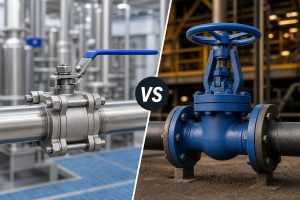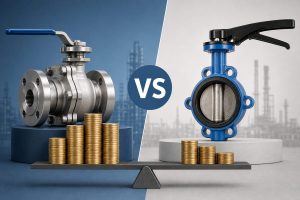
Шаровой кран в сравнении с задвижкой - Какой из них выбрать?
Дело вот в чем:
Если вы устанавливаете клапаны в своем доме, на промышленном объекте или в любой сантехнической системе, выбор неправильного типа может стоить вам времени, денег и множества головных болей.
Я видел, как люди тратили тысячи долларов на замену клапанов, потому что не понимали ключевых различий между этими двумя типами клапанов.
Но не волнуйтесь. Как профессионал шаровой клапан и производитель задвижекЯ расскажу обо всем, что вам нужно знать.
В этом руководстве вы узнаете:
- Точные различия между шаровыми кранами и задвижками
- Когда использовать каждый тип (с реальными примерами)
- Сравнение затрат, которое поможет вам сэкономить деньги
- Распространенные ошибки, которых следует избегать
- Пошаговое руководство по выбору
Давайте погрузимся.
Краткое резюме
- Шаровые краны быстро устанавливаются, не требуют обслуживания и обеспечивают превосходную герметичность. Они лучше всего подходят для газопроводов, сжатого воздуха, химической промышленности, аварийных запорных устройств и систем, которые могут быть автоматизированы.
- Задвижки подходят для магистралей большого диаметра, шламовых трубопроводов, высокотемпературного пара и дросселирования, где допустима медленная работа, а стоимость имеет значение.
- Основные риски: шаровые краны могут вызывать гидроудары и плохо подходят для дросселирования; задвижки медленные, требуют более тщательного обслуживания и могут протекать.
- Используйте прилагаемый пошаговый контрольный список для выбора (применение, приоритеты, коды, будущие потребности, общая стоимость) и следуйте советам по установке/обслуживанию, чтобы избежать распространенных дорогостоящих ошибок.
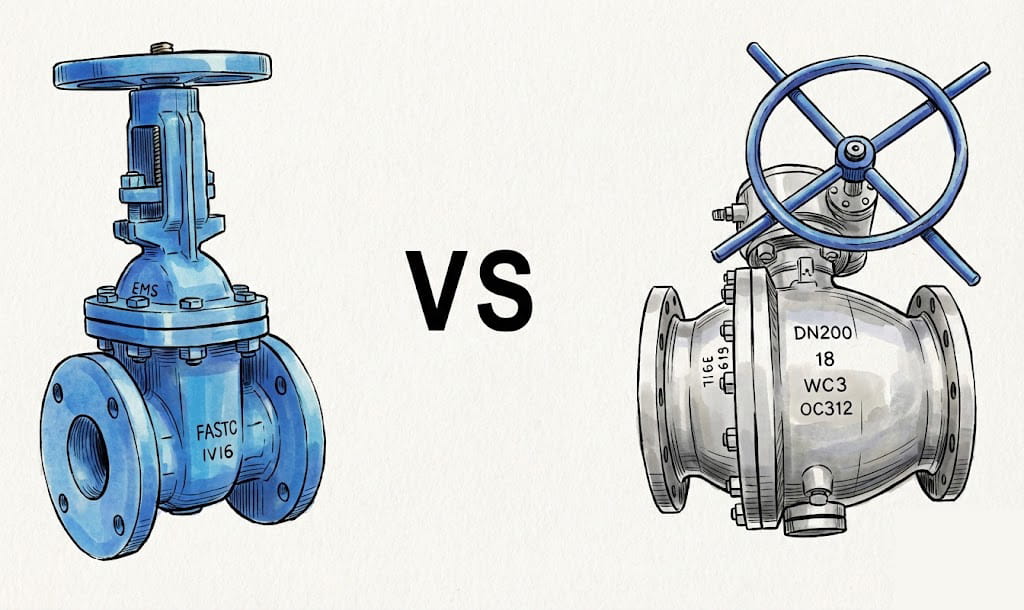
В чем реальная разница между шаровыми кранами и задвижками?
Подумайте об этом так:
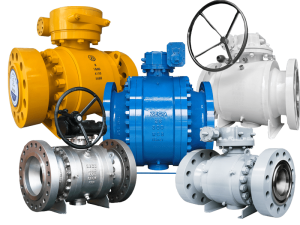
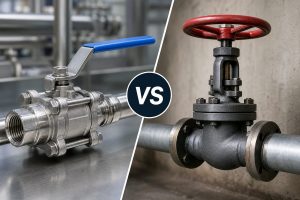
A шаровой клапан это как выключатель света. Быстро включается, быстро выключается. Для управления потоком используется вращающийся шарик с отверстием.
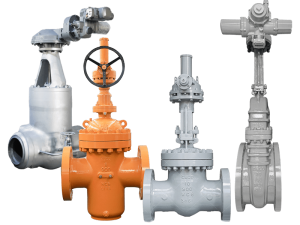
A задвижка больше похожа на гаражные ворота. Она медленно поднимает и опускает металлические ворота, чтобы запустить или остановить поток.
Но вот тут-то и становится интересно:
Эти разные механизмы создают огромные различия в работе клапанов.
Например, недавно я помог одному производственному предприятию перейти с задвижек на шаровые краны на линиях сжатого воздуха. Результат? Всего за один год они сократили расходы на техническое обслуживание на 47%.
(Подробнее об этом позже.)
Шаровые краны: Четвертьоборотные чемпионы
Шаровые краны - это демоны скорости в мире арматуры.
Почему?
Ведь для перехода из полностью открытого в полностью закрытый режим им нужен поворот на 90 градусов.
Как на самом деле работают шаровые краны
Вот что происходит внутри шарового крана:
- Полый шар находится внутри корпуса клапана
- Когда рукоятка расположена параллельно трубе, отверстие совпадает с потоком
- Поверните ручку на 90 градусов, и твердая часть шара заблокирует все.
Просто, правда?
В этом и заключается вся прелесть.
Совет профессионала: Вы можете определить, открыт ли шаровой кран, просто посмотрев на ручку. Параллельная = открыта. Перпендикулярно = закрыт.
Все самое интересное о шаровых кранах
Позвольте мне рассказать о том, что делает шаровые краны потрясающими:
Молниеносная работа - Помните этот поворот на 90 градусов? Он означает, что вы можете перекрыть поток буквально за одну секунду.
Надежное уплотнение - Шаровые краны создают так называемую "пузырьковую" герметичность. Идеально подходят для газовых линий, где даже крошечные утечки опасны.
Низкие расходы - Я видел, как шаровые краны работали более 10 лет без какого-либо обслуживания. Попробуйте сделать это с задвижкой.
Компактная конструкция - Они занимают гораздо меньше места, чем задвижки того же размера.
Не очень хорошие вещи
Но шаровые краны не идеальны:
Риск гидроудара - Такое сверхбыстрое отключение может создавать волны давления в системах высокого давления. (Я покажу вам, как этого избежать).
Плохое управление дросселированием - Использование шарового крана для управления потоком (а не просто включения/выключения) приведет к быстрому износу.
Более высокая первоначальная стоимость - Качественные шаровые краны обычно стоят на 20-40% дороже, чем задвижки.
Задвижки: Надежные рабочие лошадки
Теперь поговорим о задвижках.
Этими клапанами, вероятно, пользовался ваш дедушка. И есть веская причина, по которой они до сих пор существуют.
Как работают задвижки
Задвижки работают точно так же, как и звучат:
- Плоский металлический затвор находится внутри корпуса клапана
- Поверните маховик, и ворота поднимутся вверх.
- Продолжайте вращать, и он полностью очистит путь потока.
Ключевое отличие? Это занимает несколько оборотов - обычно 10-15 полных оборотов.
Почему люди до сих пор используют задвижки
Несмотря на то, что задвижки - "старая школа", они имеют серьезные преимущества:
Минимальный перепад давления - Когда клапан полностью открыт, кажется, что его вообще нет. Путь потока абсолютно прямой.
Лучше для дросселирования - В отличие от шаровых кранов, задвижки можно частично открывать, не разрушая их.
Низкая стоимость - Обычно 20-40% дешевле, чем аналогичные шаровые краны.
Отсутствие гидроудара - Медленное открытие/закрытие исключает скачки давления.
Недостатки, которые необходимо знать
Именно здесь и кроется недостаток задвижек:
Медленная работа - Эти 15 поворотов требуют времени. В чрезвычайных ситуациях важна каждая секунда.
Дополнительное обслуживание - Восходящий шток и сальники нуждаются в регулярном уходе.
Склонны к протечкам - Через несколько лет в задвижках часто появляются небольшие протечки в районе штока.
Занимает место - Поднимающемуся штоку нужен зазор над клапаном.
Шаровой кран против задвижки: сравнение по принципу "голова к голове
Давайте разберемся с реальными данными:
Скорость работы
- Шаровой кран: 1-2 секунды от открытия до закрытия
- Задвижка: 30-60 секунд (в зависимости от размера)
На одном из предприятий, которое я консультировал, переход на шаровые краны сократил время аварийного отключения с 45 до 3 секунд.
Статистика долговечности
На основе отраслевых данных с 2025 года:
- Шаровые краны: В среднем 15-20 лет до капитального ремонта
- Задвижки: В среднем 5-10 лет до замены уплотнения ствола
Анализ затрат
Для типичного 2-дюймового клапана:
- Задвижка: $50-150
- Шаровой кран: $75-200
Но вот в чем дело:
Если учесть затраты на обслуживание в течение 10 лет, то шаровые краны часто оказываются дешевле.
Сравнение перепада давления
Это удивило меня, когда я впервые узнал об этом:
- Задвижка (полностью открыта): Падение на 0,1-0,2 PSI
- Шаровой кран (полный порт): Падение на 0,1-0,3 PSI
В принципе, они одинаковы для большинства применений.
Когда следует использовать шаровые краны (с реальными примерами)
Основываясь на своем опыте, я могу сказать, что шаровые краны - это лучший выбор:
1. Газопроводы
Почему: Такая герметичность очень важна для безопасности. Кроме того, в экстренных случаях необходима возможность быстрого отключения.
2. Системы сжатого воздуха
Почему: Частые циклы включения/выключения разрушат сальник задвижки за несколько месяцев.
3. Химическая обработка
Почему: Многие шаровые краны оснащены седлами из тефлона, которые устойчивы к агрессивным химическим веществам.
4. Главные запорные устройства для жилых помещений
Почему: Если у вас прорвало трубу в 2 часа ночи, вы хотите перекрыть ее СЕЙЧАС, а не через 60 секунд.
5. Системы противопожарной защиты
Почему: Быстрая операция может буквально спасти жизнь.
Когда задвижки имеют больше смысла
Задвижки не умерли. Вот где они сияют:
1. Крупные водопроводные сети
Почему: На трубах диаметром более 12 дюймов задвижки значительно дешевле и отлично подходят для нечастого использования.
2. Применение суспензии
Почему: Прямоточная конструкция справляется с частицами лучше, чем шаровые краны.
3. Высокотемпературный пар
Почему: Задвижки с металлическими седлами лучше переносят сильное нагревание, чем седла шаровых кранов.
4. Приложения для дросселирования
Почему: Если вам нужно управлять потоком (а не просто включать/выключать), задвижки не будут саморазрушаться.
Распространенные ошибки, которые стоят больших денег
Я видел эти ошибки бесчисленное множество раз:
Ошибка #1: Использование шаровых кранов для дросселирования
Один завод попробовал использовать шаровые краны для управления потоком в системе охлаждающей воды. Через 6 месяцев все клапаны стали протекать.
Исправление: Для дросселирования используйте задвижки или соответствующие регулирующие клапаны.
Ошибка #2: установка задвижек там, где важна скорость
На одном из предприятий пищевой промышленности в системе аварийной химической промывки использовались задвижки. Во время аварийной ситуации 45-секундное время закрытия привело к потере $50 000 единиц продукции.
Исправление: Всегда используйте шаровые краны там, где важно быстрое действие.
Ошибка #3: игнорирование гидроудара
Системы высокого давления + шаровые краны + необученные операторы = лопнувшие трубы.
Исправление: Установите устройства защиты от гидроударов или обучите операторов закрывать клапаны медленно.
Мой пошаговый процесс выбора клапана
Вот как я помогаю клиентам выбрать правильный клапан:
Шаг 1: Определите свое приложение
Спросите себя:
- Что по нему течет? (Вода, газ, химические вещества и т.д.)
- Каковы давление и температура?
- Как часто он будет эксплуатироваться?
Шаг 2: Определите приоритеты
Проранжируйте их от наиболее до наименее важных:
- Скорость работы
- Надежность уплотнения
- Первоначальная стоимость
- Требования к техническому обслуживанию
- Ограничения по площади
Шаг 3: Проверьте местные нормы и правила
В некоторых юрисдикциях требуются краны определенных типов. Например, во многих регионах для газовых линий обязательны шаровые краны.
Шаг 4: Рассмотрите будущие потребности
Потребуется ли вам в дальнейшем автоматизировать эти клапаны? Шаровые краны гораздо проще автоматизировать.
Шаг 5: Рассчитайте общую стоимость
Не смотрите только на цену покупки. Учитывайте:
- Стоимость установки
- Ожидаемое обслуживание
- Потери энергии (перепад давления)
- Потенциальное время простоя
Перспективные соображения на 2026 год
Промышленность клапанов не стоит на месте. Вот что нового:
Технология интеллектуальных клапанов
Новый IoT-enabled Краны могут сообщать о своем состоянии, прогнозировать необходимость технического обслуживания и даже работать дистанционно. Шаровые краны лидируют в этом направлении благодаря своей простоте в эксплуатации.
Инновации в области материалов
Современные полимеры и покрытия значительно увеличивают срок службы кранов. Я вижу шаровые краны с тефлоновым покрытием, которые служат более 25 лет в агрессивных средах.
Экологические нормы
Ужесточение норм выбросов в атмосферу стимулирует спрос на клапаны с повышенной герметичностью. Шаровые краны имеют здесь явное преимущество.
Советы по установке, которые предотвращают проблемы
Независимо от того, что вы выберете - шаровые или шиберные краны, правильная установка имеет решающее значение:
Для шаровых кранов:
- Поддержка трубопровода - Шаровые краны не выдерживают нагрузки на трубу
- Проверьте направление потока - Некоторые шаровые краны являются направленными
- Оставьте зазор для ручки - Для размаха на 90 градусов нужно место
- Рассмотрите ориентацию - Горизонтальное положение стебля обычно лучше
Для задвижек:
- По возможности устанавливайте вертикально - Предотвращает скопление мусора
- Обеспечьте зазор для штока - Растущим стеблям нужно пространство
- Никогда не закрывайте принудительно - Чрезмерная затяжка повреждает сиденья
- Регулярно смазывайте - Предотвращает связывание стеблей
Графики технического обслуживания, которые действительно работают
Вот что я рекомендую клиентам:
Обслуживание шаровых кранов:
- Ежемесячно: Запустите клапан, если он нормально статичен
- Ежегодно: Проверьте наличие внешних утечек
- Каждые 5 лет: Рассмотрите возможность замены седел и уплотнений
Обслуживание задвижек:
- Квартал: Смажьте резьбу штока
- Раз в полгода: Проверка и регулировка сальника
- Ежегодно: Полный рабочий тест
- Каждые 3-5 лет: Переупаковать или заменить упаковку
Принятие окончательного решения
Итак, шаровой кран против задвижки - Кто победит?
Вот итог:
Для большинства современных применений шаровые краны являются лучшим выбором. Они более надежны, требуют меньшего обслуживания и обеспечивают лучшее уплотнение.
Но задвижки все еще имеют свое место, особенно в системах большого диаметра, где стоимость имеет решающее значение.
Мой совет?
Если сомневаетесь, выбирайте шаровой кран. Более высокая первоначальная стоимость обычно окупается за счет сокращения объема технического обслуживания и повышения надежности.
Помните: Правильный выбор клапана зависит от ВАШЕЙ конкретной ситуации. Используйте это руководство для оценки своих потребностей, и вы примете правильное решение.
Теперь вы точно знаете, как выбрать между шаровой кран против задвижки для любого применения. Главное - подобрать тип клапана в соответствии с вашими конкретными потребностями, а не просто выбрать самый дешевый вариант.