Краткое резюме
Задатчики цепи - это калиброванные ручные балансировочные клапаны со встроенной системой измерения расхода, обеспечивающие точность 5% и более быстрый ввод в эксплуатацию, но при этом в 2-3 раза более дорогие, чем базовые ручные клапаны.
Выбирайте ручные балансировочные клапаны для простых систем с постоянным расходом и ограниченным бюджетом; контурные устройства для коммерческих проектов, требующих точности и документации; и автоматические клапаны для систем с переменным расходом и колебаниями давления.
Если вы имеете дело с гидравлическими системами HVAC, то наверняка сталкивались с балансировочными клапанами и регуляторами контуров. И позвольте мне предположить, что вы задаетесь вопросом, в чем же разница между ними.
Несмотря на то, что задатчик контура технически является разновидностью балансировочного клапана, не все балансировочные клапаны являются задатчиками контура. Подумайте об этом так: все квадраты - это прямоугольники, но не все прямоугольники - это квадраты.
Главное отличие? Балансировочные клапаны Это широкая категория, включающая в себя все: от простых шаровых кранов до сложных автоматических ограничителей расхода. Установщики цепей, С другой стороны, это специально откалиброванные ручные балансировочные клапаны со встроенными возможностями измерения расхода.
Но это лишь малая часть. Как профессионал производитель балансировочных клапанов, Я помогу вам понять, что действительно важно для вашего следующего проекта.
Что такое балансировочный клапан?
Балансировочный клапан предназначен для добавления регулируемого сопротивления в вашу гидросистему.
Почему это важно?
Без надлежащей балансировки вода идет по пути наименьшего сопротивления. Это означает, что ближайшие к насосу контуры получают весь поток, а самые дальние оконечные устройства... ну, не очень много.
Вот основные типы:
Ручные балансировочные клапаны
Это ваши рабочие лошадки. Как только вы их установите, они останутся на месте. Простые, надежные и экономичные.
Недостаток? Если давление в системе меняется, то меняется и расход.
Автоматические балансировочные клапаны
Эти плохие мальчики содержат внутренние картриджи, которые автоматически регулируются для поддержания постоянного потока даже при колебаниях давления в системе.
Неплохо, правда?
Балансировочные клапаны с фиксированным отверстием
Они оснащены вставкой Вентури в сочетании с напорными отверстиями. Это как средний ребенок - более сложный, чем основные ручные клапаны, но более простой, чем автоматика.
Что делает наборщик цепей особенным?
Вот тут-то и становится интересно.
Наборщик схем (первоначально Bell & Gossett Это трехфункциональный прецизионный прибор. Это не просто клапан - это комплексное решение для управления потоком.
Что делает его особенным:
1. Калиброванный циферблат
Вы можете точно рассчитать, сколько витков нужно сделать перед установкой. Никаких догадок.
2. Остановка памяти
Эта функция - просто находка. Нужно перекрыть поток для технического обслуживания? Нет проблем. Память позволяет закрыть клапан и снова открыть его в том же положении.
3. Встроенное измерение расхода
Встроенные напорные патрубки позволяют подключить дифференциальный манометр и точно определить, сколько воды проходит через данный патрубок.
Я видел, как подрядчики экономили часы на пусконаладочных работах только потому, что вместо основных балансировочных клапанов у них стояли задатчики схемы.
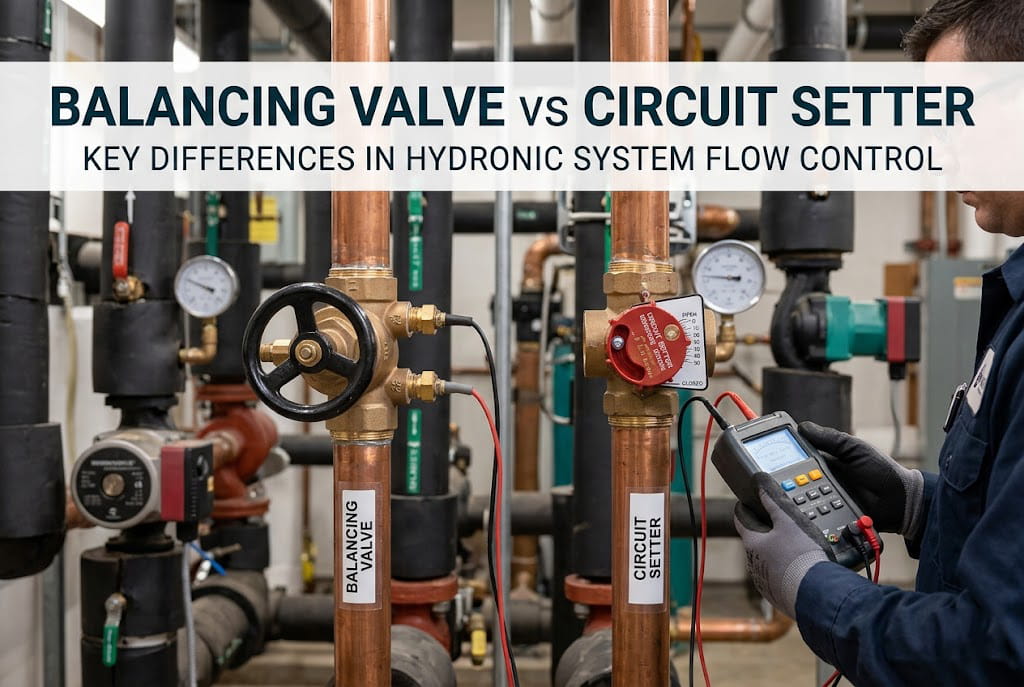
Балансировочный клапан и контурный задатчик: Основные различия
Позвольте мне разделить это на то, что действительно влияет на ваш результат:
Установка и настройка
Ручные балансировочные клапаны:
- Для точной балансировки требуются отдельные расходомеры
- Трудоемкий процесс настройки
- Более низкая первоначальная стоимость
- Для правильной балансировки требуются опытные техники
Установщики цепей:
- Предварительная настройка по кривым производителя
- Ускоренный ввод в эксплуатацию
- Более высокая первоначальная стоимость
- Меньше возможностей для ошибок при настройке
Точность и измерение
Дело вот в чем:
Как правило, задатчики цепей обеспечивают точность 5% с высокой повторяемостью. Ручные клапаны? Вы получите точность, которую обеспечит ваш отдельный расходомер (если он вообще есть).
Долгосрочная производительность
Вот тут-то и становится интересно.
Ручные клапаны, по сути, пуленепробиваемые. Установите их один раз, и они будут работать десятилетиями. Нет движущихся частей, которые могут выйти из строя, нет картриджей, которые нужно заменять.
А вот приборы для настройки схемы? Хотя они более сложны, они дают вам возможность проверить расход воды на годы вперед. Это очень важно для поддержания эффективности системы.
Когда использовать каждый тип
Позвольте мне избавить вас от головной боли с помощью этих рекомендаций:
Выбирайте ручные балансировочные клапаны, когда:
- Работа с простыми системами с постоянным расходом
- Бюджет ограничен
- Система имеет минимальные колебания давления
- Достаточно грубой балансировки
Например, я бы использовал их в небольшом многоквартирном доме с насосом с постоянной скоростью и несколькими зонами.
Выбирайте установщиков цепей, когда:
- Точность имеет решающее значение
- Работа с коммерческими системами отопления, вентиляции и кондиционирования воздуха
- Необходимость измерения расхода при вводе в эксплуатацию
- Энергоэффективность является приоритетом
- Требуется документация по расходам
Подумайте о больницах, центрах обработки данных или любых других зданиях, где жалобы на комфорт могут обойтись вам очень дорого.
Выбирайте автоматические балансировочные клапаны, когда:
- Работа с системами с переменным расходом
- Частота вращения насоса часто меняется
- Давление в системе сильно колеблется
- Хотите работать по принципу “поставил и забыл”.
Совет: Независимые от давления регулирующие клапаны (PICV) сочетают в себе балансировку, управление и регулирование перепада давления в одном устройстве. Они стоят дорого, но могут быть полезны для сложных систем.
Расчеты реальных затрат
Вот что никто не говорит вам о разнице в стоимости:
Конечно, устройства управления стоят дороже. Мы говорим о 2-3-кратной цене базового ручного клапана.
Но подумайте вот о чем:
- Время ввода в эксплуатацию с задатчиками: 50-70% меньше
- Обратные вызовы из-за неправильной балансировки: Значительно уменьшено
- Экономия энергии за счет правильной балансировки: 10-15% типичный
Я видел проекты, в которых только экономия на трудозатратах оправдывала дополнительные расходы на оборудование.
Общие ошибки, которых следует избегать
После просмотра сотен инсталляций именно эти ошибки заставляют меня содрогнуться:
1. Занижение размера в целях экономии
Это разрушает вашу способность правильно балансировать. Не делайте этого.
2. Установка без прямых труб
Большинству клапанов требуется 3-5 диаметров трубы выше по течению. Игнорировать это опасно.
3. Использование автоматических выключателей в небольших жилых системах
Полный перебор. Поберегите деньги своего клиента.
4. Типы смесительных клапанов в произвольном порядке
Выберите стратегию и придерживайтесь ее. Последовательность значительно облегчает дальнейшее обслуживание.
Фактор обслуживания
Это очень важный момент, который часто упускают из виду.
Ручные балансировочные клапаны? Практически не требуют обслуживания. Возможно, проверять положение раз в несколько лет.
Установщики цепей? Не требует особого ухода, но вы захотите:
- Периодически проверяйте калибровку
- Проверьте, не засорены ли напорные патрубки
- Убедитесь, что ограничители памяти продолжают работать
Автоматические клапаны? Вот тут-то все и становится интересным. Эти подпружиненные картриджи не вечны. Запланируйте замену каждые 5-10 лет.
Правильный выбор для вашей системы
Вот мой процесс рекомендации:
Шаг 1: Определите тип потока
- Постоянный поток? Ручные клапаны могут работать
- Переменный расход? Вам нужны автоматические или PICV
Шаг 2: Учитывайте свои потребности в точности
- ±20% достаточно хорошо? Ручные клапаны
- Требуется ±5%? Минимальный набор микросхем
Шаг 3: Учитывайте стоимость жизненного цикла
- Не ограничивайтесь только стоимостью оборудования
- Включая установку, ввод в эксплуатацию и энергоснабжение
Шаг 4: Подумайте о будущем
- Будет ли изменена система?
- Кто будет его обслуживать?
- Критична ли документация?
Нижняя линия
Выбор между балансировочными клапанами и устройствами для настройки контуров заключается не в том, что “лучше”. Речь идет о том, чтобы подобрать правильный инструмент для конкретной ситуации.
В сложных коммерческих системах, где важна точность, задатчики схемы оправдывают себя благодаря точному управлению потоком и упрощению ввода в эксплуатацию.
Для более простых систем, где бюджет - это главное, ручные балансировочные клапаны выполняют работу, не требуя больших затрат.
А для систем с переменным расходом? Автоматические клапаны или PICV практически обязательны в 2026 году.
Помните: правильная балансировка может снизить потребление энергии на 10-15%, устраняя жалобы на горячую и холодную воду. Какой бы тип клапана вы ни выбрали, убедитесь, что он правильно подобран и правильно установлен.
Потому что в конце концов даже самая причудливая схема не исправит плохо спроектированную систему.
Ключевым моментом является понимание потребностей вашей системы и выбор решения по управлению потоком, которое обеспечивает оптимальный баланс производительности, стоимости и надежности для конкретного применения.