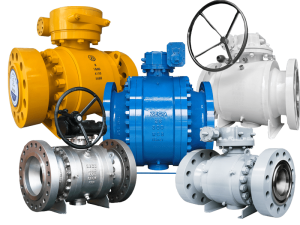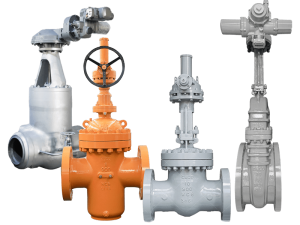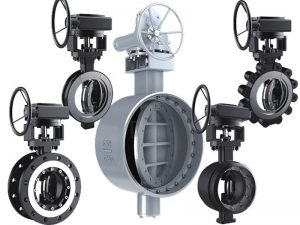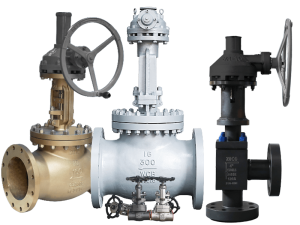
Haben Sie schon einmal vor einer Wand voller Ventile gestanden und sich gefragt, welches Sie eigentlich brauchen? Da sind Sie nicht allein.
Die Entscheidung zwischen Drosselklappe und Kugelhahn ist eine der Entscheidungen, die über Leben und Tod Ihres Rohrleitungssystems entscheiden können. Wenn Sie sich falsch entscheiden, drohen Leckagen, Druckabfall oder - schlimmer noch - ein kompletter Systemausfall.
Ich habe schon erlebt, dass Ingenieure wochenlang über diese Entscheidung nachgedacht haben. Dabei muss es gar nicht so kompliziert sein.
In diesem Leitfaden werden Sie als Fachmann Absperrklappe und Hersteller für Kugelhähne, In den folgenden Abschnitten erläutere ich genau, wann die einzelnen Ventiltypen verwendet werden sollten, welche Leistungsunterschiede sie in der Praxis aufweisen und wie Sie das richtige Ventil für Ihre spezielle Anwendung auswählen.
Lassen Sie uns eintauchen.
Kurze Zusammenfassung:
- Wählen Sie Kugelhähne für Hochdrucksysteme (über ~250 PSI), leckagefreie Anforderungen, kleine Rohre (<6 Zoll), häufige Zyklen, bidirektionalen Durchfluss und Molchen Operationen.
- Wählen Sie Absperrklappen für große Durchmesser (≥6 Zoll), platzbeschränkte Installationen und niedrige bis mittlere Drücke (unter ~150 PSI), bei denen Kosten- und Gewichtseinsparungen wichtig sind.
- Die wichtigsten Kompromisse: Kugelventile bieten blasendichte Dichtungen und einen vernachlässigbaren Druckabfall, sind aber schwerer und bei großen Größen weitaus kostspieliger; Absperrklappen sparen Geld und Platz, führen aber immer zu einem gewissen Druckabfall und möglichen Leckagen bei höheren Drücken.
- Befolgen Sie die einfachen Entscheidungskriterien (Druck, Rohrgröße, Budget, Leckagetoleranz, Platz) und vermeiden Sie häufige Fehler wie die Verwendung von Absperrklappen in Hochdruck-Dampfleitungen oder die Drosselung mit Kugelhähnen.
Was ist ein Absperrventil?
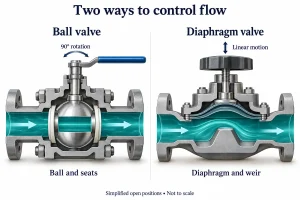
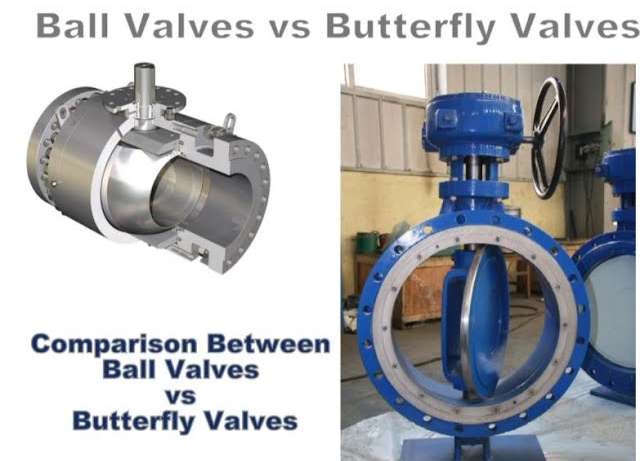
Stellen Sie sich eine Absperrklappe wie eine Scheibe vor, die sich in Ihrem Rohr dreht.
Wenn sie parallel zur Strömung steht, kann sich alles frei bewegen. Dreht man ihn um 90 Grad, blockiert er den Durchfluss vollständig.
Das macht Absperrklappen so einzigartig:
- Leichte Konstruktion (auch in massiven Größen)
- Kompakter Fußabdruck (perfekt für enge Räume)
- Schnelle Bedienung (Vierteldrehung von offen nach geschlossen)
- Kosteneffizient (insbesondere bei großen Durchmessern)
Die Scheibe bleibt im Strömungsweg, auch wenn sie vollständig geöffnet ist. Das ist wichtig - wir werden später darauf zurückkommen.
Was ist ein Kugelhahn?
Ein Kugelhahn verfolgt einen völlig anderen Ansatz.
Stellen Sie sich eine Hohlkugel mit einem Loch in der Mitte vor. Wenn das Loch mit dem Rohr übereinstimmt, fließt die Flüssigkeit. Drehen Sie sie um 90 Grad, und Sie haben eine massive Wand, die alles blockiert.
Die wichtigsten Merkmale, die Kugelhähne auszeichnen:
- Null Leckage in geschlossenem Zustand (blasendichter Verschluss)
- Voller Fluss in geöffnetem Zustand (keine Hindernisse)
- Bewältigt hohen Druck wie ein Champion
- Funktioniert mit fast allen Medien (Flüssigkeiten, Gase, sogar Schlämme)
Ich habe im Laufe der Jahre Hunderte von diesen Geräten installiert. Sie sind Arbeitstiere.
Absperrklappe vs. Kugelhahn: 7 Hauptunterschiede
Lassen Sie mich den Fachjargon durchbrechen und Ihnen zeigen, worauf es bei der Wahl zwischen diesen Ventilen wirklich ankommt.
1. Handhabung von Druck
Hier dominieren die Kugelhähne. Unbestritten.
Ich habe schon Kugelhähne gesehen, die 1.000+ PSI aushalten, ohne ins Schwitzen zu kommen. Absperrklappen? In den meisten Fällen beginnen sie bei 250 PSI zu kämpfen.
Warum der Unterschied? Es liegt an der Konstruktion. Kugelhähne erzeugen eine positive Dichtung, wobei der Druck auf der Anströmseite dazu beiträgt, die Dichtheit zu gewährleisten. Bei Absperrklappen drückt die Scheibe gegen einen Sitz - und hoher Druck kann diese Scheibe buchstäblich aus ihrer Dichtung drücken.
2. Merkmale der Strömung
Jetzt wird es interessant.
Kugelhähne (Versionen mit vollem Anschluss) = Null Druckabfall. Der Durchflussweg ist in geöffnetem Zustand völlig frei.
Absperrklappen = automatischer Druckabfall. Diese Scheibe ist immer im Weg, auch wenn sie “vollständig” geöffnet ist.
Bei einem kürzlich durchgeführten Projekt konnten wir durch die Umstellung von Klappen auf Kugelhähne den Druckabfall um 40% reduzieren. Das ist enorm, wenn man die Kosten für das Pumpen mit einberechnet.
3. Größe und Gewicht
Das ist das Gebiet der Schmetterlingsventile.
Eine 24-Zoll-Absperrklappe wiegt etwa so viel wie ein 6-Zoll-Kugelhahn. Ernsthaft.
Bei Rohren mit großem Durchmesser (alles über 6 Zoll) sind Absperrklappen aus praktischer Sicht viel sinnvoller. Weniger Gewicht bedeutet:
- Leichtere Installation
- Geringere Belastung der Rohre
- Niedrigere Supportkosten
4. Kostenvergleich
Lassen Sie uns über Geld reden.
Für kleine Ventile (unter 4 Zoll):
- Kugelhähne und Absperrklappen kosten ungefähr das Gleiche
- Manchmal sind Kugelhähne sogar billiger
Aber beobachten Sie, was bei größeren Größen passiert:
- 12-Zoll-Absperrklappe: ~$500
- 12-Zoll-Kugelhahn: ~$2.500
Das ist ein 5facher Unterschied. Und es wird nur noch schlimmer, je größer man wird.
5. Siegelleistung
Kugelhähne gewinnen auch diese Runde.
Sie bieten eine “blasendichte” Abdichtung. Keine Leckage. Punkt.
Absperrklappen? Sie sind gut, aber nicht perfekt. Bei höherem Druck oder nach längerem Gebrauch kann es zu kleineren Leckagen kommen. Die Scheibe kann sich mit der Zeit am Sitz abnutzen.
(Profi-Tipp: Wenn Ihre Anwendung absolut keine Leckagen duldet - wie bei giftigen Chemikalien oder teuren Produkten - sollten Sie ein Kugelventil verwenden).
6. Platzbedarf
Absperrklappen sind hier der klare Gewinner.
Sie bestehen im Grunde aus einer Waffel, die zwischen zwei Flansche passt. Super kompakt.
Kugelhähne brauchen Platz für die eigentliche Kugel und das Gehäuse, in dem sie untergebracht ist. In engen Maschinenräumen ist dies wichtiger, als man denkt.
7. Wartungsbedarf
Beide Ventile sind ziemlich wartungsarm, aber es gibt Unterschiede:
Absperrklappen:
- Einfachere Konstruktion = weniger ausfallgefährdete Teile
- Der Austausch des Sitzes ist einfach
- Kann oft in-line gewartet werden
Kugelhähne:
- Komplexere Interna
- Sitzwechsel erfordert Ausbau des Ventils
- Aber sie halten in der Regel länger zwischen den Dienstleistungen
Wann sollte man eine Absperrklappe wählen?
Meiner Erfahrung nach sind Drosselklappen in folgenden Fällen am sinnvollsten:
Anwendungen mit großem Durchmesser (6 Zoll und mehr)
Die Kosten- und Gewichtseinsparungen sind zu groß, um sie zu ignorieren.
Platzbeschränkte Installationen
Wenn jeder Zentimeter zählt, passen Absperrklappen dorthin, wo Kugelhähne nicht hinpassen.
Systeme mit niedrigem bis mäßigem Druck (unter 150 PSI)
Sie können mit diesem Druck sehr gut umgehen.
Wasser- und Abwasseraufbereitung
Das ist der Himmel der Absperrklappen. Große Rohre, niedriger Druck, kostenempfindlich.
HVAC-Systeme
Auch hier sind Absperrklappen bei großen Kanälen, niedrigem Druck und eingeschränktem Budget ideal.
Wenn eine gewisse Leckage akzeptabel ist
Wenn ein paar Tropfen nicht schaden, sollten Sie das Geld sparen.
Wann sollte man einen Kugelhahn wählen?
Kugelhähne eignen sich hervorragend für diese Situationen:
Hochdruckanwendungen
Bei mehr als 250 PSI greife ich zu einem Kugelventil.
Leckagefreie Anforderungen
Chemische Anlagen, Raffinerien, Pharmaunternehmen - überall, wo Lecks auftreten, gibt es Probleme.
Häufiger Betrieb
Kugelhähne überstehen Tausende von Zyklen, ohne zu verschleißen.
Rohre mit kleinem Durchmesser (unter 6 Zoll)
Der Kostenunterschied ist minimal, also kann man genauso gut eine bessere Leistung bekommen.
Bidirektionaler Fluss
Bei Kugelhähnen ist es egal, aus welcher Richtung der Durchfluss kommt.
Molchen Operationen
Sie müssen einen Reinigungsmolch durchlassen? Nur Kugelhähne mit vollem Durchgang erlauben dies.
Vergleich der Leistung unter realen Bedingungen
Lassen Sie mich einige aktuelle Daten aus den letzten Projekten nennen:
Modernisierung des städtischen Wasserwerks (2025):
- Ersetzen von 16-Zoll-Schiebern durch Absperrklappen
- Kosteneinsparungen: 65%
- Installationszeit: Schnitt durch 70%
- Leistung: Keine Probleme nach 8 Monaten
Chemische Verarbeitungsanlage (2026):
- Einsatz von Kugelhähnen in Hochdruckleitungen
- Keine Lecks in 6 Monaten Betrieb
- Druckstufe: 800 PSI
- Lohnen sich die zusätzlichen Kosten? Auf jeden Fall
HVAC-Nachrüstungsprojekt (2025):
- Mehr als 300 Absperrklappen installiert
- Durchschnittliche Größe: 10 Zoll
- Gesamteinsparungen des Projekts gegenüber Kugelhähnen: $125.000
Die Zahlen lügen nicht.
Überlegungen zur Installation
Dies wird von den Installateuren oft übersehen:
Einbau von Absperrklappen
Orientierung ist wichtig. Bauen Sie die Welle horizontal ein, um Ablagerungen zu vermeiden.
Die Ausrichtung der Flansche ist entscheidend. Falsch ausgerichtete Flansche können die Scheibe beschädigen.
Abfertigung. Im geöffneten Zustand ragt die Scheibe über das Ventilgehäuse hinaus.
Einbau von Kugelhähnen
Durchflussrichtung spielt normalerweise keine Rolle (aber überprüfen Sie es trotzdem).
Unterstützung schwerer Ventile. Achten Sie darauf, dass das Ventil nicht durch die Belastung der Rohre beschädigt wird.
Berücksichtigen Sie die zukünftige Wartung. Lassen Sie Platz, um das Ventil bei Bedarf zu entfernen.
Die richtige Wahl treffen: Ein einfacher Rahmen
Immer noch unsicher? Verwenden Sie diesen Entscheidungsbaum:
- Wie hoch ist Ihr Druck?
- Über 250 PSI → Kugelhahn
- Unter 150 PSI → Schmetterling in Betracht ziehen
- Wie groß ist Ihr Rohr?
- Über 6 Zoll → Neigung zum Schmetterling
- Unter 4 Zoll → Kugelhahn oft besser
- Wie hoch ist Ihr Budget?
- Knappes Budget + große Rohre → Schmetterling
- Budget erlaubt → Leistungsanforderungen berücksichtigen
- Können Sie ein Auslaufen tolerieren?
- Auf keinen Fall → Kugelhahn
- Geringe Leckage OK → Schmetterling funktioniert
- Platzmangel?
- Sehr eng → Schmetterling
- Raum zum Arbeiten → Jede Option
Häufig zu vermeidende Fehler
Ich sehe diese Fehler immer wieder:
Einsatz von Absperrklappen in Hochdruck-Dampfleitungen
Die Hitze und der Druck führen zu verzogenen Scheiben und defekten Dichtungen.
Einbau von Kugelhähnen, wenn eine Drosselung erforderlich ist
Kugelhähne sind zum Drosseln schlecht geeignet. Verwenden Sie sie ganz offen oder ganz geschlossen.
Geschwindigkeitsbegrenzungen ignorieren
Hohe Geschwindigkeiten können die Klappenscheiben beschädigen. Prüfen Sie Ihre Durchflussmengen.
Einsparungen bei kritischen Anwendungen
Die Einsparung von $500 bei einem Ventil ist eine Abschaltung von $50.000 nicht wert.
Das Fazit zu Absperrklappe und Kugelhahn
Es läuft auf Folgendes hinaus:
Absperrklappen sind die erste Wahl für Anwendungen mit großem Durchmesser und niedrigem Druck, bei denen Kosten und Platzbedarf wichtiger sind als eine perfekte Abdichtung.
Kugelhähne sind die Investition wert, wenn Sie zuverlässige, leckagefreie Leistung bei jedem Druck benötigen.
Die meisten Einrichtungen verwenden beides. Sie sind komplementäre Technologien, keine Konkurrenten.
Der Schlüssel ist die Anpassung des Ventils an Ihre spezifischen Bedürfnisse. Berücksichtigen Sie Ihren Druck, Ihre Größe, Ihr Budget und Ihre Leistungsanforderungen. Im Zweifelsfall wenden Sie sich an einen Ventilspezialisten, der Ihre Anwendung im Detail prüfen kann.
Denken Sie daran: Die richtige Wahl des Ventils im Vorfeld spart später Kopfschmerzen (und Geld).
Was ist Ihre größte Herausforderung bei der Auswahl von Ventilen? Je genauer Sie Ihre Anwendung beschreiben können, desto besser können Sie sich bei der Auswahl der optimalen Absperrklappe vs. Kugelhahn Entscheidung.