Краткое резюме
- Двойные обратные клапаны не подлежат испытаниям и подходят только для систем с низким уровнем опасности (например, водонагревателей).
- Устройства предотвращения обратного потока (особенно узлы RPZ) поддаются испытаниям, оснащены предохранительными клапанами и необходимы для защиты питьевой воды от загрязнения.
- Если ваша система подключена к системе питьевого водоснабжения, в которой существует риск загрязнения, используйте устройство предотвращения обратного потока, а не обратный клапан.
- Всегда проверяйте местные нормы; в большинстве юрисдикций установка обратных клапанов является обязательной для перекрестных соединений, представляющих высокую опасность.
Большинство людей на самом деле не знают, в чём разница между двойным обратным клапаном и устройством предотвращения обратного потока. И эта путаница может обойтись вам дорого. Очень дорого.
Я беседовал с десятками владельцев недвижимости, которые установили неподходящее устройство. Некоторые из них столкнулись с отказом при проверке. А остальные? Они узнали об этом на собственном горьком опыте, когда загрязненная вода попала в их систему питьевого водоснабжения.
Поэтому сегодня, будучи профессионалом производитель обратных клапанов, я собираюсь разобрать именно Чем отличаются эти два устройства и что нужно знать, чтобы обеспечить безопасность вашей системы водоснабжения.
Давайте погрузимся.
Почему это действительно важно
Вот что большинство людей не осознает:
Обратный поток — это не какое-то редкое, аномальное явление.
Такое случается постоянно.
На улице прорвало водопроводную магистраль. Открылся пожарный гидрант. Внезапно давление в ваших трубах падает, а та стоячая вода в вашей поливной линии? Она сразу же засасывается обратно в систему питьевого водоснабжения вашего дома.
Страшно, правда?
Именно поэтому понимание двойной обратный клапан и устройство предотвращения обратного потока Это решение — не просто формальность, необходимая для обеспечения соответствия нормам. Речь идет о безопасности вашей семьи или ваших клиентов.
Позвольте мне показать вам, о чём я говорю.
Что такое двойной обратный клапан? (Простое объяснение)
Двойной обратный клапан — это именно то, что подразумевает его название.
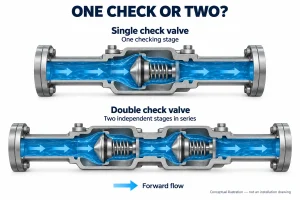
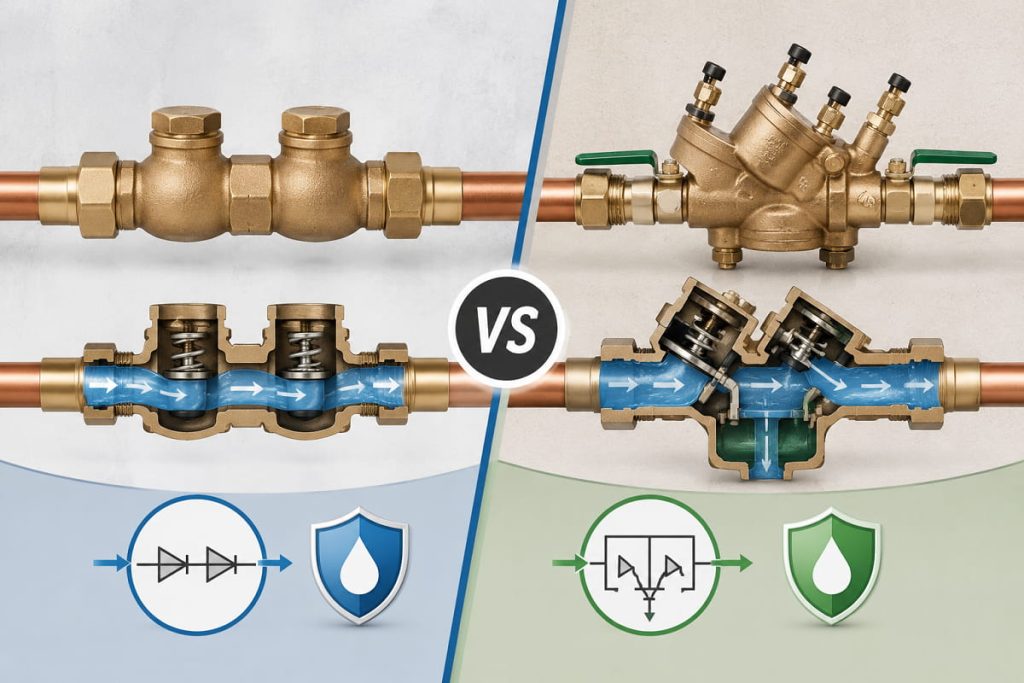
Это небольшое и простое устройство с два независимых пружинных обратных клапана выстроились в ряд. Вот и всё.
Когда вода течет в нужном направлении, оба клапана открываются. Когда вода пытается течь в обратном направлении, они мгновенно закрываются.
Всё довольно просто.
Где можно найти двойные обратные клапаны
Я вижу их в основном в жилые помещения. Подумайте:
- Входные патрубки водонагревателя
- Подводящие линии к жилым домам
- Нагнетательные трубопроводы насосов
Что нужно помнить? Двойные обратные клапаны предназначены для ситуации с низким уровнем опасности.
Речь идет о ситуациях, когда в худшем случае обратный поток может привести лишь к появлению слегка помутневшей воды или незначительной эстетической проблеме. Но не к попаданию токсичных химикатов. Не к попаданию сточных вод. Не к попаданию удобрений.
Серьезное ограничение
И вот тут-то всё и усложняется.
Двойные обратные клапаны не подлежат испытаниям.
Это означает, что после их установки невозможно определить, работают ли они на самом деле. Даже небольшой кусочек мусора может застрять в одном из обратных клапанов и заблокировать его в открытом положении, и вы об этом даже не догадаетесь, пока не возникнут проблемы.
А если они выйдут из строя? Их не ремонтировать. Их нужно заменить.
Совет от профессионала: представьте себе двойной обратный клапан как обычный дымовой датчик без кнопки проверки. Конечно, он может работать. Но вы никогда не узнаете этого, пока не возникнет проблема.
Что такое обратный клапан? (Самое важное)
Устройство, предотвращающее обратный поток, — это совсем другое дело.
В то время как двойной обратный клапан представляет собой простое механическое устройство, устройство предотвращения обратного потока — это сборка. Речь идет о нескольких компонентах, которые работают совместно, чтобы обеспечить реальную, поддающуюся проверке защиту.
Два наиболее распространённых типа, с которыми вам придётся столкнуться, — это:
- 1. Двойной обратный клапан в сборе (DCVA) – Два обратных клапана с контрольными кранами
- 2. Узел зоны пониженного давления (RPZ) – Два обратных клапана ПЛЮС предохранительный клапан
Чем отличаются устройства защиты от обратного потока
Позвольте мне объяснить, почему эти устройства настолько надежнее.
Во-первых, они поддающийся проверке. Сертифицированный специалист может подключить манометр перепада давления к этим контрольным кранам и сообщить вам именно какое давление выдерживает каждый обратный клапан.
Во-вторых, у узла RPZ есть система защиты от сбоев, которой у обычных сдвоенных обратных клапанов просто нет.
Вот как это работает:
Между двумя обратными клапанами находится камера, называемая “зоной пониженного давления”. Если один из обратных клапанов дает течь, давление в этой камере падает. В этом случае открывается предохранительный клапан и сбрасывает воду наружу.
Это означает, что даже в случае полного выхода из строя обоих обратных клапанов загрязненная вода не могу попадать обратно в систему подачи чистой воды. Вода просто вытекает на землю, а не попадает в трубы.
Довольно умно, правда?
Где требуется установка обратных клапанов
Вы найдете их в:
- Коммерческие здания
- Системы орошения (особенно с внесением удобрений)
- Системы пожаротушения
- Промышленные объекты
- Везде, где опасные вещества могут привести к загрязнению питьевой воды
Итак, что из этого следует? Если существует хоть малейшая вероятность того, что вредные вещества могут попасть в ваш водопровод, вам нужен надлежащий обратный клапан. А не просто обратный клапан.
Двойной обратный клапан и устройство предотвращения обратного потока: сравнение характеристик
Позвольте мне изложить это ясно, чтобы вы сразу увидели разницу.
| Особенность | Двойной обратный клапан | Устройство предотвращения обратного потока (RPZ/DCVA) |
|---|---|---|
| Уровень опасности | Только низкий | От меньшего к большему |
| Тестируемость | Не поддается проверке | Должно проходить ежегодную проверку |
| Отказоустойчивый | Никто | Предохранительный клапан (RPZ) или резервный клапан (DCVA) |
| Обслуживание | Заменить при выходе из строя | Поддающийся ремонту |
| Типичная стоимость | $20-$100 | $200-$1,000+ |
| Утверждение проекта | Не предназначено для защиты питьевой воды | Требуется большинством водохозяйственных органов |
Почему один домовладелец пожалел о своём решении
Недавно я разговаривал с одним парнем, у которого есть небольшая ферма недалеко от Портленда. У него была система орошения, подключенная к колодцу. Его подрядчик сказал ему, что достаточно просто обратный клапан было бы неплохо.
А в течение двух лет? Всё было нормально.
И вот однажды насос вышел из строя. Давление упало. А та вода, что осталась в его оросительных трубах? Та, что была смешана с органическими удобрениями? Она просто хлынула обратно в его колодец.
Он не осознал, что произошло, пока его семья не заболела.
A превентор обратного потока Наличие исправного клапана RPZ позволило бы предотвратить всю эту ситуацию. При падении давления этот предохранительный клапан открылся бы и сбросил бы загрязненную воду на землю, вместо того чтобы допустить её обратный поток.
Не допускайте, чтобы это случилось с вами.
Что на самом деле требуют местные нормы?
Вот что удивляет многих:
В большинстве юрисдикций не допускается использование двойных обратных клапанов для защиты систем водоснабжения питьевой водой.
Я ознакомился с Единым кодексом сантехнических норм (UPC) и Международный кодекс по сантехнике (IPC). В обоих документах указано, что на перекрестных соединениях, где существует вероятность загрязнения, необходимо устанавливать устройства предотвращения обратного потока (в частности, узлы RPZ или клапаны DCVA).
Двойные обратные клапаны? Они просто не допускаются к применению в условиях высокой или даже средней степени опасности.
Совет от профессионала: всегда уточняйте требования у местного водохозяйственного ведомства. Я был свидетелем случаев, когда городские власти отклоняли заявки на установку из-за того, что кто-то пытался использовать двойной обратный клапан там, где требовался устройство предотвращения обратного потока. Это означает, что придётся всё демонтировать и начинать сначала. А это недёшево.
5 вопросов, которые нужно задать перед покупкой
Когда вам предстоит выбрать между двойной обратный клапан и устройство предотвращения обратного потока, просмотрите этот краткий контрольный список:
1. Что вытекает из моих труб? Если вы имеете дело с химикатами, удобрениями или любыми опасными веществами, вам необходим обратный клапан.
2. Что говорится в моих местных нормах? Не гадайте. Позвоните в водохозяйственную организацию или загляните на их сайт.
3. Это нужно будет проверить? Если да, то использовать двойной обратный клапан нельзя. И точка.
4. Каковы последствия неудачи? Затопленный подвал? Или загрязненная питьевая вода во всем здании?
5. Могу ли я пойти на такой риск? Иногда экономия в $200 на начальном этапе обходится вам в $20 000 позже.
Реальная оценка затрат
Давайте поговорим о деньгах, ведь я знаю, что именно об этом вы и думаете на самом деле.
Простой двойной обратный клапан может обойтись вам от $20 до $100.
Надежный обратный клапан? Перед вами от $200 до $1 000+ стоимость самого устройства, плюс монтаж, плюс ежегодные испытания (обычно от 1 000 до 2 000 в год).
Это существенная разница.
Но вот в чем дело:
Эти дополнительные расходы дают вам уверенность.
Если у вас установлен обратный клапан, вы можете быть уверены, что он исправен, потому что его ежегодно проверяют. А с двойным обратным клапаном? Остается только надеяться.
Не знаю, как вы, а я не люблю полагаться на удачу, когда речь идет о питьевой воде для моей семьи.
Распространенные заблуждения (позвольте мне их развеять)
“Обратный клапан — это, по сути, то же самое, что и устройство предотвращения обратного потока”.”
Нет. Даже близко не так.
Обратный клапан обеспечивает вам один слой защиты. Устройство предотвращения обратного потока обеспечивает вам несколько слоев, зачастую с учетом мер безопасности и возможности тестирования.
“Я могу просто установить два обратных клапана и на этом закончить”.”
Именно в этом и заключается назначение узла с двумя обратными клапанами (DCVA). Однако надлежащий узел DCVA включает в себя контрольные краны и запорные клапаны и специально разработан для предотвращения обратного потока. Простое соединение двух обратных клапанов в линию не соответствует требованиям нормативов.
“Устройства защиты от обратного потока слишком сильно снижают давление воды у меня”.”
Современные обратные клапаны характеризуются минимальной потерей давления. Обычно речь идет о 5–10 PSI. Если у вас и так нет проблем с давлением, вы разницы даже не заметите.
Моя личная рекомендация
После многих лет изучения систем водоснабжения и общения с сертифицированными специалистами по тестированию я пришел к следующему выводу:
Если ваша система подключена к системе подачи питьевой воды и существует ЛЮБАЯ вероятность загрязнения, используйте устройство предотвращения обратного потока.
Не пытайтесь сэкономить за счет использования двойного обратного клапана.
Требование о ежегодном тестировании — это не хлопоты, а залог спокойствия. Вы будете уверены, что ваше устройство исправно. У вас будет документация для страховой компании и подтверждение соответствия нормам. И вы будете спать спокойнее, зная, что не рисковали качеством воды.
Тем не менее, двойные обратные клапаны, безусловно, имеют своё место. Для малоопасных бытовых применений, таких как подключение водонагревателя или простая нагнетательная линия насоса? Они вполне подходят. Они доступны по цене. И они справляются со своей задачей.
Просто помните об ограничениях.
Итоги
Когда вы взвешиваете двойной обратный клапан и устройство предотвращения обратного потока Принимая решение, не стоит ориентироваться только на первоначальные затраты.
Оцените риск.
Ознакомьтесь с требованиями местных норм.
Подумайте, что может стоять на кону, если что-то пойдет не так.
Двойной обратный клапан — это простое и недорогое решение для ситуаций с низким уровнем риска, когда его отказ не повлечёт за собой серьезных последствий. Устройство предотвращения обратного потока — это специально разработанное защитное устройство, предназначенное для защиты питьевой воды от реального загрязнения.
Выбирайте с умом.
Ведь как только вода потечет в обратную сторону, уже невозможно будет устранить её загрязнение.
Часто задаваемые вопросы
Можно ли использовать двойной обратный клапан в моей системе орошения?
Это зависит от обстоятельств. Если вы используете только чистую воду (без удобрений и химикатов) и это разрешено местными нормами, то, возможно, да. Однако большинство систем орошения подключаются к сетям питьевого водоснабжения, а это означает, что в большинстве юрисдикций требуется установка надлежащего устройства предотвращения обратного потока.
Как часто необходимо проводить проверку обратных клапанов?
Ежегодно. Некоторые коммерческие или промышленные системы требуют более частого тестирования, однако для большинства случаев стандартной периодичностью является один раз в год.
Что произойдет, если мой обратный клапан не пройдет проверку?
Сертифицированный специалист по тестированию пометит его как неисправный, и вам нужно будет отремонтировать или заменить его. Затем устройство пройдет повторное тестирование. Именно поэтому возможность тестирования так важна — вы действительно ЗНАЕТЕ, когда что-то не так.
Действительно ли мне нужен обратный клапан на частном колодце?
В некоторых местах это остается «серой зоной». Но вот мое мнение: вода из вашего колодца — это ваша питьевая вода. Если ваша ирригационная система или какое-либо другое перекрестное соединение может привести к загрязнению колодца, установите устройство предотвращения обратного потока. Не рискуйте здоровьем своей семьи ради экономии нескольких сотен долларов.