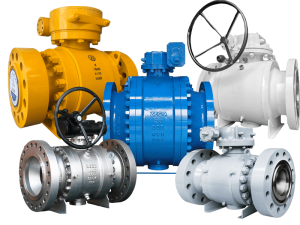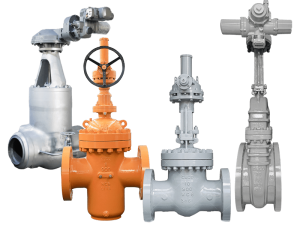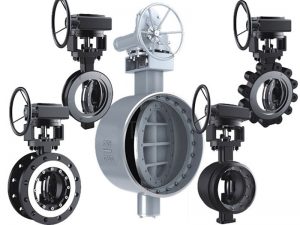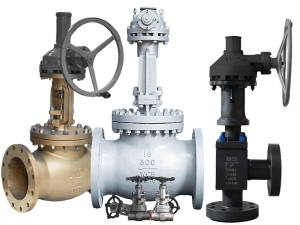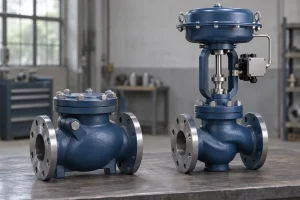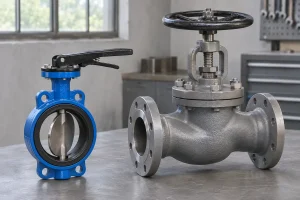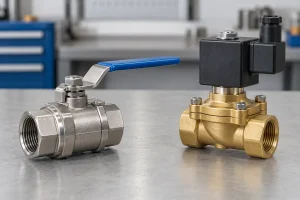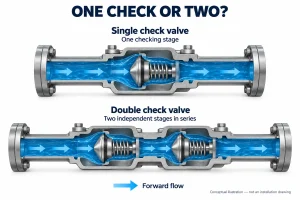
The difference in check valve and control valve is what each valve does: a check valve automatically prevents reverse flow, while a control valve adjusts flow to regulate a process. Use a check valve for backflow protection and a control valve to help maintain a target flow rate, pressure, temperature, or liquid level; many systems need both.
| Feature | Check valve | Control valve |
|---|---|---|
| Main purpose | Prevent reverse flow | Regulate a process variable by adjusting flow |
| Typical operation | Responds automatically to fluid forces, often with a spring or gravity assisting closure | An actuator moves the valve in response to a control signal |
| Position | Opening varies with operating conditions; no commanded setpoint | Can hold intermediate positions for modulating service |
| Key pressure checks | Cracking pressure, operating pressure drop, reverse pressure, and pressure-temperature rating | Available pressure drop, shutoff differential pressure, and pressure-temperature rating |
| Common designs | Swing, lift, ball, dual-plate, and axial check valves | Globe, characterized ball, and suitable butterfly valves |
| Typical cost pattern | Lower installed cost for comparable ordinary service | Higher installed cost when actuation and instrumentation are included |
| Typical application | Prevent reverse flow through a stopped pump | Adjust cooling-water flow to maintain process temperature |
| Important limitation | Does not regulate a selected process setpoint | Does not inherently provide automatic backflow protection |
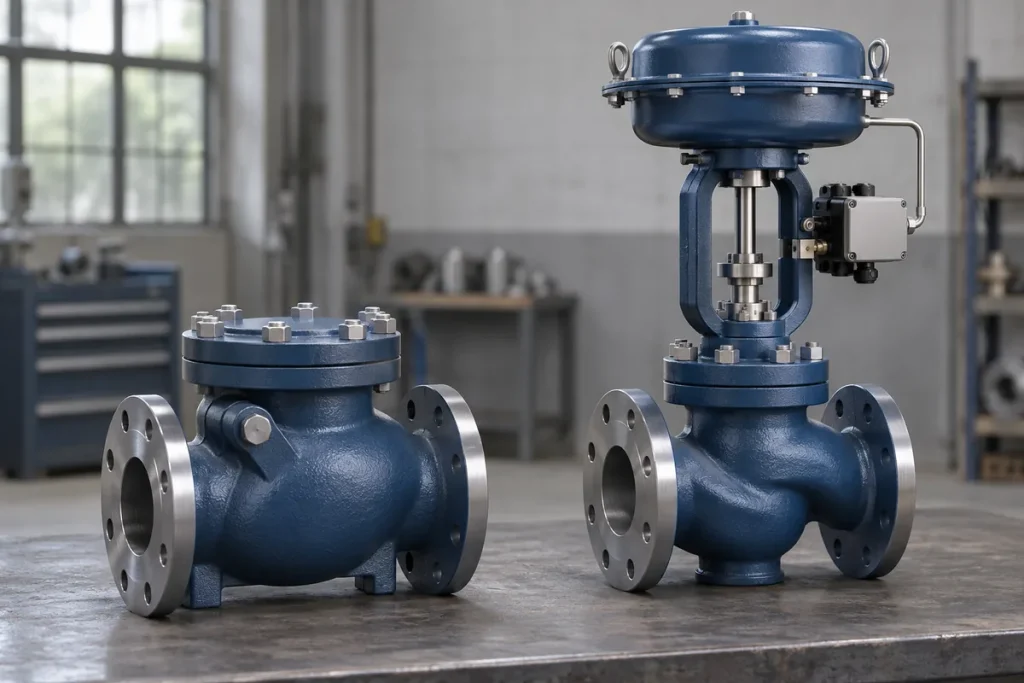
The comparison here covers conventional pipeline check valves and modulating industrial control valves. Specialized hydraulic cartridges and combined valve assemblies need their own datasheet review.
How Does a Check Valve Work?
A check valve opens when forward fluid forces overcome its closing forces and closes as those conditions change. It restricts reverse flow automatically, without a command from a controller.
Picture a pump sending water into an elevated tank. When the pump stops, the water may try to flow back through it. A correctly selected check valve closes to limit that return flow.
The moving part might be a hinged disc, a ball, or a guided poppet. Depending on the design, gravity, a spring, reverse pressure, or a combination helps bring it onto the seat.
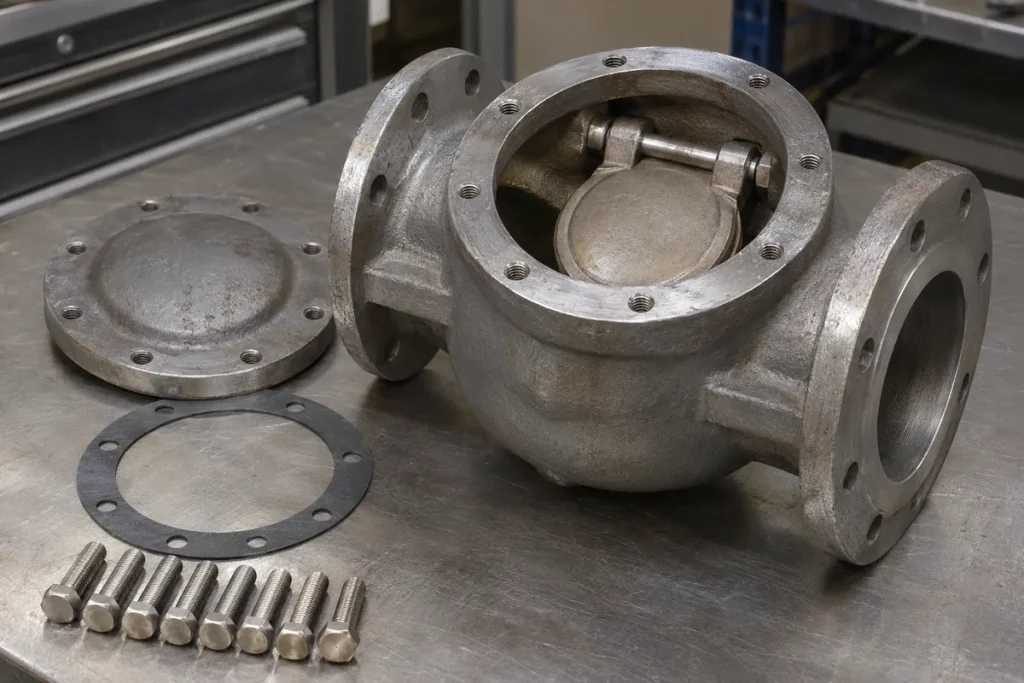
You will also see the terms non-return valve and one-way valve. In normal pipeline terminology, these describe the same function. Spirax Sarco’s check-valve guide uses “check” and “non-return” interchangeably.
A check valve can be partially open, depending on the flow conditions and its design. That opening is a response to the fluid forces, not a way to hold a selected flow or pressure setpoint.
Which Check Valve Designs Should You Compare?
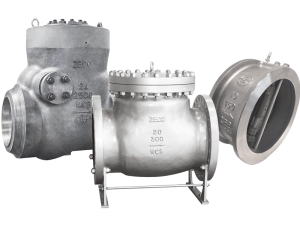
Compare designs using the fluid, flow range, permitted pressure loss, installation orientation, and required closing response. ZECO’s check valve range includes several designs, so start with the operating duty before narrowing the choice by pipe diameter.
- A swing check uses a hinged disc that opens with forward flow. When comparing products such as ZECO’s stainless steel swing check valve, review closing behavior for pump trips or rapid flow changes.
- A lift or piston check has a guided element that lifts off its seat. Confirm the permitted mounting orientation and suitability for the fluid.
- A ball check uses a ball that moves away from its seat during forward flow. Solids handling and sealing performance depend on the particular design.
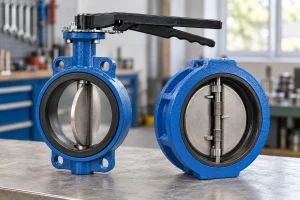
- Dual-plate and axial checks can use spring assistance and a shorter closing movement. Check the manufacturer’s dynamic performance data for your application.
A “non-slam” designation does not guarantee that the whole piping system is free from pressure surges. The valve’s closing response has to suit the system.
How Does a Control Valve Work?
A modulating control valve changes its flow passage in response to a command. In a feedback control loop, those adjustments help keep a measured process variable near its setpoint.
Consider a heat exchanger that needs more cooling water as the process heats up. A typical control loop works like this:
- A temperature sensor measures the process temperature.
- A controller compares the reading with the target.
- The controller sends a signal to the valve assembly.
- The actuator moves the valve to change cooling-water flow.
- The sensor measures the result, and the loop continues adjusting.
In this example, changing the water flow is how the complete loop controls temperature.
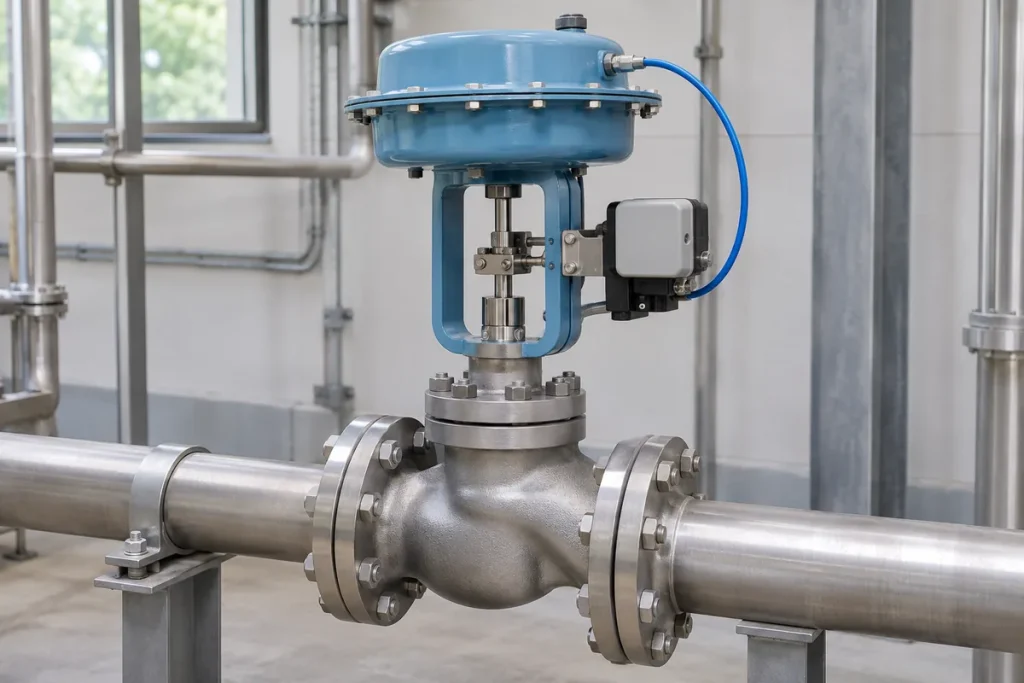
Common actuator options include pneumatic, electric, and hydraulic designs. A valve positioner helps the stem or shaft follow the commanded position, though some assemblies work without a separate positioner. Spirax Sarco explains the actuator and positioner arrangements, including how differential pressure affects positioning.
Globe control valves, characterized ball valves, and suitable butterfly valves all handle modulating duties. Their flow characteristics, materials, and operating limits determine suitability. If you’re considering a pneumatic ball-valve assembly, specify whether it needs on/off operation or continuous modulation; that affects the valve and accessory selection.
Self-operated regulators use process energy to regulate pressure. Spirax Sarco’s pressure-control guidance describes designs that need no external power. Their regulating function still differs from an ordinary check valve’s backflow function.
Check Valve vs Control Valve Pressure: Four Key Differences
A check valve responds to differential pressure and fluid forces; a control valve uses a variable restriction to influence flow and the process. For either type, distinguish the pressure needed for operation from the pressure the equipment can safely withstand.
1. Cracking Pressure Is an Opening Threshold
Cracking pressure is the differential pressure at which a check valve first begins to pass flow under specified conditions. It is not its full-flow pressure drop or its maximum working pressure.
Suppose a spring-loaded check valve has a specified cracking pressure of 0.3 bar. That tells you when opening begins. To find the pressure loss at your required flow rate, look at the manufacturer’s flow curve.
Swagelok’s explanation of cracking and resealing pressure makes the same distinction: first flow does not necessarily mean the valve is fully open. Check resealing behavior too, especially where very low reverse leakage matters.
2. Operating Pressure Drop Affects Capacity
Both valve types create pressure loss during forward flow. A control valve deliberately varies that restriction, while a check valve’s loss follows its opening and flow characteristics.
For control valves, the flow coefficient Cv connects flow capacity with differential pressure. Using the US definition, Cv describes water flow in US gallons per minute at a pressure drop of 1 psi under specified conditions. Spirax Sarco’s capacity guide explains Cv and the metric coefficient Kv.
For a simplified, turbulent, non-choked liquid-flow calculation:
Cv = Q × √(SG / ΔP)
Here, Q is flow in US gallons per minute, SG is liquid specific gravity relative to water, and ΔP is the pressure drop in psi.
For an illustrative water duty of 40 US gpm with 4 psi available across the valve:
Cv = 40 × √(1 / 4) = 20
This is the required coefficient at that operating point. The selected valve must also cover minimum and maximum flow with usable travel. Final sizing needs the manufacturer’s method, including relevant fitting and flow corrections; steam and gas require different calculations.
For a check valve, verify that the minimum operating flow is sufficient for stable operation. An oversized valve can chatter even when its connections match the pipe.
3. Pressure Rating and Shutoff Capability Are Different
The pressure-temperature rating describes the valve’s permitted pressure boundary conditions. Shutoff differential pressure describes the pressure difference the closed assembly must withstand while meeting its specified shutoff performance.
A control-valve body may have the correct rating while its actuator lacks enough force or torque to close against the maximum differential pressure. Check the body and actuator as a complete assembly.
For a check valve, confirm allowable reverse pressure, seat leakage, and temperature limits for the specified body, seat material, and seals.
A pressure-class label is not a universal pressure value. Read the applicable rating table at the actual service temperature.
4. Water Hammer and Cavitation Need Separate Checks
Water hammer comes from rapid changes in liquid velocity, while cavitation involves vapor bubbles forming and collapsing as local pressure changes. Neither problem is solved simply by choosing a valve category.
A check valve that closes after significant reverse flow develops can slam and contribute to a pressure surge. Spirax Sarco’s check-valve guide describes this risk. Spring-assisted or damped designs may reduce it when their closing behavior suits the system. ZECO’s guide to non-slam check valves provides more detail on spring-assisted designs.
Rapid control-valve closure can also generate a surge. Review closure time alongside pipe length, pump behavior, and the rest of the hydraulic system.
Cavitation is especially relevant when a control valve takes a large liquid pressure drop. Local pressure can fall below vapor pressure, then recover enough for the bubbles to collapse. Spirax Sarco’s water-system sizing guide explains the resulting noise, vibration, and potential trim damage.
These checks can lead to a different trim design, staged pressure reduction, revised operating conditions, or a system-level surge study.
Can a Check Valve Replace a Control Valve?
An ordinary check valve cannot replace a modulating control valve. A standard control valve also needs a separate assessment before you rely on it for automatic backflow protection, because its response mechanism and acceptance criteria differ.
A check valve has no commanded process setpoint. Changing its spring or relying on partial opening does not turn it into a dependable flow controller.
A control valve may offer a specified tight-shutoff option. That tells you about sealing performance, not whether it will close automatically when flow reverses. You also need to check its command, available power, closing time, and permitted flow direction.
Likewise, check valves are not automatically leak-free. Debris, seat wear, operating differential pressure, and the specified leakage allowance affect sealing.
A hydraulic flow-control valve can incorporate a bypass check valve, restricting flow in one direction while allowing a lower-resistance return path. The assembly combines two functions; the check element and the regulating element still have separate jobs.
When Does a System Need Both Valves?
A system needs both functions when it must regulate forward operation and prevent unwanted reverse flow. A pumped cooling-water branch is a useful example.
During operation, a control valve adjusts water flow to the heat exchanger. When the pump stops, a check valve helps prevent pressure elsewhere in the system from driving water backward through the idle pump.
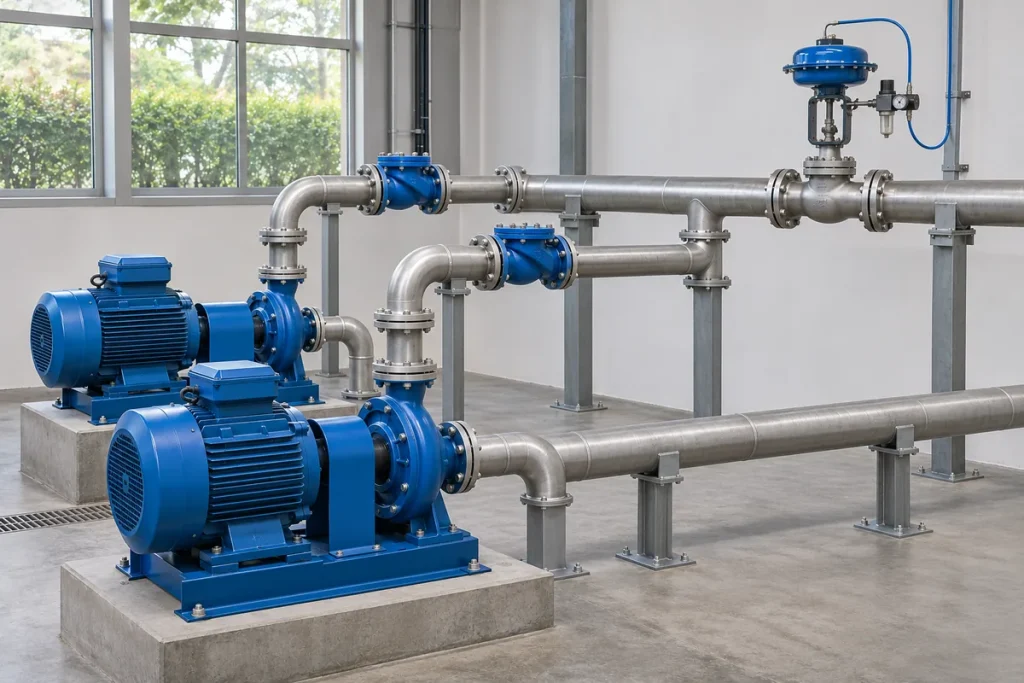
Other typical applications include:
- With parallel pumps, check valves limit reverse flow through idle branches; control valves may regulate individual process demands.
- When filling a tank, a control valve adjusts inflow from a level signal. A check valve provides backflow protection where the hydraulic arrangement requires it.
- In process supply lines, a control valve regulates the feed, while a separately selected check valve addresses possible reverse flow from the receiving system.
There is no universal rule that the check valve must sit immediately downstream of the control valve. Placement depends on the piping arrangement, equipment protection needs, maintenance access, and manufacturer instructions.
Need help specifying the valve?
Send ZECO your fluid, flow range, inlet and outlet pressures, temperature, and line size. Tell us whether you need backflow protection, modulating control, or both.
Check Valve vs Control Valve Cost: Compare Installed Cost
A conventional check valve usually costs less to install than a comparable automated control-valve assembly. Compare the complete equipment package and installation costs, then budget for energy, maintenance, and the consequences of failure.
What Drives the Purchase and Installation Price?
Size, material, pressure class, seat design, certifications, and service severity drive both valve prices. Actuation, instrumentation, and commissioning add further costs to a typical control-valve installation.
Ask suppliers to quote the same operating conditions and scope:
- For the check valve, include the specified design, connections, leakage requirements, and any damping arrangement.
- For the control valve, include the body and trim, actuator, required positioner and accessories, and testing.
- For installation, include pipework, access, instrument air or electrical work where needed, control-system integration, and commissioning.
A large alloy check valve can cost more than a small, simple control valve. There is no reliable fixed price ratio between the two categories.
I recommend getting current supplier quotations against one shared datasheet. That makes omissions, such as an actuator or commissioning work, easier to spot.
How Much Can Pressure Loss Add to Running Cost?
Extra valve pressure loss can increase pumping energy when the system must maintain the same liquid flow. The U.S. Department of Energy’s guidance on control-valve energy losses explains that the power needed to overcome pressure loss is proportional to flow rate and the size of that loss.
Consider an illustrative comparison with these assumptions:
- Water flow: 36 m³/h, equivalent to 0.01 m³/s.
- Additional valve pressure drop: 0.5 bar, equivalent to 50,000 Pa.
- Combined pump and motor efficiency: 70%.
- Operation: 6,000 hours per year.
- Electricity price: US$0.12 per kWh.
Additional electrical power = Q × ΔP / efficiency
That gives 0.01 × 50,000 / 0.70 = approximately 714 watts, or 0.714 kW.
Annual electricity cost is approximately 0.714 × 6,000 × US$0.12 = US$514.
The US$514 figure comes from the assumptions above; it is not a supplier quote or a measured saving. Actual performance depends on the pump, operating profile, and control strategy. A control valve also needs enough pressure drop to regulate effectively, which limits how far you can reduce that loss.
What Maintenance Should You Budget For?
Check valves need inspection for sealing and mechanical condition; control-valve assemblies also need attention to actuation and positioning. Maintenance frequency depends on service conditions and duty cycle.
For check valves, review seat wear, debris, sticking, spring condition, hinge wear where applicable, and evidence of chatter or slam.
For control valves, review packing leakage, trim erosion, actuator condition, air leaks, positioner performance, and loop behavior. Persistent oscillation may involve sizing, friction, or controller tuning, so replacing the valve is not always the answer.
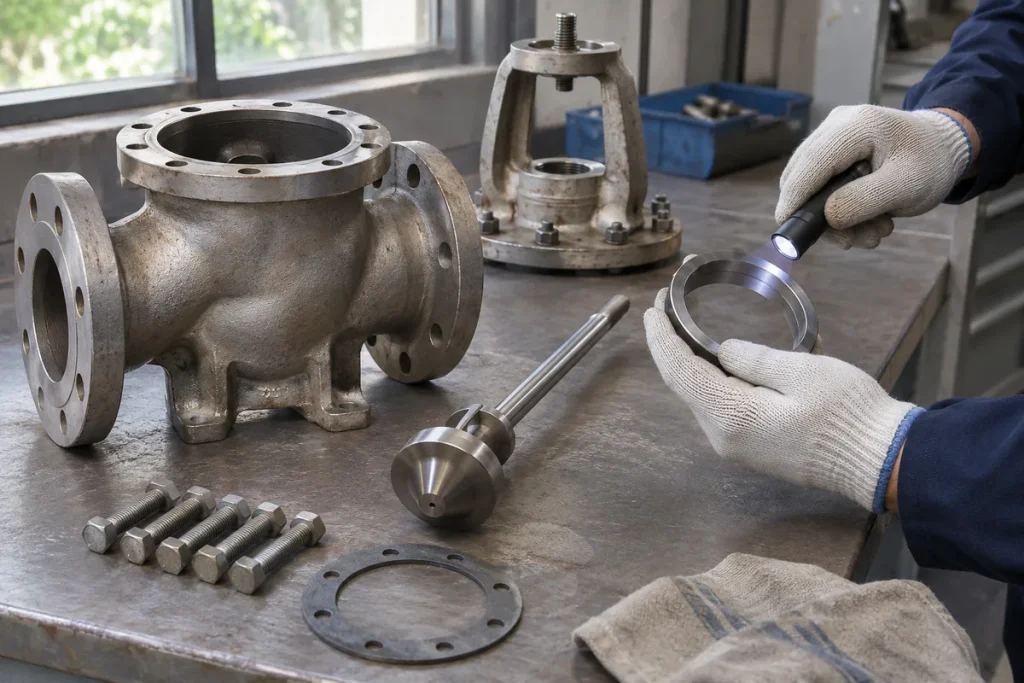
Include access and downtime in the estimate. A relatively inexpensive valve can be costly to service if the entire process must stop to reach it.
How to Select the Right Valve in Six Steps
Start with the required function, then verify performance across the full operating range. That gives you the information needed to compare size and price.
- Write down the job: reverse-flow prevention, process regulation, or both. Define the acceptable result in measurable terms.
- Describe the fluid, including composition, temperature, viscosity, solids, and compatibility requirements for wetted materials and seals.
- Provide minimum, normal, and maximum flow, upstream and downstream pressures, and expected startup or shutdown conditions.
- Check the sizing. For check valves, review cracking pressure, flow curves, stable operation, and closing response. For control valves, review Cv or Kv, travel, rangeability, and cavitation or noise limits.
- Specify what should happen after loss of power, instrument air, or signal. A control valve’s fail-open, fail-closed, or fail-in-place behavior must suit the process risk.
- Confirm installation orientation, connections, leakage requirements, maintenance access, and the manufacturer’s selection limits. Have the responsible engineer review duties where failure has significant consequences.
Record those requirements on the valve datasheet so each supplier quotes against the same duty.
Frequently Asked Questions
A check valve creates pressure loss but does not regulate downstream pressure or replace a relief valve. A control valve’s failure position and suitability for isolation depend on its complete design and installation.
Does a Check Valve Reduce Water Pressure?
Yes. A check valve causes pressure loss while water flows through it. The amount depends on flow rate, opening, and design; it does not maintain a chosen downstream pressure like a pressure regulator.
Is a Check Valve the Same as a Pressure-Relief Valve?
No. An ordinary check valve controls flow direction, while a pressure-relief valve opens to discharge fluid under specified overpressure conditions. A check valve’s cracking-pressure value does not qualify it as an overpressure protection device.
Can Either Valve Serve as Maintenance Isolation?
Do not assume either valve is suitable as the sole barrier for maintenance. Isolation depends on the equipment, leakage requirements, and site procedures. Spirax Sarco specifically cautions against using a check valve in place of an isolation valve to contain live steam.
Does a Control Valve Always Close When Power Fails?
No. Its failure position depends on the actuator, stored energy, accessories, and configuration. Confirm the response to each relevant failure condition; loss of electrical signal and loss of instrument air may not produce the same result.
Which Valve Should You Choose?
Choose a check valve when the requirement is automatic reverse-flow prevention. Choose a control valve when the process needs adjustable regulation, and specify both when the system requires both functions.
Get a quote for your valve package
Send your datasheet to ZECO with the quantity, material, pressure class, end connections, and any actuation requirements. Include the testing and documentation your project needs.
Before ordering, verify the flow range, pressure conditions, leakage limits, and shutdown behavior. Use the complete installed and operating costs to finish your comparison of check valve vs control valve.