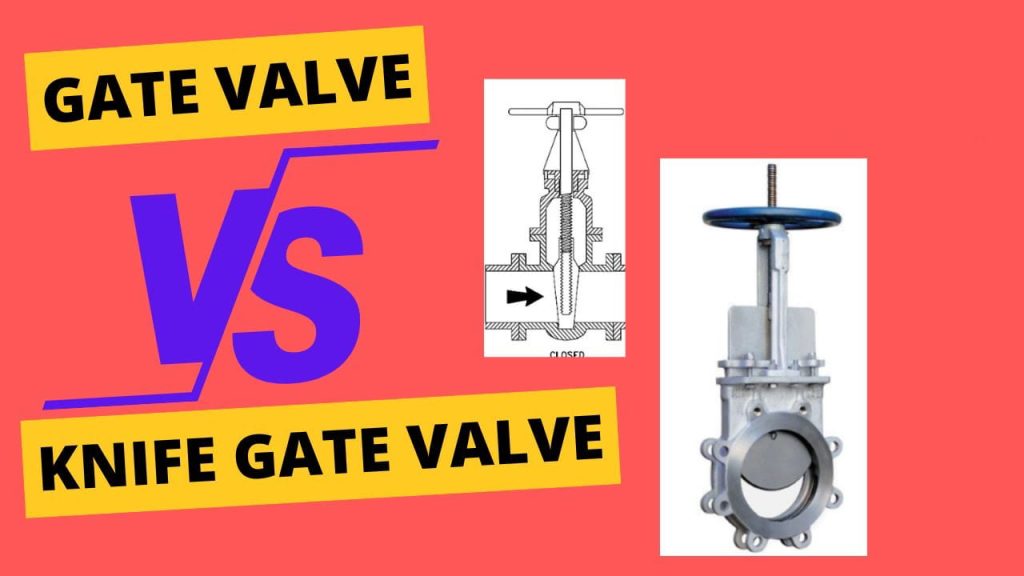
key Takeaways:
- Knife valves are designed for viscous fluids with suspended solids and work best under 150 PSI, while gate valves excel with clean fluids in high-pressure applications up to 600+ PSI.
- Choose knife valves for wastewater, slurries, and pulp applications where you need to cut through solids; choose gate valves for steam service, oil and gas pipelines, and clean water systems.
- Common mistakes include using knife valves for dry powders (which destroy the seals) and specifying gate valves for slurry service (where solids accumulate and prevent closure).
- Match the valve to your specific application by evaluating your media type, pressure requirements, space constraints, and total lifecycle costs—not just the purchase price.
So you’re trying to decide between a knife valve and a gate valve for your application?
Here’s the thing: while these valves might look similar at first glance, they’re actually designed for completely different jobs. And picking the wrong one? That can lead to leaks, maintenance headaches, and costly downtime.
I’ve seen plenty of engineers make this mistake. They assume that because both are linear motion valves used for on/off service, they’re basically interchangeable. Not even close.
The main difference? Knife valve vs gate valve comes down to what they’re designed to handle. Knife valves excel at cutting through thick, viscous media with suspended solids. Gate valves work best with clean fluids in high-pressure applications.
But that’s just scratching the surface. As a professional gate valve manufacturer, let me break down exactly when to use each type (and when NOT to).
What Makes Them Similar (And Why That’s Confusing)
First, let’s clear up why people get these valves mixed up in the first place.
Both valves share some key characteristics:
They’re both on/off valves. Neither is designed for throttling or flow control. When fluid pushes against a partially closed gate, you get vibration. That vibration gradually destroys the seat and disk.
They open and close slowly. This protects your system from water hammer – that destructive pressure surge that can blow out pipes and equipment.
They handle similar applications. You’ll find both types in:
- Wastewater treatment
- Mining operations
- Chemical processing
- Oil and gas facilities
But here’s where things get interesting…
Knife Valve vs Gate Valve: The Critical Differences
Let me show you what really sets these valves apart.
Design Standards: The Foundation of Everything
Gate valves follow ANSI standards. Knife valves? They’re built to TAPPI standards.
Why does this matter?
Because it affects everything about the valve:
- Dimensions
- Pressure ratings
- Testing requirements
- Material specifications
For example, that ANSI gate valve in your plant? It has to meet strict API leak-tightness standards. The knife valve down the hall? Different story entirely.
The Blade vs The Wedge: A World of Difference
Here’s where the rubber meets the road.
A knife valve features a sharpened blade specifically designed to slice through:
- Stringy pulp fibers
- Thick slurries
- Viscous sludge
- Suspended solids
I once visited a paper mill where they’d installed gate valves in their pulp lines. Big mistake. The stringy fibers would wrap around the wedge, preventing a proper seal. They were constantly dealing with leaks.
Gate valves use a solid wedge or parallel disks. This design creates a bubble-tight seal – perfect for clean fluids but terrible for anything with solids.
Size and Weight: Why It Matters More Than You Think
Let me give you some real numbers:
A 16″ knife valve typically weighs under 300 pounds.
A 16″ gate valve? You’re looking at 1,200+ pounds.
That’s a 4x difference!
This impacts:
- Installation costs
- Support structure requirements
- Maintenance procedures
- Replacement expenses
Pro Tip: If you’re retrofitting an existing system, the weight difference alone might make your decision for you.
Flow Direction: One-Way or Two-Way?
Gate valves are inherently bi-directional. Install them either way, and they’ll work fine.
Knife valves? Usually uni-directional (though some manufacturers offer bi-directional options at a premium).
This seems minor until you’re planning your piping layout. Trust me, I’ve seen entire systems redesigned because someone ordered the wrong valve type.
When to Choose a Knife Valve (And When to Run Away)
Knife valves shine in specific applications. But use them wrong, and you’ll regret it.
Perfect Applications for Knife Valves
Pulp and paper industry. This is literally what they were invented for. The sharp edge slices through fibrous material that would jam any other valve.
Wastewater treatment. Dealing with sludge, grit, and all sorts of nasty suspended solids? Knife valve all the way.
Mining slurries. Whether it’s coal slurry or mineral processing, these valves handle abrasive materials like champs.
Chemical processing. But only for viscous fluids or those with suspended solids. Clean chemicals? Look elsewhere.
When NOT to Use Knife Valves
Here’s where people mess up:
High-pressure applications. Most knife valves top out around 150 PSI. Need 600 PSI? You’re in gate valve territory.
Clean fluid service. Using a knife valve for clean water is like bringing a sledgehammer to hang a picture. It’ll work, but why?
Dry bulk powders. This surprises people, but knife valves actually perform poorly with dry materials. The powder packs into the soft seals, causing premature wear and leakage.
When Gate Valves Are Your Best Bet
Gate valves might be heavier and more expensive, but sometimes they’re exactly what you need.
Ideal Gate Valve Applications
High-pressure systems. We’re talking 600+ PSI applications where knife valves would fail catastrophically.
Steam service. The metal-to-metal seating handles high temperatures that would destroy knife valve elastomers.
Oil and gas pipelines. When you need absolute reliability and bi-directional flow, gate valves deliver.
Clean water systems. From municipal water supplies to industrial cooling systems, gate valves provide dependable shut-off.
Gate Valve Limitations
But they’re not perfect:
Terrible with slurries. Solids accumulate in the bottom cavity, preventing proper closure.
Slow operation. That multi-turn operation takes forever compared to quarter-turn valves.
Space hogs. A gate valve needs clearance equal to its diameter when fully open. Got height restrictions? Problem.
The Cost Factor: It’s Not What You Think
Everyone focuses on the purchase price. Big mistake.
Yes, knife valves typically cost 20% less than comparable gate valves. But that’s not the whole story.
Consider the total cost of ownership:
Installation costs. That 300-pound knife valve needs way less structural support than a 1,200-pound gate valve.
Maintenance frequency. In the right application, knife valves require less maintenance. In the wrong application? You’ll be replacing seals constantly.
Downtime costs. A knife valve in clean service might need seal replacement every six months. That same valve in proper slurry service? Years between maintenance.
Energy costs. The streamlined design of knife valves creates less pressure drop, potentially saving thousands in pumping costs.
I worked with a wastewater plant that switched from gate valves to knife valves in their sludge lines. Initial investment: $50,000. Annual maintenance savings: $75,000. The valves paid for themselves in 8 months.
Making the Right Choice Between Knife Valve and Gate Valve
Here’s my proven framework for choosing between these valves:
Step 1: Define Your Media
What exactly is flowing through this valve?
- Clean fluids → Gate valve
- Slurries/suspended solids → Knife valve
- Dry powders → Neither (consider a slide gate)
Step 2: Check Your Pressure
Operating pressure requirements:
- Under 150 PSI → Either valve works
- Over 150 PSI → Gate valve only
- Over 600 PSI → Specialized gate valve required
Step 3: Consider Your Space
Installation constraints:
- Limited headroom → Knife valve
- Weight restrictions → Knife valve
- No restrictions → Either works
Step 4: Evaluate Maintenance Access
How easy is it to service this valve?
- Easy access → Either valve
- Difficult access → Choose based on media (you want the most reliable option)
Step 5: Calculate True Costs
Don’t just compare purchase prices:
- Factor in installation
- Estimate maintenance frequency
- Consider energy costs
- Account for downtime impact
Common Mistakes to Avoid
I’ve seen these errors countless times. Learn from others’ expensive mistakes:
Mistake #1: Using knife valves for dry bulk materials. “But it has ‘knife’ in the name!” Doesn’t matter. Dry powders destroy the soft seals.
Mistake #2: Specifying gate valves for slurry service. That bottom pocket becomes a solid mass, preventing closure.
Mistake #3: Ignoring weight in retrofit projects. That existing pipe support might not handle a gate valve’s weight.
Mistake #4: Choosing based solely on price. The cheapest valve is rarely the most economical long-term.
Mistake #5: Overlooking maintenance requirements. Can your team actually service that valve in its installed location?
Emerging Trends and Technologies
The valve industry isn’t standing still. Here’s what’s coming:
Hybrid designs. Some manufacturers now offer valves combining knife valve simplicity with gate valve sealing technology.
Advanced materials. New elastomers and coatings extend seal life in challenging applications.
Smart valve technology. Position feedback, leak detection, and predictive maintenance capabilities.
Improved actuation. Faster operation while maintaining water hammer protection.
The Bottom Line
Choosing between a knife valve vs gate valve isn’t complicated once you understand their fundamental differences.
Knife valves excel when you need to:
- Cut through viscous media
- Handle suspended solids
- Minimize weight and space
- Keep costs down in low-pressure applications
Gate valves are your go-to when you need:
- High-pressure capability
- Bi-directional flow
- Metal-to-metal sealing
- Maximum reliability with clean fluids
The key? Match the valve to your specific application. Don’t try to force a square peg into a round hole.
Take the time to properly evaluate your needs using the framework I’ve outlined. Consider not just the media and pressure, but also installation constraints, maintenance requirements, and total lifecycle costs.
Remember: the right valve choice today prevents headaches (and expenses) tomorrow. Whether you choose a knife valve or gate valve, make sure it’s the right tool for your specific job.