Quick Summary:
Brass ball valves perform best for residential water, HVAC, and non-corrosive fluids at normal pressure and temperature. Stainless steel ball valves are required for chemicals, saltwater, high pressure, high heat, and lead-free/FDA compliance.
Watch for dezincification in brass and galvanic corrosion when mixing metals. Match the material to your fluid, environment, pressure, and total lifecycle cost.
Choosing between a brass vs stainless steel ball valve can feel confusing. Brass is cheaper, but you don’t want it to corrode, leak, or fail in a harsh environment. Stainless is tougher, but you don’t want to overspend on a simple water line. That anxiety is real—corrosion causes premature failure, high pressure can overwhelm weaker materials, and mixing metals can trigger galvanic corrosion.
The solution isn’t guesswork. You just need to compare fluid type, pressure, temperature, environment, cost, and compliance. In this guide, as a professional ball valve manufacturer, I will break down the key differences between brass and stainless steel ball valves, explains when brass is perfectly sufficient, and shows you when stainless steel is the only smart choice.
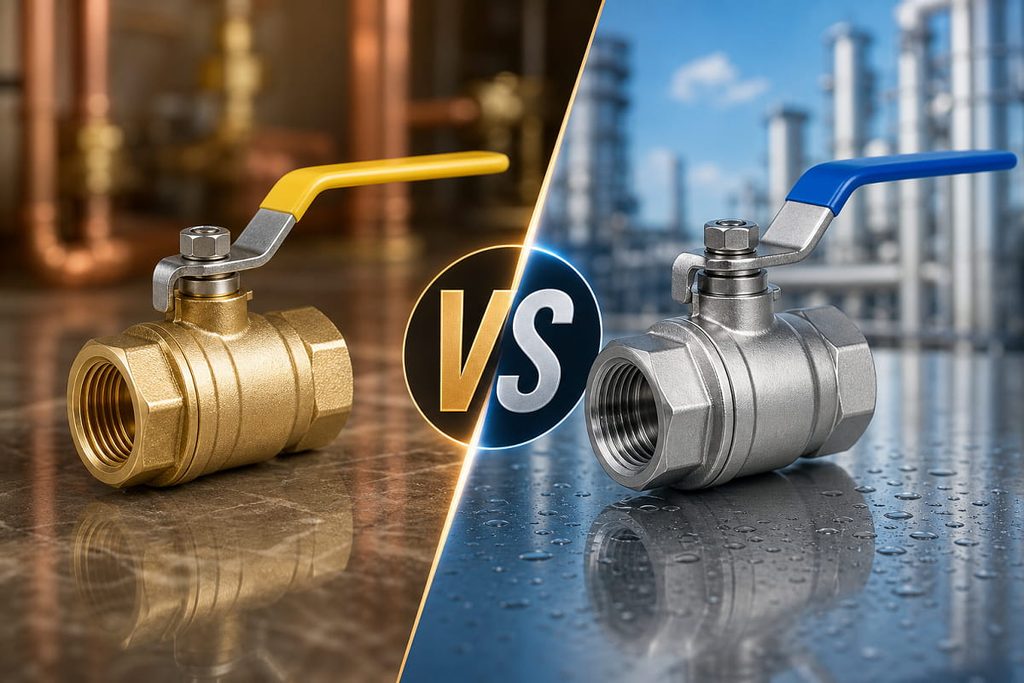
The Short Answer
Let me give you the quick version first.
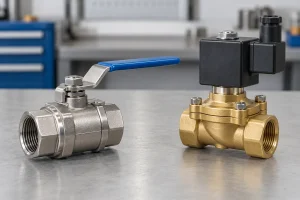
Brass ball valves are best for standard residential water, HVAC, irrigation, and low-to-moderate pressure systems. They’re cheaper, easy to install, and work great when the fluid is non-corrosive.
Stainless steel ball valves are built for tougher jobs. They handle high pressure, high temperature, and aggressive chemicals. They also last longer in marine environments and food or pharmaceutical applications.
The bottom line? If the stuff flowing through the pipe is harsh, choose stainless steel. If it’s regular water or air, brass is probably all you need.
Key Differences: Brass vs Stainless Steel Ball Valve
Let’s get into the specifics that actually matter. I’ve organized this so you can compare them side by side.
| Factor | Brass Ball Valve | Stainless Steel Ball Valve |
|---|---|---|
| Material | Copper + zinc alloy | Iron alloy + chromium + nickel |
| Corrosion resistance | Good for water and mild fluids | Excellent for chemicals, saltwater, acids |
| Pressure handling | Good for low-to-moderate pressure | Great for high pressure |
| Temperature range | Fine for normal use (up to about 200°F/93°C) | Handles much higher temps |
| Cost | Lower upfront cost | Higher upfront cost |
| Installation | Softer, easier to thread and seal | Harder, can be trickier to weld |
| Compliance | Must be certified lead-free for drinking water | Naturally meets most sanitary standards |
But there’s more to it. Let’s break down each one.
Corrosion Resistance: The Big Deal
Corrosion is the main reason valves fail early. And this is where stainless steel really shines.
Brass handles clean water beautifully. It’s been used in plumbing for years. But under certain conditions, brass can suffer from dezincification. That’s when zinc leaches out of the alloy, leaving the valve weak and porous.
You’re more likely to see this with:
- Water that’s high in chlorine
- Acidic or alkaline fluids
- Saltwater exposure
- Aggressive chemical environments
Stainless steel, especially 316 stainless steel, is a different animal. Chromium gives it a protective layer that resists rust. And 316 adds molybdenum, which makes it even more resistant to chlorides and saltwater.
That’s why you see stainless steel valves in:
- Marine operations
- Chemical processing plants
- Oil and gas systems
- Desalination facilities
If your valve will touch anything corrosive, don’t cheap out. Go stainless.
Pressure Ratings: Can Brass Keep Up?
For most home systems? Yes.
A standard brass ball valve is fine for typical residential water pressure. Most 1-inch brass valves come in around 600 PSI WOG. That’s plenty for a house.
But industrial systems are a different story.
Stainless steel ball valves typically have much higher pressure ratings. In many cases, they can handle well over 1,000 PSI. Some heavy-duty models go much higher.
So here’s my rule of thumb:
- Under 600 PSI with non-corrosive fluid? Brass is fine.
- Over 1,000 PSI? Use stainless steel.
- Any high-pressure steam or gas? Stainless steel, no question.
Temperature Resistance: Don’t Push Brass Too Far
Heat breaks down softer materials. And brass softens faster than stainless steel.
Brass ball valves are fine for normal hot water and HVAC systems. But once you get into high-temperature steam or process heat, stainless steel is the safer bet.
Stainless steel ball valves can handle significantly higher temperatures without losing strength. That makes them a natural fit for:
- Steam lines
- Boiler systems
- High-temp chemical processing
- Some food and beverage operations
If your system runs hot, and I mean really hot, don’t gamble with brass.
Cost: What You Pay vs. What You Get
Let’s talk money. Because that’s usually what makes people pause.
Brass ball valves are cheaper. There’s no way around that.
But here’s the thing: the price tag isn’t the whole story.
A stainless steel ball valve might cost two to three times more. But if it lasts 20 years in an environment where brass would fail in two? That’s actually the cheaper option in the long run.
Think about it this way:
- Brass = lower upfront cost, ideal for everyday jobs
- Stainless steel = higher upfront cost, longer lifespan in tough conditions
In my experience, people don’t regret buying stainless steel when the job needs it. They regret buying brass for an application that’s too harsh.
Pro Tip: Before you decide, ask yourself: How much will a valve failure cost? If leaks mean expensive downtime or damage, stainless steel is worth it.
Installation and Welding: Brass Is Easier
Brass is softer than stainless steel. That’s actually a good thing in some ways.
Softer metal makes the valve easier to:
- Machine
- Thread
- Weld
- Seal
Plumbers often prefer brass because it’s forgiving. You can get a nice, tight connection without fighting the material.
Stainless steel is harder and stronger. But that means it’s also more difficult to work with. Welding stainless often requires breaking down the oxide layer first. And threading it properly takes more effort.
So, if you’re doing a DIY install or a standard residential job, brass is usually the friendlier option.
What About Lead and Food Safety?
This is important. And I’m glad you’re thinking about it.
Brass can contain lead. That’s why you need to check for lead-free certification when using brass valves for drinking water.
In the U.S., plumbing parts that contact potable water must meet strict lead limits. Look for the label “lead-free” and certifications like NSF/ANSI 61.
For food and beverage, the rules are even stricter.
Stainless steel doesn’t have this problem. It isn’t made with lead, so it naturally meets most health and safety standards. That’s why stainless steel is the default choice in:
- Food processing plants
- Breweries
- Pharmaceutical production
- Drinking water systems where safety is critical
If you’re working with anything people will consume, I’d go stainless steel. Or at the very least, verified lead-free brass.
Galvanic Corrosion: Watch What You Connect
Here’s a detail that catches people off guard.
If you connect brass valves to stainless steel pipes, you can create something called galvanic corrosion.
That happens when two different metals touch each other in the presence of moisture. One metal starts corroding faster than normal to protect the other. Usually, the less noble metal gets eaten away.
Brass and stainless steel are different enough that this can become a problem in wet environments.
That’s why you need to think about the whole system, not just the valve.
If your pipes are stainless steel, a stainless steel valve is usually the safer match. If your pipes are copper or PEX, brass is often perfectly fine.
When to Choose Brass Ball Valves
Let’s keep it simple. Brass is your best bet when:
- The fluid is clean water, air, or non-corrosive gas
- You’re working on residential plumbing or HVAC
- Pressure and temperature are normal
- You want easier installation
- Budget is a priority
Common brass ball valve applications:
- Home water shutoffs
- Garden hoses
- Irrigation systems
- Heating and cooling lines
- Compressed air lines
- Light commercial plumbing
For these jobs, brass can last just as long as stainless steel. And it won’t break the bank.
When to Choose Stainless Steel Ball Valves
Go stainless when:
- The fluid is corrosive, acidic, or chemical-heavy
- The environment is salty or marine
- The pressure rating needs to be high
- Temperatures are extreme
- You need to meet food, beverage, or pharmaceutical safety standards
- Downtime is expensive and you need maximum reliability
Common stainless steel ball valve applications:
- Chemical plants
- Oil and gas operations
- Marine and offshore systems
- Breweries and food processing
- High-pressure steam lines
- Water treatment facilities
Stainless steel costs more upfront. But in these conditions, it often saves you money over time.
How I’d Decide in Four Steps
You want a clear process? Here you go.
Step 1: Identify the fluid. Is it water? Air? Chemical? Saltwater? If it’s corrosive, move to stainless.
Step 2: Check pressure and temperature. Review your system specs. If you’re running high pressure or high heat, brass may not cut it.
Step 3: Consider the environment. Will the valve sit outdoors, underground, or near saltwater? Corrosive environments demand stainless steel.
Step 4: Look at total cost. Don’t just compare price tags. Factor in installation, maintenance, downtime, and lifespan.
That simple framework will get you to the right answer.
Common Ball Valve Mistakes I See
People mess this up all the time. Here are the biggest mistakes to avoid.
Mistake 1: Using brass in a corrosive system. Brass isn’t invincible. If you feed it aggressive chemicals, it will fail. Use stainless steel when the fluid is harsh.
Mistake 2: Ignoring lead-free rules. If you’re installing valves on drinking water, lead-free isn’t optional. Check the certification.
Mistake 3: Mixing metals carelessly. Again, galvanic corrosion is real. Make sure the valve material works with your pipe material and environment.
Mistake 4: Paying for stainless steel when you don’t need it. Stainless is great. But you don’t need it for simple home water lines. Don’t overspend if the conditions don’t require it.
Mistake 5: Forgetting about seals. Even the best valve body won’t help if the soft seals aren’t rated for your temperature or chemical exposure. In extreme settings, you may need special seal material too.
FAQ: Quick Answers to Common Questions
Can I use a brass ball valve for drinking water? Only if it’s certified lead-free and meets NSF/ANSI 61 standards. Check the label.
Do stainless steel ball valves rust? Stainless steel resists rust far better than brass. Grade 316 is especially good in marine environments.
Are brass ball valves cheaper than stainless steel? Yes, brass has a lower upfront cost. But stainless steel can offer better long-term value in demanding conditions.
Which is stronger? Stainless steel. It handles more pressure and temperature without deforming.
Is brass easier to install? Yes. Brass is softer and easier to thread, weld, and seal.
Final Thoughts
I know this is a lot. But choosing between these two doesn’t have to be overwhelming.
Use brass for everyday water, HVAC, and low-pressure jobs. Use stainless steel when you need toughness, corrosion resistance, or compliance with strict standards.
At the end of the day, the right choice always comes down to your specific application. Match the material to the fluid, pressure, temperature, and environment.
That’s the honest answer. And it’s exactly what makes this brass vs stainless steel ball valve decision much easier once you stop looking at price tags and start looking at the job.