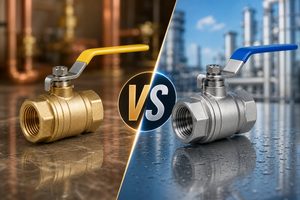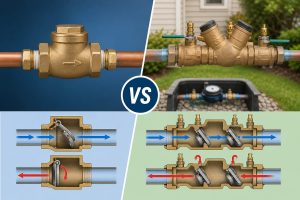
Quick Summary:
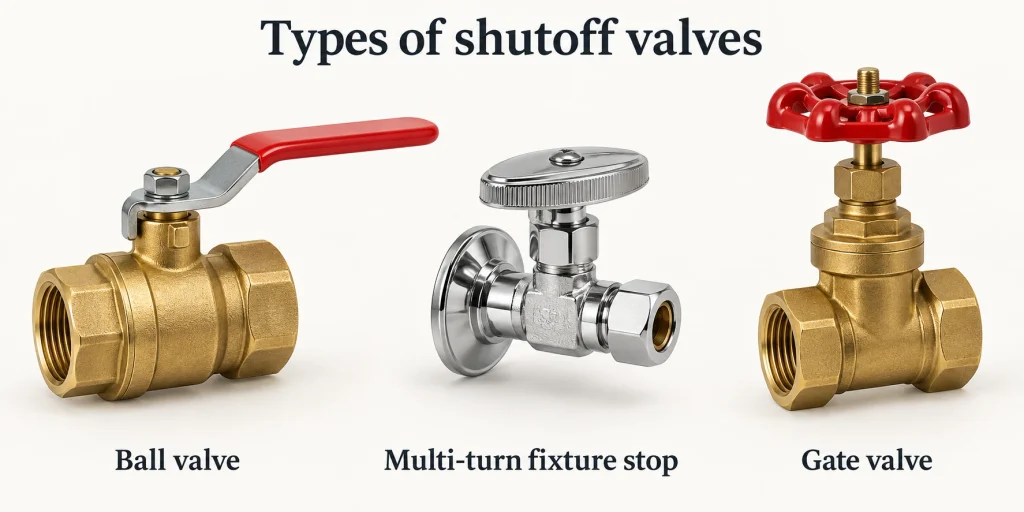
A ball valve is one type of shutoff valve. It uses a rotating ball and usually closes with a 90-degree turn, while a multi-turn fixture stop uses a threaded stem and a washer or seal. Gate valves use a gate that lowers across the flow path.
- For many main and branch isolation tasks, a properly rated full-port ball valve can provide simple operation and low flow restriction. A compatible fixture stop is often suitable for individual sinks, toilets, or appliances.
- Before buying, confirm the service, pressure and temperature limits, pipe and port size, connection method, materials, certification, handle clearance, and installation space. Use a valve specifically designed for regulation when continuous flow adjustment is required, and isolate the supply and relieve pressure before removing a valve.
Choosing between a ball valve and another shutoff valve can be confusing, especially when a leaking faucet connector, crowded cabinet, or faulty main valve requires quick isolation. The term “shutoff valve” describes a valve’s function, while “ball valve” describes its mechanism, so they are not competing categories. The wrong replacement may fail to match the pipe, service ratings, connection method, flow requirements, handle clearance, or local requirements.
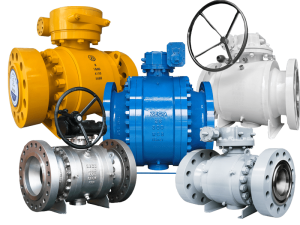
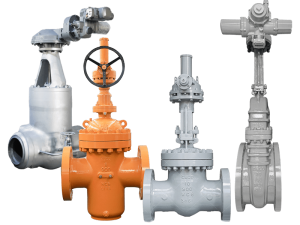
In this guide, as a professional ball valve manufacturer, I will compare ball valves, multi-turn fixture stops, and gate valves, explains quarter-turn operation, flow restriction, maintenance, throttling limits, and installed cost, then outlines how to select a valve for main lines, branches, sinks, toilets, and appliances.
| Feature | Ball valve | Multi-turn fixture stop | Gate valve |
|---|---|---|---|
| Closing mechanism | A rotating ball seals against seats | A threaded stem presses a washer or seal onto a seat | A gate lowers across the flow path |
| Operation | Quarter-turn: 90 degrees | Several handle rotations | Several handwheel rotations |
| Typical household use | Main, branch, and fixture isolation | Faucet and toilet supply connections | Main or branch isolation in some existing systems |
| Flow when fully open | Low restriction with a full-port model | Depends on internal passage and outlet size | Low restriction with an unobstructed gate |
| Continuous flow adjustment | Use a model specifically designed for throttling | Only when the manufacturer permits it | Generally unsuitable |
| Main selection concern | Correct ratings, port size, and handle clearance | Connection compatibility and serviceable seals | Operating condition and complete closure |
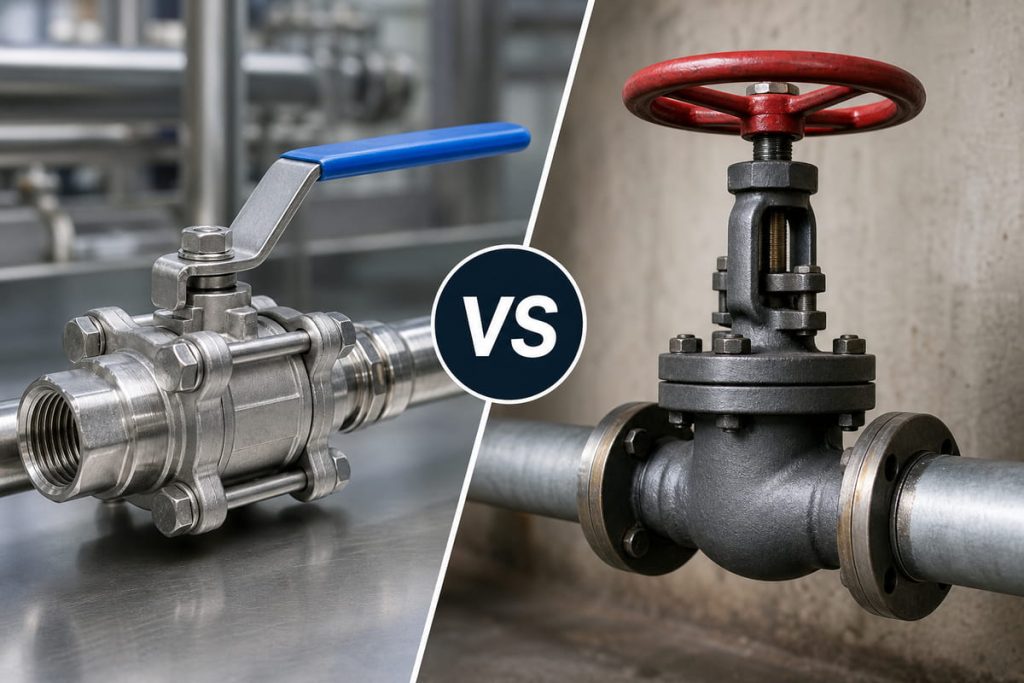
Actual Difference Between Ball valve and ShutOff Valve
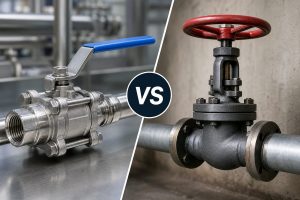
“Shutoff valve” describes what a valve does. “Ball valve” describes how it works. A shutoff valve stops the supply to a pipe, appliance, fixture, or section of a plumbing system.
Think of “vehicle” and “pickup truck.” One is the category. The other is a specific design within it.
The same relationship applies here. Ball valves, gate valves, and many fixture stops can all provide water isolation.
The confusion usually starts at the hardware store. Someone calls the small valve under a sink a “shutoff valve,” then calls the lever-operated valve near the water meter a “ball valve.” Both descriptions can be correct.
But they don’t describe competing categories.
If you’re replacing a valve, ask a more useful question: Which shutoff design fits this location, connection, and water service? That question gets you closer to the right purchase.
Working Principle Comparison
How Does a Ball Valve Work?
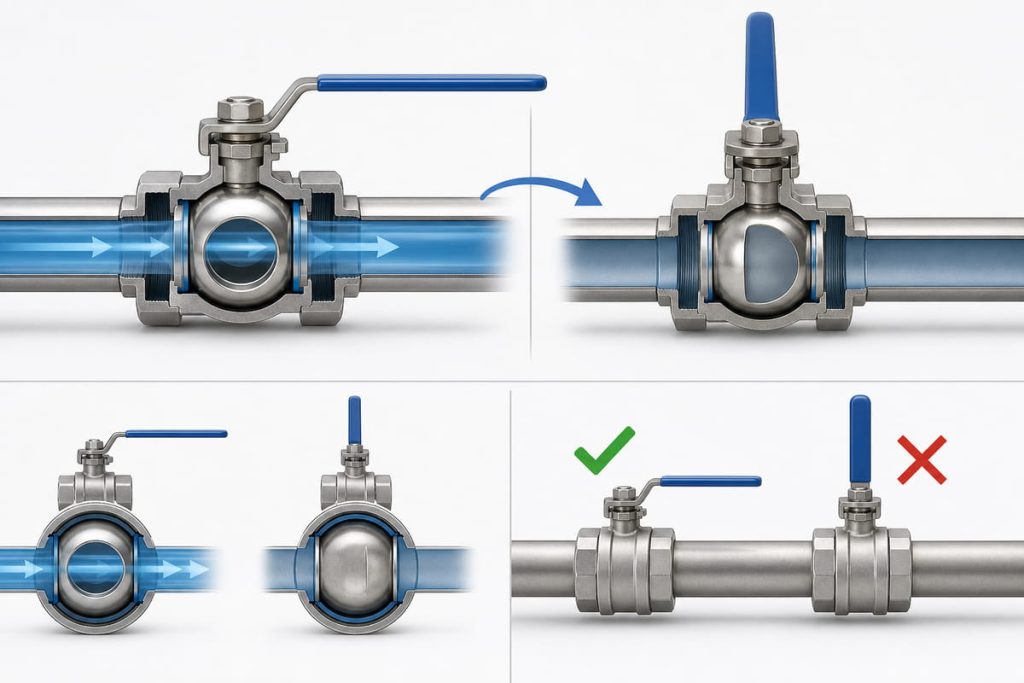
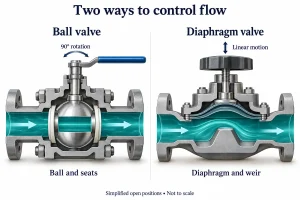
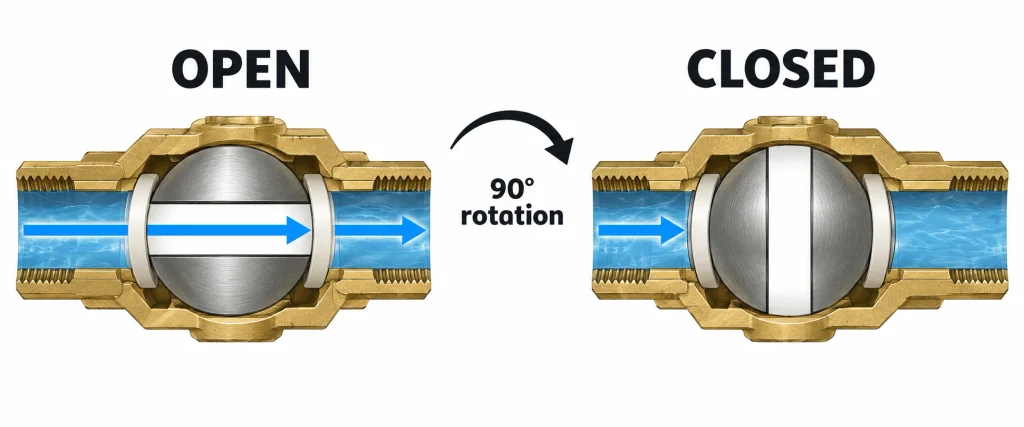
A ball valve opens and closes by rotating a ball with a hole through its center. When that hole lines up with the pipe, water passes through; turning the ball 90 degrees blocks the passage.
On a conventional two-way ball valve with a correctly fitted lever:
- Handle parallel to the pipe: Usually open.
- Handle perpendicular to the pipe: Usually closed.
Check the valve’s markings and instructions, especially with unusual handles or actuators. Handle position indicates the intended setting; it doesn’t prove that a damaged valve has stopped the water.
The ball seals against seats inside the body. For example, BrassCraft’s quarter-turn ball stops use a brass ball with PTFE seats, plus O-rings around the stem.
That construction makes an important point: ball valves still contain seals that can wear or become damaged. They are useful isolation devices, but “quarter-turn” doesn’t mean “incapable of leaking.”
How Does a Traditional Fixture Stop Work?
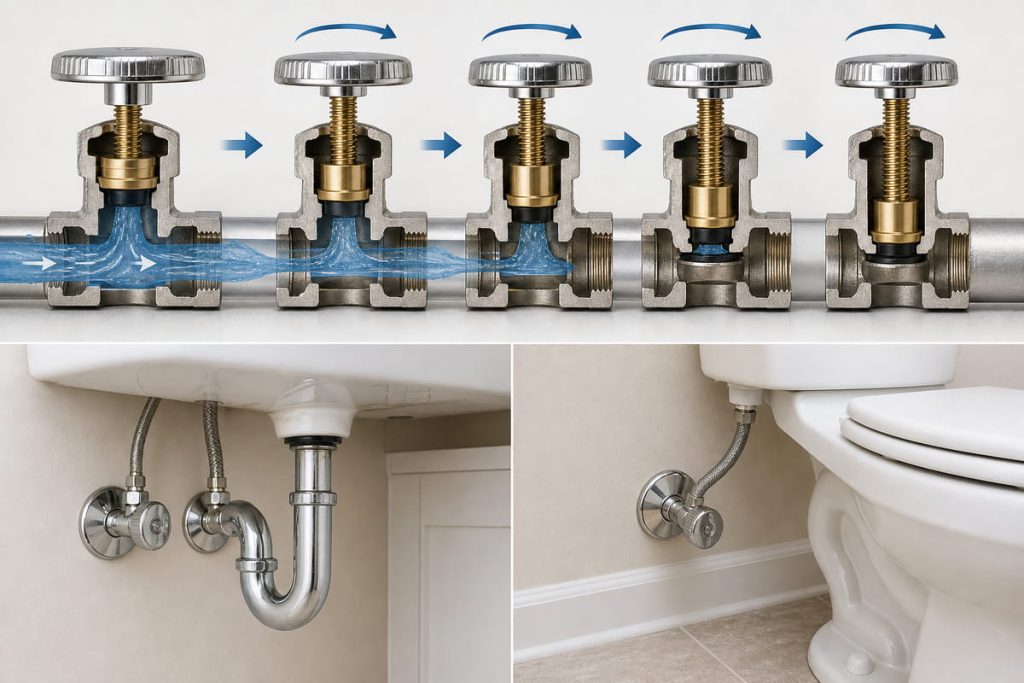
A typical multi-turn fixture stop uses a threaded stem to move a washer or sealing element against a seat. Turning the handle closes the opening gradually until water stops flowing.
You’ll often find these valves beneath sinks or beside toilets. Their job is convenient: isolate one fixture while keeping water available elsewhere.
Some models have replaceable washers, packing, or stem assemblies. That can make repair worthwhile when the body and connections remain sound and the correct parts are available.
Is an Angle Stop Different From a Ball Valve?
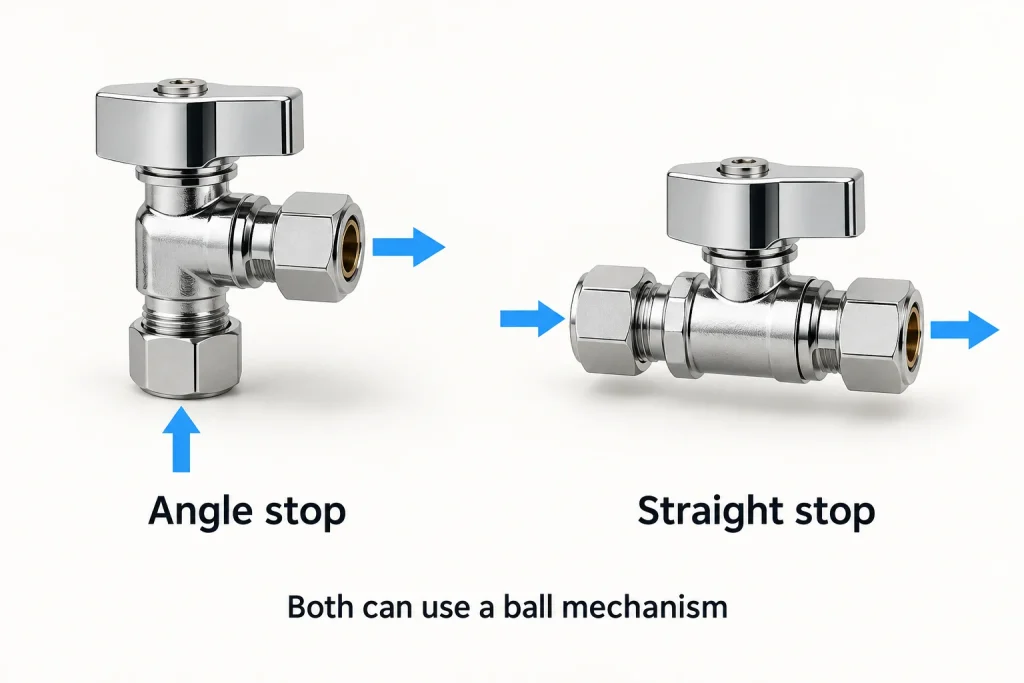
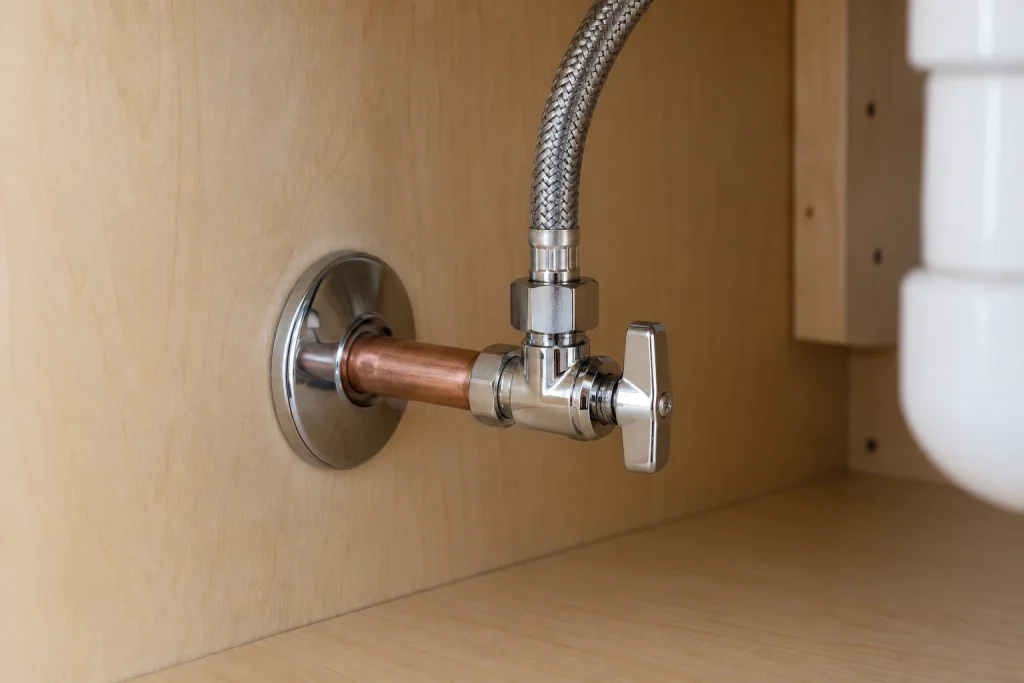
An angle stop can also be a ball valve. “Angle” describes the shape of the flow path, while “ball” describes the internal mechanism.
An angle stop changes the water’s direction by 90 degrees. A straight stop keeps the inlet and outlet aligned.
Either shape can be offered with different operating mechanisms. BrassCraft, for example, lists both straight and angle configurations in its ball-stop range.
This matters when shopping. You may need a quarter-turn angle stop under a sink, rather than a large inline valve with a long lever. And a quarter-turn handle alone doesn’t establish that the valve uses a ball; check the product description.
Five Differences That Matter When Choosing a Valve
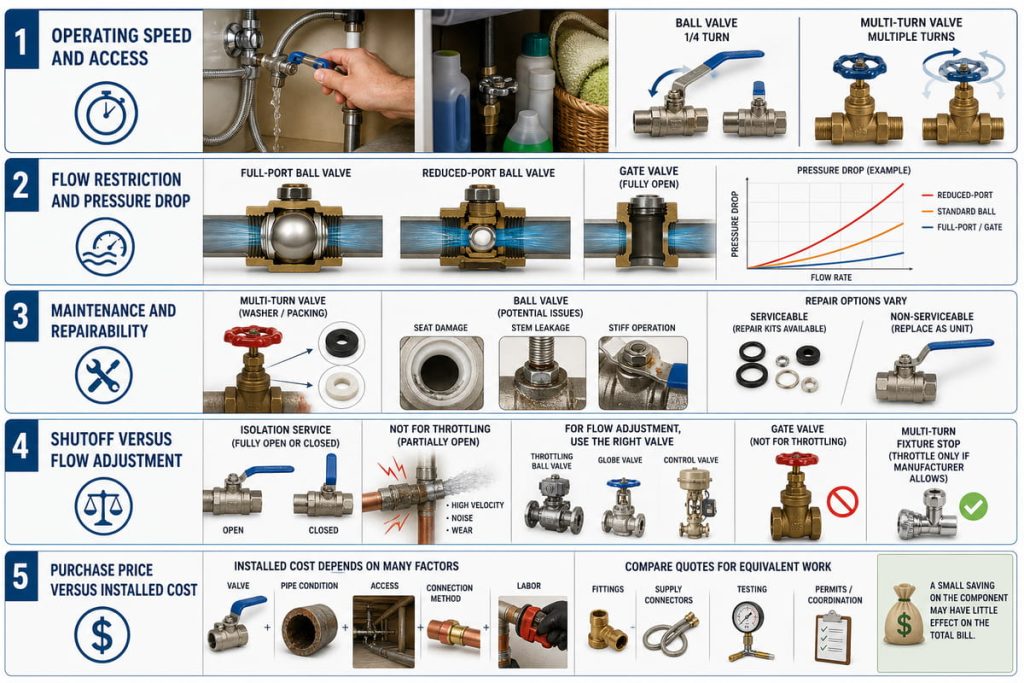
The useful comparisons are operating speed, flow restriction, serviceability, throttling capability, and installed cost. These affect everyday use more than the generic label “shutoff.”
1. Operating Speed and Access
A ball valve reaches its open or closed position in a quarter-turn, while a multi-turn valve needs several rotations. That shorter movement can help when you need to isolate a leaking supply quickly.
Picture a leaking faucet connector inside a crowded vanity. An accessible handle is much easier to use than one hidden behind storage or pressed against the cabinet wall.
Check the handle’s entire travel before choosing a replacement. The valve body might fit perfectly while the lever hits a nearby pipe.
During normal operation, close valves smoothly. Snapping a valve shut against moving water can contribute to water hammer, a pressure surge that may produce banging pipes.
2. Flow Restriction and Pressure Drop
A full-port ball valve has a passage approximately matching the connected pipe’s bore, which helps limit pressure drop when fully open. A reduced-port model has a smaller internal opening and generally creates more restriction under comparable conditions.
Both may connect to the same nominal pipe size.
That’s why checking the connection size alone isn’t enough. If maintaining flow matters, look for full port or full bore, then check the manufacturer’s flow data.
Gate valves can also provide low restriction when fully open. There is no reliable blanket rule that every ball valve passes more water than every gate valve.
For a detailed comparison, use the valve’s flow coefficient, often called Cv, at the relevant operating position. Compare actual models under the same conditions.
3. Maintenance and Repairability
Ball valves avoid the repeated screw-down action of a traditional washer-style stop, but both designs can develop leaks. Water quality, debris, temperature, installation, and operating frequency all affect service life.
A multi-turn valve may need a washer or packing replacement. A ball valve may suffer seat damage, stem leakage, or stiff operation.
Repair options depend on the product. Some valves have manufacturer-approved service parts; others are intended to be replaced as a complete unit.
I wouldn’t choose a valve based on a generic promise that it will last a fixed number of years. A documented specification and suitable application are stronger buying criteria.
4. Shutoff Versus Flow Adjustment
Ordinary household isolation ball valves are generally intended for fully open or fully closed service. Don’t assume they are suitable for continuous throttling simply because the handle can stop halfway.
Partially open operation can create high local velocities, noise, and wear, depending on the valve and operating conditions.
There are purpose-built exceptions. Emerson’s throttling ball valves demonstrate that ball mechanisms can be engineered for flow control.
A globe valve or another specified control valve may suit an adjustment task. Gate valves are generally unsuitable for throttling, and a multi-turn fixture stop should only be used that way when its manufacturer allows it.
Choose the function first. Then choose the valve designed to perform it.
5. Purchase Price Versus Installed Cost
The installed cost depends on the valve, pipe condition, access, connection method, and labor. Valve type alone doesn’t establish which option will be cheaper.
Replacing an accessible fixture stop is a different job from replacing a main valve that requires an upstream shutdown and pipe alterations.
Compare quotes for equivalent work. Check whether they include fittings, supply connectors, testing, and any required permits or utility coordination.
A small saving on the component may have little effect on the total bill.
Which Shutoff Valve Should You Choose?
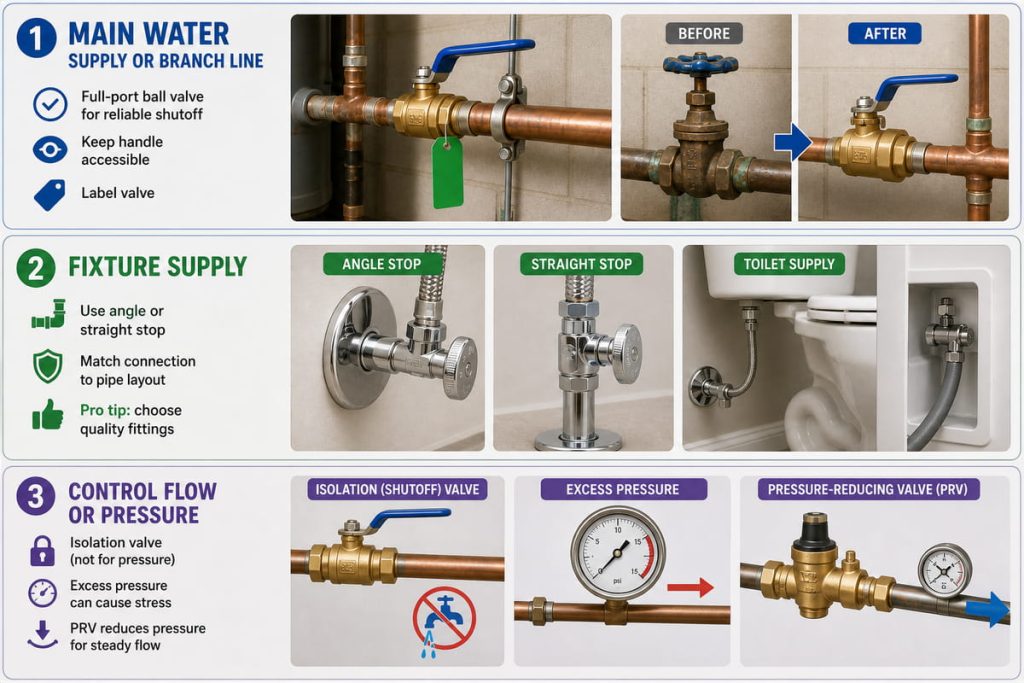
For many household applications, a properly rated ball valve is a strong option for main or branch isolation, and a suitable quarter-turn fixture stop is convenient at a sink or toilet. The final choice must match the plumbing layout and local requirements.
For a Main Water Supply or Branch Line
A full-port ball valve is often a sensible choice because it combines simple operation with low flow restriction. Select a model approved for the water service and sized for the existing system.
Make sure the handle remains accessible after installation. Label the valve so someone unfamiliar with the home can find it.
For example, replacing a faulty gate valve in a utility room with a suitable ball valve can make its intended open or closed position easier to identify. The plumber still needs to confirm compatibility and arrange reliable upstream isolation.
For a Sink, Toilet, or Appliance
A fixture stop should match both the incoming pipe and the outgoing supply connector. Choose angle or straight geometry according to the pipe layout, then select the operating mechanism.
A supply pipe emerging from the wall often suits an angle stop. A pipe rising from the floor may suit a straight stop, depending on the fixture connection.
Pro tip: Record the existing valve’s markings and photograph both connections before shopping. Similar-looking fittings can use different sizing conventions or sealing methods.
For Controlled Flow or Pressure
Use a valve specifically designed for regulation when you need stable adjustment. An isolation valve’s ability to reduce flow doesn’t make it a pressure regulator.
For example, partially closing a shutoff may reduce flow while a faucet runs, but it doesn’t reliably reduce downstream static pressure once the faucet closes. Excess supply pressure calls for an appropriately selected pressure-reducing valve and system assessment.
Check These Six Details Before Buying Valves
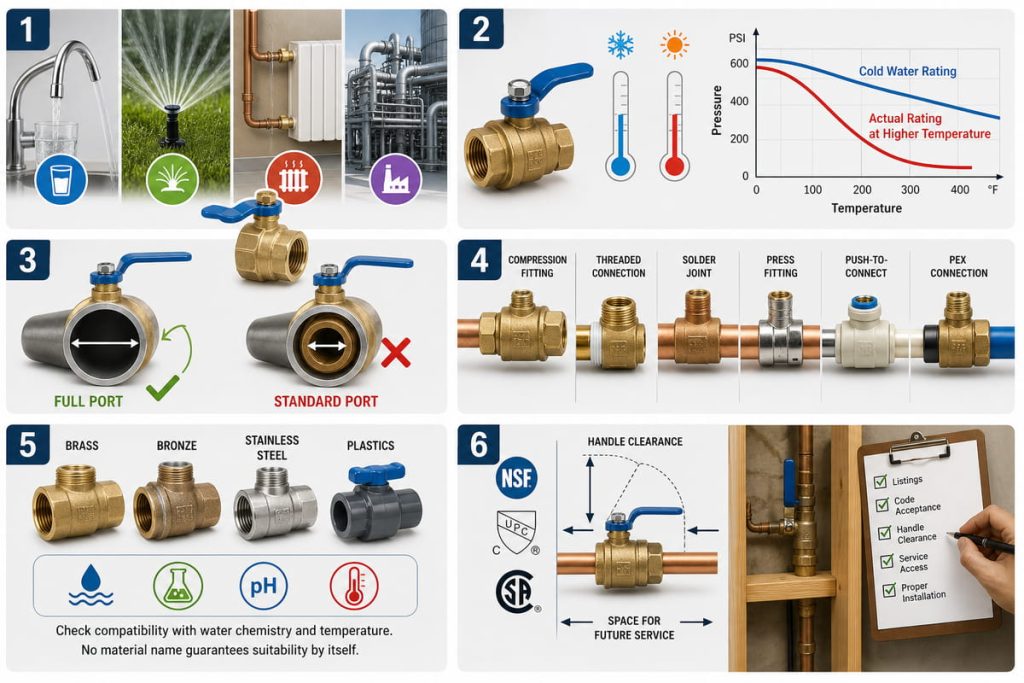
The right replacement must match the service, ratings, dimensions, connections, materials, and installation space. Work through these checks before comparing brands or prices.
- Water service. Confirm whether the valve is for potable water, irrigation, heating, or another application. Approval for one service doesn’t automatically cover another.
- Pressure and temperature together. Read the pressure-temperature limits for the exact model. A cold-water pressure rating doesn’t establish the allowable pressure at a higher temperature.
- Pipe size and port size. Match the nominal connection size and assess whether a full-port design is needed. A valve’s external appearance doesn’t reveal its internal restriction.
- Connection method. Compression fittings, threaded connections, solder joints, press fittings, push-to-connect fittings, and PEX connections have different installation requirements. Use the method approved for the pipe and location.
- Body and seal materials. Brass, bronze, stainless steel, and plastics suit different conditions. Check compatibility with the water chemistry and temperature; no material name guarantees suitability by itself.
- Certification and access. Confirm the required listings, local code acceptance, handle clearance, and space for future service. An approved product still needs correct installation.
There is real manufacturer data behind the temperature check. NIBCO’s 4770 CPVC ball-valve listing specifies 150 psi at 73°F and 45 psi at 180°F. Those figures apply to that product, but they illustrate why you must read pressure and temperature together.
For U.S. drinking-water applications, distinguish NSF/ANSI/CAN 61, which addresses health effects of materials in contact with drinking water, from NSF/ANSI/CAN 372, which addresses lead content.
NSF’s explanation of drinking-water requirements describes the applicable “lead free” limit as a weighted average of 0.25% across wetted surfaces for covered plumbing products. “Lead free” doesn’t mean every component contains zero lead.
Verify the exact model’s certification listing. A familiar brand name or a brass-colored body isn’t enough.
How to Check an Existing Shutoff Valve
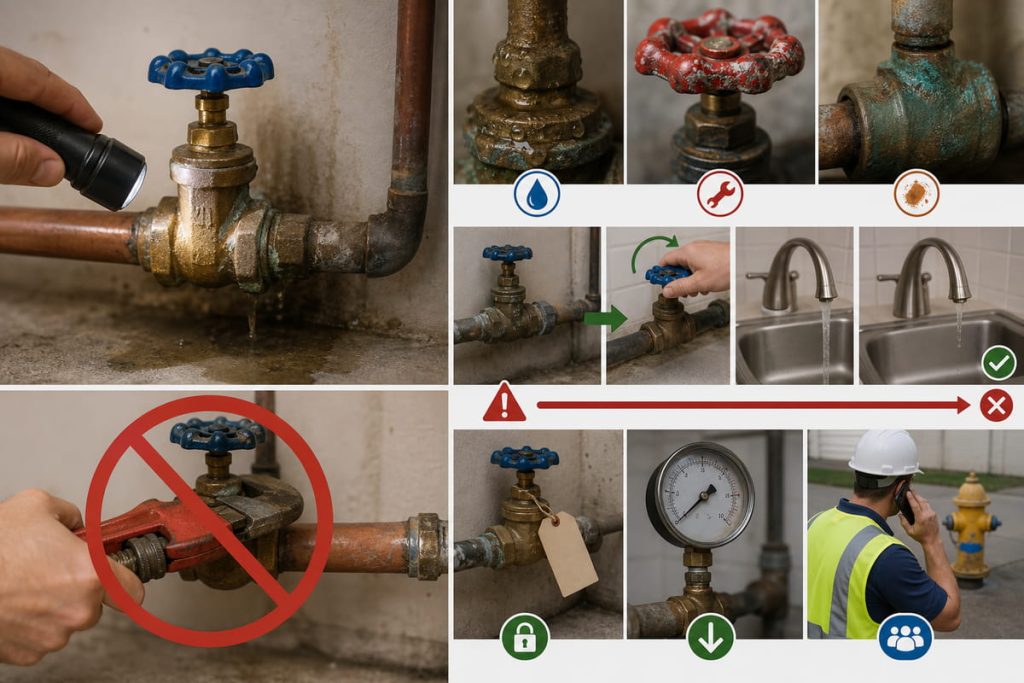
A useful shutoff valve must operate as intended, stop the supply, and remain free of external leaks. Inspect its condition and follow the manufacturer’s maintenance guidance rather than relying on age alone.
Look for moisture around the stem, body, and joints. Note corrosion, damaged handles, or increasing resistance during operation.
If you perform an operational check, identify an available upstream shutoff first. Close the valve gently and check a suitable downstream outlet; residual water may drain briefly, but continuing supply suggests incomplete isolation or another feed.
Don’t force a seized handle with extra leverage. A broken stem or disturbed connection can turn an inspection into a leak.
Before loosening or removing any valve, isolate the supply and relieve pressure. Main-valve work may require a plumber and utility coordination, especially when the upstream valve belongs to the water provider.
Frequently Asked Questions
Most replacement decisions come down to fit, condition, and intended use. These answers resolve the common points that product labels can leave unclear.
Can You Replace a Gate Valve With a Ball Valve?
Yes, when the replacement matches the pipe, service conditions, and applicable requirements. The installation may need pipe adjustments because valve dimensions and connection methods differ.
For a main water shutoff, arrange the upstream shutdown before starting work. A valve that won’t close cannot provide its own isolation for replacement.
Is Every Quarter-Turn Valve a Ball Valve?
No. Quarter-turn describes the operating movement, and several internal designs use it. Butterfly valves and certain fixture-stop mechanisms also operate through a quarter-turn.
Read the model’s technical description if you specifically want a ball mechanism.
Do Ball Valves Always Seal Better?
No valve design guarantees better sealing in every application. Seat design, pressure, debris, wear, and installation all matter.
A correctly selected ball valve can provide dependable isolation. A damaged one may still pass water even with its handle in the closed position.
Should You Replace a Working Multi-Turn Stop?
A working, correctly specified multi-turn stop doesn’t automatically need replacement. Prioritize valves that leak, bind, fail to isolate, or no longer suit the installation.
When a fixture is already being replaced, it can be convenient to assess the stop and supply connector at the same time.
Choose the Valve That Fits the Job
Choose a properly rated full-port ball valve for many main and branch isolation tasks, and a compatible fixture stop for individual sinks, toilets, or appliances. Use a purpose-built control valve when the job requires regulation.
Before buying, confirm the connection, service ratings, certification, and access. Those details determine whether the valve will work in your system.
Understanding the mechanism and matching it to the application gives you a useful answer to Ball valve vs shut off valve.