Quick Summary:
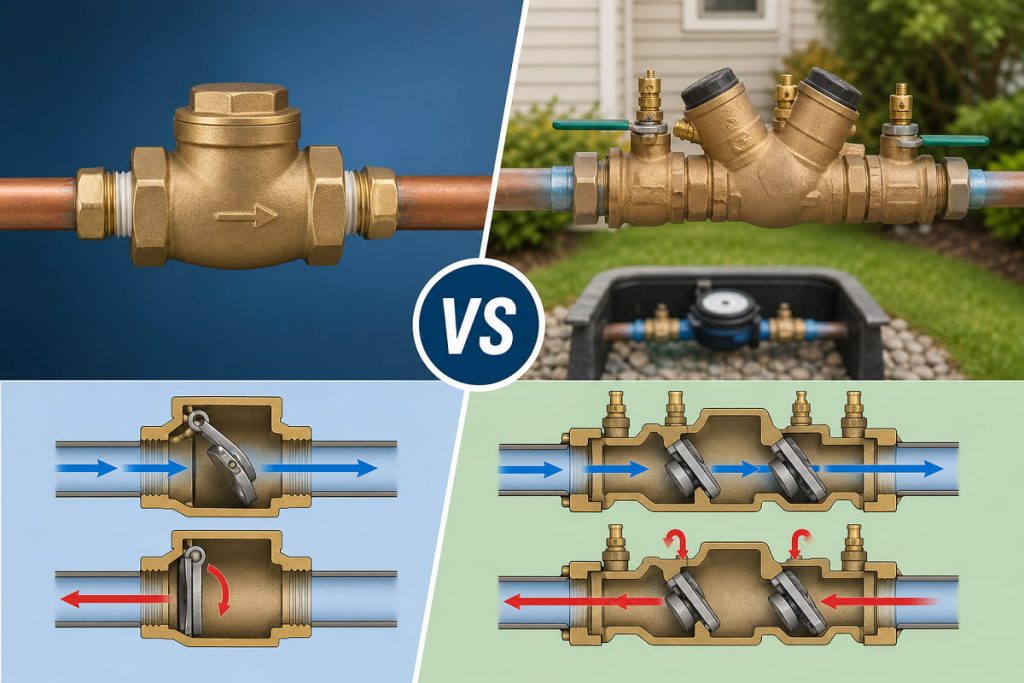
Check valves are simple one-way gates for low-risk jobs like protecting equipment from reverse flow. Backflow valves (backflow preventers) are certified safety assemblies with multiple check valves, a relief valve, and test ports to protect potable water.
Check valves can’t replace backflow preventers in code-required situations. If the line connects to drinking water, could involve contaminants, or will be inspected, go with a backflow valve—that’s the bottom line on the check valve vs backflow valve decision.
Plumbing decisions get confusing fast. Check valve vs backflow valve—they sound similar, and plenty of people use the words like they’re interchangeable. But picking the wrong one can fail an inspection, trigger fines, or let contaminated water into your drinking supply.
A check valve is just a basic one-way gate. A backflow valve is a certified safety assembly. And when you swap in a $20 check valve where code requires a backflow preventer, inspectors notice. The EPA says the average backflow incident takes nearly 500 hours to fix at a cost of $14,800.
In this guide, as a professional check valve manufacturer, I will break down how each works, the common types, key differences, and the legal requirements you need to know. Plus, I’ll give you a simple three-question framework to make the right call before you buy.
The Quick Answer
Here’s the short version:
- A check valve is a basic one-way gate. It stops fluid from flowing backward.
- A backflow valve (also called a backflow preventer) is a certified safety assembly. It uses multiple check valves plus a relief valve to keep contaminated water out of your drinking supply.
Simple as that.
But if you need to make a smart decision, you need more than a one-liner. You need to understand how they work, where they’re required, and why they’re absolutely not interchangeable.
Let’s go deeper.
What Does a Check Valve Actually Do?
Let me explain check valves first, because they’re the simpler of the two.
A check valve is a mechanical gate. It’s almost always spring-loaded or gravity-assisted. Inside, you’ll find a flap, a disc, a ball, or a hinged clapper. When water flows forward, the pressure pushes that mechanism open. If the flow tries to reverse, the mechanism slams shut.
No electricity. No sensors. No manual override.
It’s all about pressure.
That’s why check valves are everywhere. They’re cheap, small, and reliable for basic reverse-flow prevention. You’ll find them on sump pump discharges, water heater inlet lines, HVAC systems, and pump discharge pipes.
But here’s the thing: a check valve is equipment protection, not health protection.
If debris gets caught in the valve, it can stay stuck open. When that happens, you get reverse flow. No backup. No alarm. No fail-safe. Just a quiet leak in the wrong direction.
And when a check valve slams shut too fast, it can cause water hammer—a pressure spike that damages the valve and nearby pipes.
Common Check Valve Types
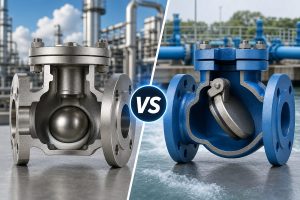
- Swing check valve – A hinged flap that swings open and closed. Great for horizontal pipes. But debris can interfere with the seat.
- Spring-loaded check valve – A spring pushes a disc shut when flow stops. Fast closure, good for vertical lines.
- Ball check valve – A ball seals against an opening. Simple and cheap. Good for low-pressure lines.
- Double-door (dual disc) check valve – Two half-discs that close around a central hinge. Faster response, widely used.
In my experience, swing and spring-loaded valves cover most residential needs. The others are more for industrial or specialized systems.
What Is a Backflow Valve?
Now let’s talk about the heavy-duty option.
A backflow valve—properly called a backflow preventer—is a complete assembly. Its only job is to stop contaminated water from flowing into a potable water supply. That’s a legally protected water source, by the way. The stuff you drink, cook with, and shower in.
Backflow can happen in two ways:
- Backpressure: Downstream pressure becomes higher than supply pressure, forcing water backward.
- Backsiphonage: Supply pressure drops, creating a vacuum that pulls contaminated water into the pipes.
Here’s a real-world example: a garden hose sits in a bucket of soapy water. A fire hydrant opens nearby, dropping pressure. That soapy water gets sucked into your house’s plumbing. Without a backflow preventer, you’re drinking soap.
Scary, right?
Backflow preventers are installed at cross-connection points—places where potable water meets a potential contaminant. That could be an irrigation line, a fire sprinkler system, a commercial kitchen, or a washing machine.
Types of Backflow Preventers
- Air gap: A physical separation between the water outlet and the receiving vessel. Simple, but takes up space.
- Atmospheric vacuum breaker (AVB): Good for low-hazard outdoor faucets. Lets air in to break a siphon.
- Pressure vacuum breaker (PVB): A spring-loaded check plus an air inlet. Common for irrigation.
- Double check valve assembly (DCVA): Two independent check valves in a series. If one fails, the other holds.
- Reduced pressure zone (RPZ) assembly: The gold standard. Two check valves plus a pressure relief valve. If a check valve leaks, the relief valve dumps the water to a drain.
I personally recommend an RPZ for any high-hazard connection. It’s the only type that’s truly fail-safe.
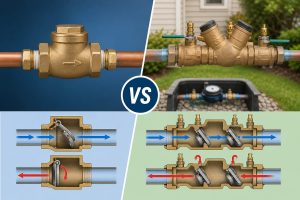
Check Valve vs Backflow Valve: Key Differences
Let’s put them side by side. This is the part I want you to remember.
| Feature | Check Valve | Backflow Valve (Preventer) |
|---|---|---|
| Primary job | Prevent reverse flow | Prevent contamination |
| Design | One moving part | Multiple checks + relief valve |
| Protection | Single layer | Redundant/fail-safe |
| Legal status | Usually not code-required | Required at cross-connections |
| Testing | No formal testing | Annual certified testing |
| Common uses | Sump pumps, water heaters, HVAC | Irrigation, fire sprinklers, commercial plumbing |
| Cost | $15–$50 | $50–$500+ |
The bottom line? A check valve handles nuisance reverse flow. A backflow preventer handles public safety. That’s why local plumbing codes treat them completely differently.
Why a Check Valve Can’t Replace a Backflow Preventer
I see this mistake all the time.
A contractor or homeowner decides to “save money” by installing a $20 check valve where a backflow preventer is required. It makes sense on the surface. Both stop reverse flow, right?
Wrong.
Here’s why a check valve is never a safe substitute for a backflow preventer:
- No fail-safe. If a check valve jams open, water flows backward. Backflow preventers have redundant layers.
- No relief valve. Backflow preventers can discharge contaminated water safely. Check valves can’t.
- No test cocks. Certified backflow testers need test ports to verify the device is working. Check valves have none.
- No approval. Local water authorities and inspectors know the difference. They will fail you.
In 2026, plumbing codes are stricter than ever. You don’t want to be on the wrong side of a code violation.
I once saw a homeowner install a check valve on an irrigation line because he didn’t want to pay for a real backflow preventer. The city inspector flagged it immediately. He had to rip it out, buy the correct assembly, and hire a plumber. The “cheap” solution cost him triple—and delayed his whole project.
Don’t be that person.
When Do You Actually Need a Backflow Preventer?
This list will help you figure out if you need the real deal.
- Irrigation systems – Fertilizers, pesticides, and soil can contaminate the water.
- Fire sprinkler systems – Stagnant water and chemical additives can backflow.
- Commercial kitchens – Grease and cleaning chemicals are a serious hazard.
- Hospitals and industrial facilities – High-risk contaminants, no exceptions.
- Multi-unit buildings – Shared plumbing increases cross-contamination risks.
- Private wells – Untreated groundwater needs a barrier.
- Boiler systems – Corrosion inhibitors could mix with potable water.
If any of these sound like your situation, a backflow preventer isn’t optional. It’s the law in most places.
When Is a Check Valve Enough?
Check valves are perfectly fine for lower-risk situations. Here’s where I’d use one:
- Sump pump discharge line
- Water heater cold water inlet
- HVAC condensate drain
- Pump discharge on a non-potable line
- Compressed air systems
- Anywhere reverse flow could damage equipment but can’t contaminate drinking water
The key question is: if this line backflows, could someone get sick?
If the answer is no, a check valve probably works. If the answer is yes, you need a backflow preventer.
Testing and Maintenance: The Part Most People Miss
Here’s something that often gets overlooked.
Backflow preventers need regular testing. In many areas, that means annual testing by a certified backflow tester. They connect gauges to the test cocks, pressurize the system, and verify that each check valve holds tight.
Check valves don’t have test cocks. They’re dead-end devices. Once installed, you just assume they work. That’s fine for low-risk lines, but it’s not acceptable for drinking water protection.
Why does this matter?
Because the EPA estimates that an average backflow incident takes nearly 500 hours to fix and costs $14,800. That’s not a minor inconvenience. That’s a public health emergency.
Pro Tip: If you own a rental or commercial property, keep a written log of all backflow tests. It makes annual inspections way easier and shows you’re serious about compliance.
How to Choose: A Simple Framework
If you’re still not sure, run through these three questions.
- Is this pipe connected to potable drinking water? If yes, get a backflow preventer.
- Could chemicals, sewage, fertilizer, or stagnant water ever be on the other side? If yes, get a backflow preventer.
- Will an inspector have an opinion? If yes, get a backflow preventer.
If all three are no, a check valve will probably do the job. If any are yes, stop overthinking. Buy the correct backflow assembly and sleep well at night.
Sound good?
Bottom Line
Let’s wrap this up.
A check valve is a simple, affordable one-way door. It’s great for protecting equipment and stopping minor reverse flow.
A backflow valve is a certified safety system. It protects drinking water, includes failsafes, and meets legal requirements that check valves simply can’t match.
Don’t let anyone talk you into substituting one for the other. Ask to see the certification. Work with a licensed plumber. And when in doubt, choose the device that could save you a $14,800 mistake.
So the next time you’re weighing a check valve vs backflow valve, remember: protect the water, follow the code, and get the right device for the job.