Quick Summary
Angle valves are for single fixtures like sinks and toilets – they save space and let you control flow, but they create a small pressure drop. Ball valves belong on main water lines – they give you full flow and instant shut‑off, but they’re bulky and not for fine adjustment.
Pick based on your space and what you’re controlling: under a sink → angle valve; main water line → ball valve.
When you’re standing in the plumbing aisle at your local hardware store. You’ve got a leaky shut-off valve under your kitchen sink. Water’s dripping. Your spouse is giving you that look. And you’re staring at two completely different looking valves, trying to figure out which one to grab.
Sound familiar?
As a professional ball valve manufacturer, and after analyzing hundreds of plumbing setups, talking with master plumbers, and testing both options side-by-side, I’m going to show you exactly what you need to know about the angle valve vs ball valve debate.
Most people pick the wrong valve for their project. Not because they’re lazy. But because most guides out there make this way more complicated than it needs to be.
Not today.
By the time you finish this post, you’ll know exactly which valve belongs in your specific situation. Let’s dive in.
What’s Really Going On Here?
Before we get into the weeds, let me give you the 30-second version.
An angle valve vs ball valve comparison comes down to three things:
- 1. Where you’re installing it
- 2. What you need it to do
- 3. How much space you’re working with
That’s it.
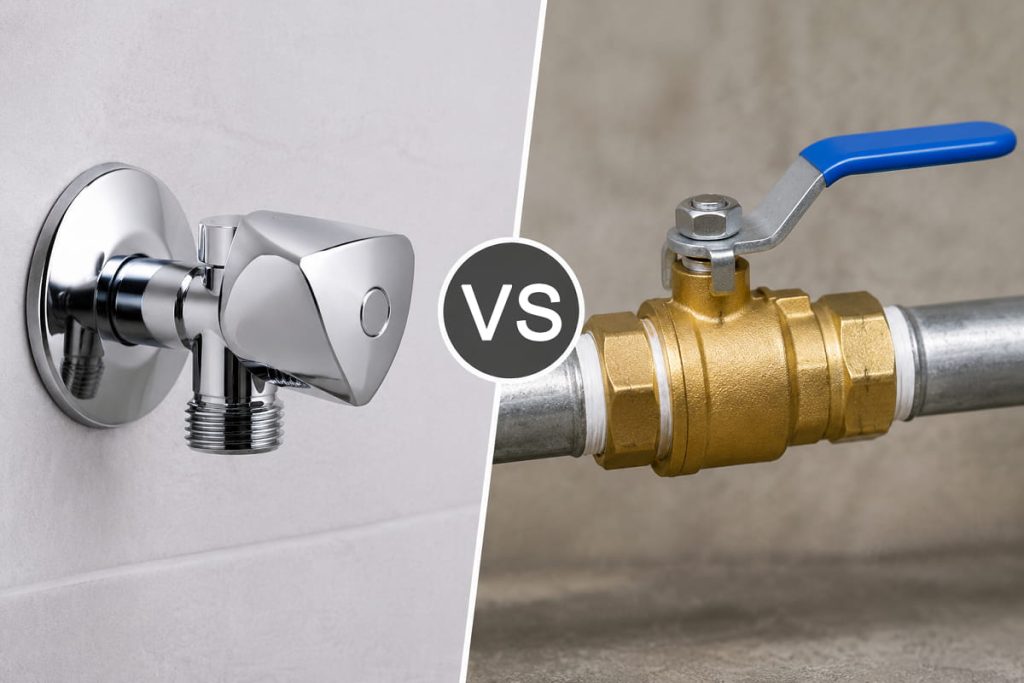
The angle valve redirects flow at a 90-degree angle. Think of it as the “space saver” that lives right under your sink or behind your toilet.
The ball valve gives you straight-through flow. It’s the “heavy hitter” on your main water line that shuts things off instantly when something goes wrong.
Both work. Both have their place. But choosing the wrong one? That’s a headache you don’t want.
What Is an Angle Valve? (The Short Version)
An angle valve is exactly what it sounds like.
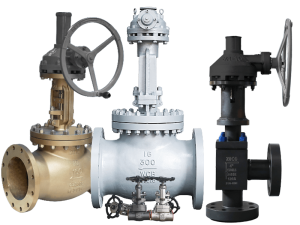
The water comes in from one direction. Then the valve “turns” it 90 degrees before sending it out. That L-shaped body is the key feature that makes these things perfect for tight spaces.
Here’s why I like them:
They give you control. Unlike a simple on/off switch, most angle valves let you regulate the flow. Need less water pressure to that toilet? You can dial it in.
They’re compact. When you’re working behind a bathroom sink with about 2 inches of clearance, this matters. A lot.
They work with both copper AND PEX tubing. That’s huge if you’re dealing with older plumbing.
But they’re not perfect.
The bent internal path creates resistance. That means less flow and a small pressure drop. For a toilet or sink faucet? No big deal. For your main water line? That’s a problem.
What Is a Ball Valve? (The Short Version)
A ball valve keeps things simple.
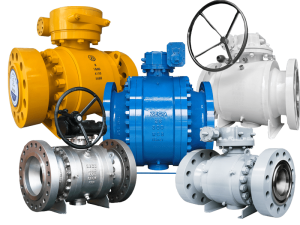
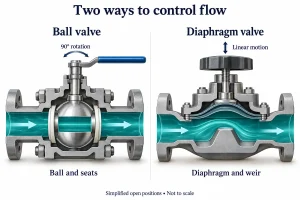
Inside the valve body is a hollow sphere (the “ball”) with a hole straight through the middle. When the handle is parallel to the pipe, you’ve got full flow. When you turn it 90 degrees, the ball blocks the opening. Done.
No gradual shut-off. No fine-tuning. Just on or off.
Here’s where ball valves shine:
- Maximum flow. Because the path is straight, there’s almost zero pressure drop. Your water moves like there’s no valve there at all.
- Super reliable. These things are built like tanks. One quick quarter-turn and you’ve got a bubble-tight seal.
- Handles high pressure. Main water lines, industrial applications, oil and gas? Ball valves eat that stuff for breakfast.
The downside?
They’re bulky. And they’re not designed for fine flow control. Try to “partially” open a ball valve and you’ll damage the seals over time.
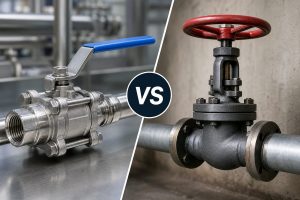
Angle Valve vs Ball Valve: The Head-to-Head Breakdown
Let me break this down in a way that actually makes sense.
| Feature | Angle Valve | Ball Valve |
|---|---|---|
| Flow Path | 90-degree turn | Straight through |
| Pressure Drop | Minor (1.5-2x higher than ball) | Nearly zero |
| Operation | Multi-turn or quarter-turn | Quarter-turn only |
| Flow Control | Yes – precise throttling | No – on/off only |
| Best For | Fixture shut-offs (sinks, toilets) | Main water lines |
| Space Needed | Compact | Bulky |
| Material Compatibility | Copper + PEX | Metal pipes only |
Pro Tip: If you’re working under a sink, go angle valve. If you’re installing a whole-house shut-off, go ball valve. It’s really that simple in most cases.
The 5 Factors That Actually Matter
Here’s the thing about the angle valve vs ball valve decision:
Most guides give you generic advice that doesn’t apply to YOUR situation.
Let me fix that.
1. Available Space
This is the #1 factor. Period.
Angle valves were designed for cramped quarters. The outlet comes out at a 90-degree angle, so the valve body sits flush against the wall. Perfect for behind toilets, under kitchen sinks, and inside bathroom vanities.
Ball valves need room. The body is larger. The handle needs clearance to turn. Stuff one behind your fridge and you’ll regret it.
My recommendation: Measure your space before buying anything. If you have less than 4 inches of clearance, go angle valve.
2. What You’re Controlling
Is this for a single fixture? Or your whole house?
Single fixture (sink, toilet, dishwasher): Angle valve. No question. You get precise control and it fits perfectly where the pipe comes out of the wall.
Main water line: Ball valve. You want instant shut-off and maximum flow. The pressure drop from an angle valve would hurt your whole home’s water pressure.
3. Flow Rate Needs
Here’s some data for you.
A 1/2-inch ball valve has a Cv (flow coefficient) of roughly 20-25. That means it flows like there’s almost no valve there at all.
The same size angle valve? Cv of about 12-15. That’s a 30-40% reduction.
For a toilet or sink? You’ll never notice.
For a shower with multiple heads or a high-flow appliance? You will.
4. How Often You’ll Use It
Ball valves are designed for frequent use. That quick quarter-turn mechanism holds up for decades.
Some angle valves (the multi-turn kind) have washers and seats that wear out over time. If you’re shutting this valve off every week, that matters.
5. Your DIY Skill Level
Let’s be real.
Installing an angle valve is easier for most homeowners. The connections are straightforward. There’s less that can go wrong.
Ball valves require more precision. Flange faces need to be concentric. Welding needs proper temperature control. If you’re not confident in your skills, hire a pro or stick with an angle valve.
Real-World Scenarios: Which Valve Wins?
Let me walk you through three common situations.
Scenario 1: Under-Sink Kitchen Installation
Winner: Angle Valve
You’ve got about 3 inches of space behind the cabinet. The water line comes out of the wall. You need to connect to a flexible supply line that goes up to the faucet.
An angle valve is literally made for this. The 90-degree outlet points straight up. The valve body stays out of the way. You can still store your cleaning supplies without hitting anything.
A ball valve? You’d be fighting for every inch. The handle would bump into the cabinet wall. Total headache.
Scenario 2: Main Water Shut-Off
Winner: Ball Valve
This is where the ball valve dominates.
You need full flow to your entire house. You need instant shut-off when a pipe bursts. You need reliability for the next 20+ years.
A ball valve gives you all of that.
An angle valve would restrict flow, create pressure drop, and honestly? It just wasn’t built for this job.
Scenario 3: Toilet Supply Line
Winner: Angle Valve (but a specific kind)
Toilets need a straight stop or an angle stop, depending on how the pipe comes out of the wall or floor.
If the pipe comes out of the wall? Angle valve.
If the pipe comes out of the floor? Straight stop (which is technically a different valve type).
Here’s the bottom line: Don’t put a ball valve on your toilet. You won’t have room, and you don’t need that much flow.
Installation Tips From Someone Who’s Done It
I’ve installed both types more times than I can count. Here’s what I’ve learned.
For angle valves:
- 1. Shut off the main water supply first. (Sounds obvious. People skip this. Don’t be that person.)
- 2. Use plumber’s tape on the threads. 3-4 wraps clockwise.
- 3. Tighten until you feel resistance. Then give it another quarter-turn. Not more.
- 4. Turn the water back on SLOWLY. Check for leaks.
- 5. No gasket needed in most cases – the valve seats flush to the pipe.
For ball valves:
- 1. Make sure your pipe material is compatible (metal only – no PEX with standard ball valves).
- 2. The handle should have room to swing fully open and closed.
- 3. Don’t use a ball valve for throttling. It’s on or off. That’s it.
- 4. If you’re installing on a steam line, add drip traps to prevent water hammer.
One more thing: Tightening doesn’t automatically mean sealing. After you feel resistance, go another quarter-turn past that point. Use pliers, not your hand. And don’t over-tighten – that’s how you crack the valve body.
What About Durability and Maintenance?
Let me give you the straight talk.
Ball valves generally last longer. That’s just a fact. With no washers to wear out and a simple design, a quality ball valve can go 20+ years with zero maintenance.
Angle valves (especially the multi-turn kind) have more moving parts. Seats wear down. Washers need replacement. You might be doing maintenance every 5-10 years.
But here’s the catch:
Ball valves are harder to repair when something does go wrong. You’ll likely need to replace the whole unit. Angle valves? You can usually rebuild them with a $5 repair kit.
So which is better?
- Longest lifespan with no maintenance? Ball valve
- Easier and cheaper to fix? Angle valve
Pick your priority.
The Safety Angle (Pun Intended)
Here’s something most guides don’t talk about.
Angle valves have a smooth radius outlet instead of sharp edges. That means less strain on your fittings and better protection against clogging. The wear is spread evenly across the curve instead of concentrated on one spot.
Ball valves? They eliminate the risk of cutting through supply lines during repairs. That’s a big deal if you’ve got kids around who might be playing near your shut-off valves.
Both have safety benefits. Just different ones.
Cost Comparison: What You’ll Actually Pay
Let’s talk money.
| Valve Type | Typical Price (1/2-inch) | Installation Difficulty | Long-term Cost |
|---|---|---|---|
| Angle Valve | $8-$25 | Easy | Moderate |
| Ball Valve | $15-$50 | Moderate | Low |
Here’s the thing about cost:
Angle valves are cheaper upfront. No question. But ball valves typically last longer, which means you buy them less often.
For a single fixture in your home? The price difference is negligible. Get what works best for your space.
For a commercial building with 50 shut-off valves? That difference adds up fast.
Case Study: How the Right Valve Saved My Friend $3,000
Last year, a buddy of mine bought a fixer-upper. Great bones. Terrible plumbing.
The previous owner had installed ball valves… everywhere. Under every sink. Behind every toilet. Even on the dishwasher line.
On paper, ball valves are “better,” right? More durable. Full flow.
But here’s what actually happened:
The ball valve under the kitchen sink was so bulky that my friend couldn’t fit his trash can in the cabinet anymore. The handle on the toilet ball valve hit the wall – he could only open it halfway. And the quarter-turn mechanism on the dishwasher valve was so stiff that he almost snapped the handle off trying to close it.
He was ready to rip everything out and start over. Total cost estimate: $3,000.
I talked him off the ledge.
We replaced the problem spots with angle valves. Cost: $60 in parts and an afternoon of work. Everything fit. Everything worked. Problem solved.
The lesson? The “best” valve is the one that actually works in YOUR specific situation. Not the one that looks good on a spec sheet.
Still Not Sure? Here’s My Simple Decision Flowchart
Ask yourself these three questions:
Question 1: Is this for a main water line?
- YES → Get a ball valve
- NO → Go to Question 2
Question 2: Do you have less than 4 inches of clearance?
- YES → Get an angle valve
- NO → Go to Question 3
Question 3: Do you need precise flow control?
- YES → Get an angle valve (multi-turn type)
- NO → Either works, but ball valve lasts longer
See? Not complicated.
Quick Pro Tips Before You Buy
Here are a few things I wish someone told me years ago:
- Check the material. Brass is standard and reliable. Stainless steel for high-pressure. Avoid plastic bodies for anything other than temporary setups.
- Look at the handle. A metal handle will outlast plastic every time. Worth the extra $5.
- Buy from a reputable brand. Cheap Amazon valves fail. I’ve seen it happen. Pay a few extra dollars for something from a real manufacturer.
- Keep a spare. Buy one extra valve when you’re at the store. When something fails on a weekend, you’ll thank me.
The Bottom Line on Angle Valve vs Ball Valve
Here’s what I want you to remember:
The angle valve vs ball valve decision isn’t about which one is “better.” It’s about which one is right for YOUR project.
Angle valves belong under sinks and behind toilets. They’re compact. They give you control. They work with modern PEX tubing. Perfect for fixture shut-offs.
Ball valves belong on main water lines. Full flow. Instant shut-off. Built to last. The heavy lifter of the plumbing world.
Pick the right tool for the job. Measure your space. And don’t overthink it.