Quick Summary:
- A check valve stops reverse flow using a physical barrier, but it cannot prevent back-siphonage caused by a sudden pressure drop. An anti-siphon valve is the only safe choice for protecting potable water and irrigation systems because it introduces air to break the vacuum.
- Check valves work underground and in any orientation; anti‑siphon valves must be installed above ground, at least 6–12 inches higher than the highest outlet.
- Using a check valve where a code requires an anti‑siphon valve risks contamination and can result in heavy fines—always check local regulations.
Picking between an anti-siphon valve and a check valve? Here’s the thing to remember: you can’t swap one for the other. A check valve keeps water from flowing backward. An anti-siphon valve does something different, stopping water from getting sucked back by breaking a vacuum. That gap matters most when you’re guarding drinking water, since back-siphonage can drag contaminated water into clean pipes.
Check valves work fine for protecting equipment and other non-potable setups. But they won’t give you the same safety for drinking water. Anti-siphon valves come with strict install rules too, and they have to sit above ground. So the right valve depends on your risk and your setup both.
Today as a professional check valve manufacturer, I’m going to break down the anti siphon valve vs check valve debate once and for all. By the time you finish reading, you’ll know exactly which one you need and why.
Let’s dive in.
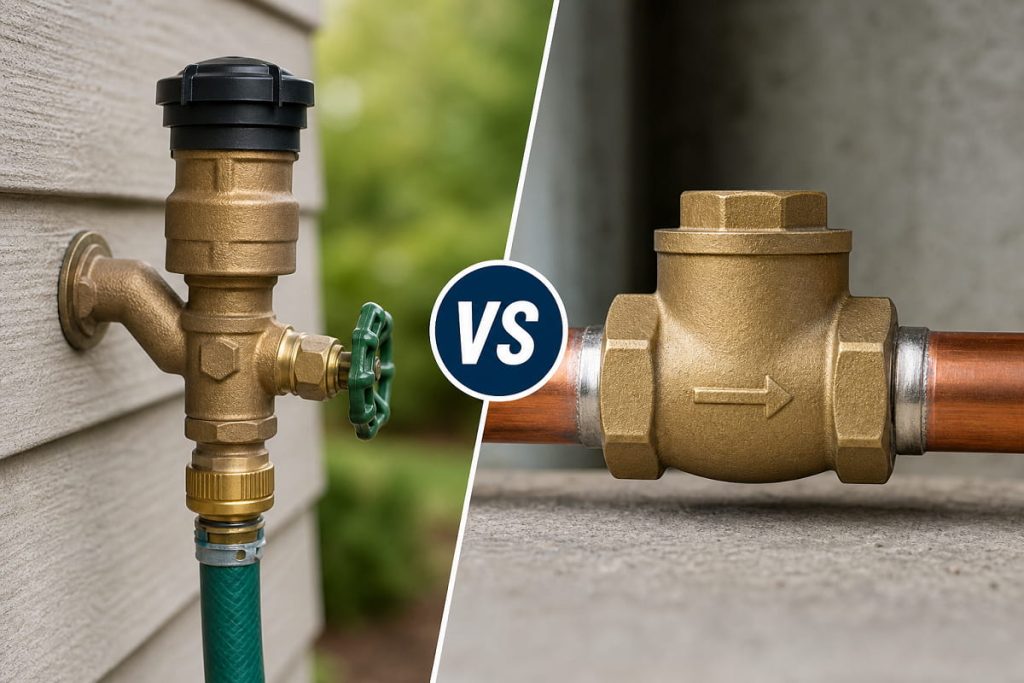
Anti Siphon Valve vs Check Valve
The Core Difference
Here’s the simplest way to think about it:
A check valve stops water from flowing backward.
An anti-siphon valve stops water from being sucked backward.
See the difference?
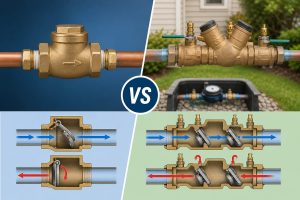
A check valve is passive. It relies on a physical barrier—like a spring, flapper, or ball—to block reverse flow. It works when water tries to push back through the pipe.
An anti-siphon valve is active. It introduces air into the line to break the vacuum. This prevents water from being pulled backward, even if pressure drops suddenly.
Pro Tip: Think of a check valve as a one-way door. And an anti-siphon valve as a one-way door with a built-in safety vent.
Working Principles
How Anti-Siphon Valves Work
Let me explain the siphon effect first.
Remember doing that experiment in elementary school? You’d put a straw in a glass of water, suck on it, and watch the water flow. Then you’d cover the top and the water would keep flowing.
That’s siphoning.
In your plumbing system, the same thing can happen. If a water main breaks or a fire hydrant opens nearby, pressure in your pipes can drop instantly. This creates a vacuum. And that vacuum can pull contaminated water—from your garden hose, sprinkler heads, or even your toilet—back into your clean drinking water.
The anti-siphon valve prevents this.
Inside the valve, there’s a floating disc (sometimes called a “poppet”). Here’s how it works:
- Normal pressure: Water pushes the disc up. The air vent seals shut. Water flows to your sprinklers.
- Pressure drop: The disc falls. The air vent opens. Air rushes in and breaks the vacuum.
No vacuum = no siphoning = no contaminated water in your pipes.
Pretty clever, right?
How Check Valves Work
Check valves are much simpler.
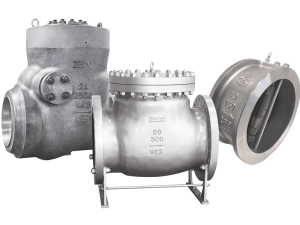
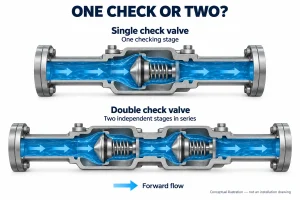
They use a mechanical barrier—a spring-loaded disc, a swinging flap, or a floating ball—to allow flow in one direction only.
When water flows the right way, the barrier opens. When water tries to flow backward, the barrier closes.
That’s it.
No air vents. No vacuum breaking. Just a simple one-way gate.
And that’s exactly why check valves are NOT safe for protecting drinking water.
The Safety Showdown: Why Check Valves Fall Short
Here’s the deal:
A check valve can stop backflow. But it cannot stop back-siphonage.
Why?
Because if a vacuum forms in your pipes, it can pull water through a check valve even if the valve is closed. If the seal is dirty, cracked, or worn—which happens over time—the vacuum can still suck water through.
In fact, I’ve seen cases where a check valve looked perfectly fine on the outside, but a tiny piece of debris was holding the seal open just enough for siphoning to occur.
The bottom line? Check valves are great for preventing backflow in low-risk situations. But for protecting potable water, you need an anti-siphon valve (or another approved backflow prevention device).
Where Check Valves Shine
Don’t get me wrong. Check valves are incredibly useful. Here’s where they work best:
- Pump protection: Prevents water from flowing backward and spinning the pump in reverse
- HVAC systems: Controls refrigerant and water flow
- Wastewater applications: Prevents sewage from backing up
- Industrial equipment: Protects compressors and other machinery
In these situations, you don’t need anti-siphon protection. You just need to stop unwanted reverse flow.
Check valves are perfect for that.
Installation Rules (Don’t Skip This)
This is where most people mess up.
Anti-siphon valves MUST be installed:
- At least 6–12 inches higher than the highest sprinkler head
- Above ground
- Where they’ll never be submerged
Why?
Because the air vent needs to open to break the vacuum. If the valve is underground or underwater, the vent can’t work. It’s that simple.
Check valves, on the other hand:
- Can be installed in any orientation
- Work underground, in walls, or in tight spaces
- Can handle high-pressure lines
So if you need a valve in a buried pipe or a cramped crawlspace, a check valve is your friend.
But remember: placement flexibility doesn’t mean check valves are safer. They’re just more versatile.
Real-World Scenario: The Underground Dilemma
I came across a question from someone trying to connect outdoor hose bibs to city water. They wanted to use anti-siphon valves, but the pipes were underground.
Here’s the problem:
An anti-siphon valve HAS to be above ground. If you bury it, it won’t work. Period.
So this person asked: “Can I use a check valve instead?”
My answer? Probably not for code compliance.
Most municipalities require approved backflow prevention devices for any connection to the public water supply. And check valves usually don’t meet the standard.
The fines for getting this wrong can be huge. I’ve heard of people getting slapped with $5,000+ fines for improper backflow protection. Plus, you’ll have to redo the work and install the right device anyway.
Pro Tip: Always check your local plumbing codes before making a decision. Some areas require specific types of backflow preventers, and the rules vary widely.
The Cost Factor
Let’s talk money.
A basic check valve might cost $10–$30. An anti-siphon valve runs $15–$50. Not a huge difference.
But installation costs can vary. Anti-siphon valves often require more complex piping to get them above ground and properly positioned.
That said, don’t let a few dollars dictate your decision. The cost of fixing contaminated water—or paying fines—is much higher.
When to Use Each Valve (Quick Reference)
Use a check valve when:
- You’re protecting equipment (pumps, compressors, etc.)
- The pipe is underground or in a tight space
- The water is non-potable (irrigation wastewater, industrial fluids)
- You need a simple, low-cost solution
Use an anti-siphon valve when:
- You’re protecting drinking water
- The valve can be installed above ground
- The highest outlet is lower than the valve
- Local codes require it (which is most of the time for irrigation)
Common Mistakes I See
After analyzing countless plumbing setups, here are the most frequent errors:
Mistake #1: Installing an anti-siphon valve downstream of another valve. This creates back pressure and prevents the air vent from opening.
Mistake #2: Burying an anti-siphon valve. It simply won’t work underground.
Mistake #3: Using a check valve for potable water protection. As I mentioned, the vacuum can pull water through.
Mistake #4: Assuming all anti-siphon valves are the same. Some are rated for continuous pressure, others aren’t.
Avoid these, and you’ll save yourself a headache.
The Bottom Line
Here’s what I want you to take away from this:
Anti siphon valve vs check valve isn’t really a debate. They serve different purposes.
- Use a check valve for equipment protection and non-potable systems.
- Use an anti-siphon valve (or approved backflow preventer) for drinking water and irrigation.
When in doubt, go with the anti-siphon valve. It provides an extra layer of safety that a check valve simply can’t offer.
And if you’re still unsure, talk to a licensed plumber. The cost of a consultation is way cheaper than fixing a contamination issue.
Got questions? Drop them in the comments below. I personally read and respond to every one.