Quick Summary
Swing check valves use gravity to close and work best in horizontal pipes with steady flow, offering low pressure drop at 30-50% less cost. Spring check valves close quickly with a spring mechanism, prevent water hammer, and work in any orientation including vertical pipes.
Choose swing valves for large municipal systems and drainage; choose spring valves for pump discharge lines, high-pressure systems, and noise-sensitive environments. Wrong valve selection can cause equipment damage, noisy pipes, and expensive repairs.
Ever stood in front of a wall of valves at the hardware store wondering whether you need a swing check valve or a spring check valve?
You’re not alone.
As a professional check valve manufacturer, and after installing hundreds of these valves (and fixing plenty of mistakes), I can tell you that choosing wrong can lead to noisy pipes, equipment damage, and expensive repairs.
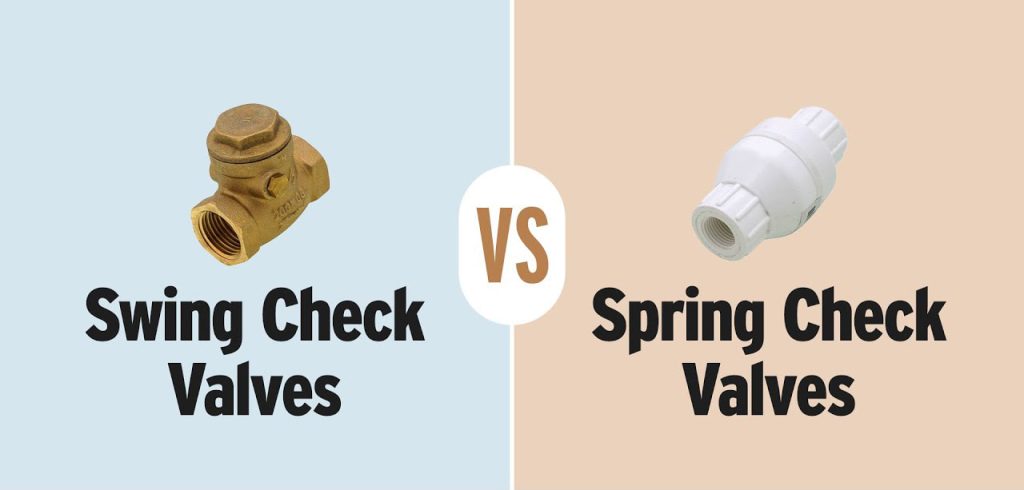
The main difference? Swing check valve vs spring valves comes down to how they close. Swing check valves use gravity and a hinged disc, while spring check valves use—you guessed it—a spring mechanism. But that’s just scratching the surface.
Let me break down exactly when to use each type, so you can make the right choice the first time.
What Is a Swing Check Valve?
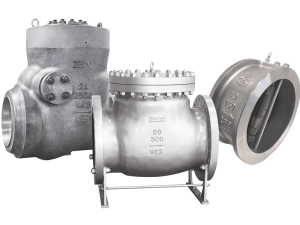
A swing check valve is basically a one-way door for your pipes.
Here’s how it works:
A disc (or “flapper”) hangs on a hinge inside the valve. When water flows forward, it pushes the disc open. When flow stops or reverses, gravity swings the disc closed.
Simple, right?
Think of it like a pet door that only swings one way. Fluid can push through in the right direction, but it can’t come back.
The key components are:
- Body (the main housing)
- Disc (the swinging gate)
- Hinge (what the disc pivots on)
- Seat (where the disc seals when closed)
I’ve found these work great in:
- Municipal water systems
- Sewage lines
- Large industrial pipelines
- Drainage systems
But here’s the thing: They’re not perfect for every situation.
What Is a Spring Check Valve?
Now let’s talk about spring check valves (also called spring-loaded check valves).
These use a totally different approach:
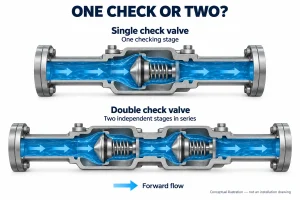
Instead of gravity, they use a spring to hold a disc, ball, or poppet against the valve seat. When upstream pressure gets high enough, it overcomes the spring force and pushes the valve open.
The moment pressure drops? SNAP—the spring slams it shut.
The main parts include:
- Body (similar to swing valves)
- Spring (the star of the show)
- Disc/Ball/Poppet (the sealing element)
- Seat (sealing surface)
I recommend these for:
- Pump discharge lines
- HVAC systems
- Vertical piping
- High-pressure applications
Swing Check Valve vs Spring: Key Differences
Let me save you some headaches with this comparison:
Installation Orientation
Swing check valves: Mostly limited to horizontal pipes. They CAN work vertically, but only if flow goes upward. Gravity won’t close them properly in downward flow.
Spring check valves: Work in ANY orientation. Horizontal, vertical up, vertical down—doesn’t matter. The spring does the work, not gravity.
Pressure Drop
This is huge for system efficiency:
Swing check valves: Super low pressure drop. The disc swings almost completely out of the flow path.
Spring check valves: Higher pressure drop. The flow constantly fights against spring tension.
In one industrial system I worked on, switching from spring to swing valves reduced pressure drop by 40%. That’s real energy savings.
Closing Speed and Water Hammer
Ever hear pipes bang when you shut off a faucet? That’s water hammer.
Swing check valves: Slow to close. This can amplify water hammer because the disc slams shut when flow reverses.
Spring check valves: Close FAST. Often called “silent” or “non-slam” valves because the spring closes them before flow reverses.
Cost Considerations
Let’s talk money:
Swing check valves: Generally 30-50% cheaper upfront.
Spring check valves: Higher initial cost, but can save money long-term by preventing water hammer damage.
When to Choose a Swing Check Valve
Swing check valves shine in specific situations:
1. Large Diameter Pipes
For pipes over 4 inches, swing checks often make more sense. The bigger the pipe, the more that pressure drop matters.
2. Low-Pressure Systems
Municipal water mains, gravity-fed systems, and drainage applications are perfect for swing valves.
3. Steady Flow Applications
If your flow rate doesn’t change much, swing valves work great. Think irrigation systems or continuous process flows.
4. Budget-Conscious Projects
When initial cost is critical and water hammer isn’t a concern, swing valves win.
Pro Tip: Always install swing check valves with the hinge pin horizontal. I’ve seen too many installed sideways that don’t seal properly.
When to Choose a Spring Check Valve
Spring check valves are your go-to for:
1. Pump Discharge Lines
Pumps create pulsating flow and sudden stops. Spring valves handle this perfectly.
2. Vertical Installations
Need to prevent backflow in a vertical pipe? Spring valve, no question.
3. High-Pressure Systems
The spring provides positive closure even at high pressures where swing valves might flutter.
4. Noise-Sensitive Environments
Hospitals, apartments, offices—anywhere that banging pipes would be a problem.
5. Variable Flow Conditions
Systems with frequent starts/stops or flow reversals need the quick response of spring valves.
Real-World Application Examples
Let me share some specific scenarios I’ve encountered:
Municipal Water Main: Swing Check Won
A city water department asked me about check valves for their 12-inch main. With steady flow and a tight budget, swing checks were perfect. Three years later? Still running quietly.
High-Rise Pump System: Spring Check Saved the Day
A 40-story building had terrible water hammer with swing checks. We switched to spring-loaded valves. Noise disappeared overnight.
Industrial Cooling Tower: Mixed Approach
Here’s where it gets interesting. We used swing checks on the large supply headers (low pressure drop) but spring checks on the pump discharge lines (prevent water hammer).
Common Mistakes to Avoid
I’ve seen these errors cost thousands:
1. Wrong Orientation
Installing a swing check valve vertically for downward flow. It’ll stay open permanently.
2. Ignoring Cracking Pressure
Spring valves need minimum pressure to open. Too strong a spring = no flow.
3. Oversizing
Bigger isn’t always better. Oversized valves can flutter and wear out fast.
4. Missing the Flow Arrow
Every check valve has a flow direction arrow. Install it backward? Zero flow.
Material Considerations
Both valve types come in various materials:
- Brass: Great for water, reasonable cost
- Stainless Steel: Corrosion resistant, handles high temps
- PVC: Cheap, good for chemicals
- Cast Iron: Durable, perfect for large pipes
Match the material to your fluid and conditions. Hot water + PVC = disaster.
Maintenance and Lifespan
Here’s what to expect:
Swing check valves:
- Inspect annually
- Check hinge wear
- Replace seat if leaking
- Typical life: 10-20 years
Spring check valves:
- Check spring tension yearly
- Look for fatigue or corrosion
- May need spring replacement after 5-10 years
- Typical life: 8-15 years
Making Your Final Decision
The bottom line?
Choose swing check valves when you have:
- Horizontal pipes
- Steady flow
- Large diameters
- Tight budgets
- Low-pressure systems
Choose spring check valves when you need:
- Any orientation flexibility
- Quiet operation
- Fast closure
- High-pressure handling
- Pump protection
Still not sure? Here’s my rule of thumb:
When in doubt, go with spring checks for residential and commercial buildings. Use swing checks for municipal and industrial applications with large pipes.
Future Considerations for 2026
As we move through 2026, I’m seeing trends toward:
- Smart valves with position sensors
- Improved spring materials lasting longer
- Hybrid designs combining both technologies
But the fundamentals remain the same. Understanding when to use swing check valve vs spring loaded designs will save you time, money, and headaches.
Remember: The right valve in the right place makes all the difference. Take time to analyze your specific needs before buying.
Got a tricky valve situation? The principles in this guide will point you in the right direction. Just match your application requirements to each valve’s strengths, and you’ll make the right choice every time.