Quick Summary
Floating ball valves work best for low to medium pressure systems (under 600 PSI) and smaller pipes (under 10 inches), offering simple design and lower initial cost. Trunnion valves excel in high-pressure applications (up to 2500+ PSI) and large diameters (up to 60 inches), with lower operating torque and longer service life despite higher upfront investment.
Choose floating valves for standard applications with tight budgets; select trunnion valves for critical systems, automation, or when total lifecycle cost matters more than initial price.
Ever wondered why some ball valves cost twice as much as others? Or why your engineer insists on a trunnion valve for that new pipeline project?
The difference between floating ball valve vs trunnion designs can make or break your system’s performance. And choosing wrong? That can mean anything from annoying leaks to catastrophic failure.
I’ve spent years working with both valve types. And I’ve seen firsthand how picking the right one saves companies thousands in maintenance costs.
In this guide, I’ll break down everything you need to know about these two valve designs. No fluff. Just actionable insights you can use today.
What Exactly Is a Floating Ball Valve?
Let me start with the basics.
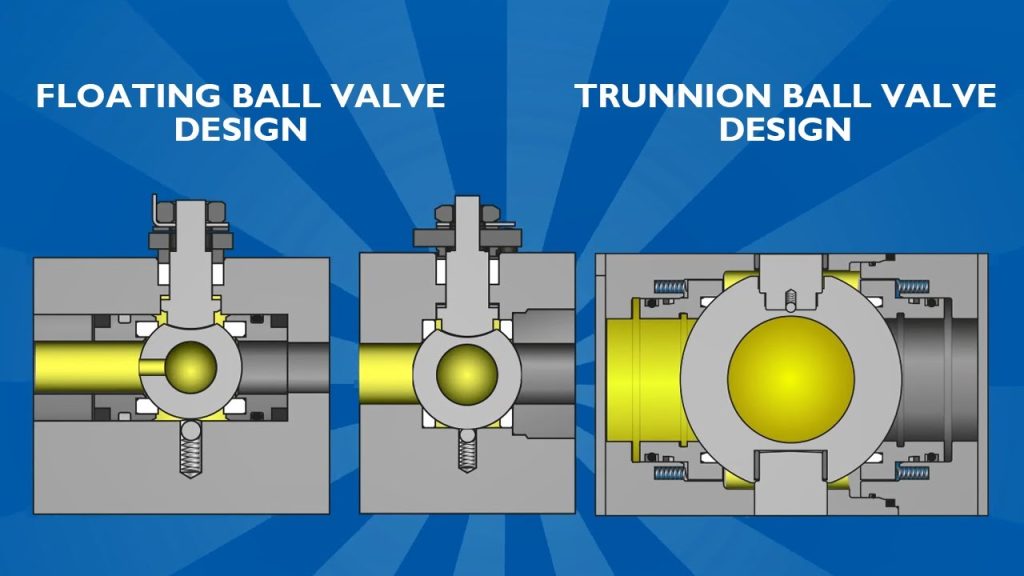
A floating ball valve gets its name because the ball inside literally “floats” between two seats. It’s not fixed in place.
When you close the valve, upstream pressure pushes the ball against the downstream seat. This creates your seal.
Think of it like a cork in a bottle. The pressure from the liquid pushes the cork tighter against the opening.
Pretty simple, right?
Here’s what makes floating ball valves unique:
- The ball moves slightly within the valve body
- Pressure does the heavy lifting for sealing
- Simpler design = lower cost
- Perfect for smaller pipes (typically under 10 inches)
I’ve installed hundreds of these in various systems. They’re workhorses for standard applications.
But they’re not perfect for everything.
How Trunnion Ball Valves Work Differently
Now, trunnion valves? Totally different beast.
In a trunnion design, the ball is anchored. It has a shaft (called a trunnion) at the bottom that prevents any movement except rotation.
Since the ball can’t move, the seats do. They’re spring-loaded and push against the fixed ball to create a seal.
Key differences with trunnion valves:
- Ball stays put (zero lateral movement)
- Spring-loaded seats do the sealing work
- More complex = higher initial cost
- Built for high-pressure and large-diameter applications
The bottom line? Trunnion valves are the heavy-duty option when floating valves just won’t cut it.
Floating Ball Valve vs Trunnion Comparison
Let’s get into the nitty-gritty details.
Operating Torque
This is huge. And it’s where trunnion valves really shine.
Floating ball valves: As pressure increases, the ball gets pressed harder against the seat. Result? You need Hulk-like strength to turn the handle at high pressures.
Trunnion valves: The fixed ball design means torque stays low and consistent. Even at 2500 PSI, you can still operate it smoothly.
I once worked on a project where we replaced floating valves with trunnion ones just because operators were getting injured trying to turn the handles.
Pressure Handling
Floating valves: Great for ANSI Class 150-600 (low to medium pressure)
Trunnion valves: Can handle ANSI Class 900-2500+ without breaking a sweat
Here’s a real-world example:
A client’s natural gas pipeline operated at 1200 PSI. Their floating valves leaked constantly. We switched to trunnion valves. Zero leaks in 3 years.
Size Limitations
Floating: Typically max out around 10-12 inches
Trunnion: I’ve seen them up to 60 inches in diameter
Why the difference? Physics. A 24-inch floating ball valve would need a forklift to operate under pressure.
Cost Analysis
Let’s talk money.
Initial costs:
- Floating valve (6-inch): $500-1,500
- Trunnion valve (6-inch): $2,000-5,000
But here’s the kicker:
Over 10 years, that “expensive” trunnion valve often costs LESS when you factor in:
- Lower maintenance needs
- Longer service life
- Reduced downtime
- Smaller actuators (for automated systems)
Maintenance Requirements
Floating valves:
- Simple design = easy repairs
- But seats wear faster under high pressure
- Expect seat replacement every 2-5 years in demanding applications
Trunnion valves:
- More complex internals
- But components last much longer
- Many feature replaceable seats without removing the valve from the line
Pro tip: If your maintenance crew is small or inexperienced, floating valves are more forgiving.
When to Choose Floating Ball Valves
Based on my experience, go with floating valves when:
- Working with clean, non-abrasive media
- Water treatment plants
- HVAC systems
- Light chemical processing
- Operating at lower pressures (under 600 PSI)
- Using smaller pipe sizes (10 inches or less)
- Budget is tight and application isn’t critical
- Maintenance downtime is acceptable
I recently specified floating valves for a brewing facility. Low pressure, clean media, 4-inch pipes. They’ve run perfectly for 2 years.
When Trunnion Valves Are Worth the Investment
Choose trunnion when you’re dealing with:
- High-pressure systems
- Oil and gas pipelines
- Steam systems over 600 PSI
- High-pressure chemical processing
- Large diameter pipes (over 10 inches)
- Automated valve systems (lower torque = smaller actuators = cost savings)
- Critical applications where failure isn’t an option
- Abrasive or dirty media that would destroy floating valve seats
Case in point: A refinery I consulted for switched their main crude oil lines to trunnion valves. Maintenance costs dropped 70% over 5 years.
Installation Tips for Both Valve Types
Floating Ball Valve Installation
- Check flow direction – While many are bidirectional, some have a preferred direction
- Support the pipeline – The valve body shouldn’t carry pipe weight
- Use proper gaskets – Match them to your media and pressure rating
- Don’t over-torque flanges – You’ll distort the body and cause leaks
Trunnion Valve Installation
- Level is critical – Misalignment causes premature wear
- Check cavity relief valves – Many trunnions have them for trapped pressure
- Lubricate per specs – Some require periodic greasing of the trunnion
- Install block valves – For maintenance isolation
Common Mistakes to Avoid
I see these errors constantly:
Mistake #1: Choosing by price alone
A cheap floating valve in a high-pressure system costs more long-term than a quality trunnion valve.
Mistake #2: Ignoring velocity limits
High-velocity flows erode seats faster. Both valve types have limits.
Mistake #3: Wrong seat material
PTFE seats melt in high-temp applications. Metal seats can seize if not properly selected.
Mistake #4: Oversizing “just in case”
An oversized valve operates in a partially open position, causing premature wear.
The Future of Ball Valve Technology
The industry isn’t standing still. Here’s what I’m seeing:
- Smart valves with position sensors and diagnostic capabilities
- Advanced coatings that extend seat life 5-10x
- Hybrid designs combining the best of both technologies
- 3D-printed components for custom applications
Making the Final Decision
Here’s my simplified decision tree:
- Pressure over 600 PSI? → Consider trunnion
- Pipe over 10 inches? → Definitely trunnion
- Need automation? → Trunnion saves money on actuators
- Tight budget + standard conditions? → Floating works fine
But remember: Every application is unique. When in doubt, consult with valve specialists who can analyze your specific conditions.
Key Takeaways
The difference between floating ball valve vs trunnion designs boils down to this:
- Floating valves excel in standard applications with lower pressures and smaller sizes
- Trunnion valves dominate in high-pressure, large-diameter, or automated systems
- Initial cost isn’t everything – consider total lifecycle costs
- Proper selection prevents headaches (and budget overruns) down the road
The right valve choice can mean the difference between a system that runs for decades and one that needs constant attention.
What’s your experience with these valve types? I’d love to hear about your applications and any lessons learned along the way.