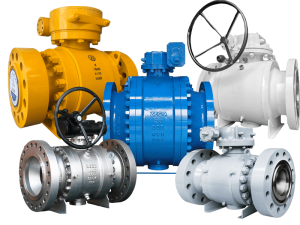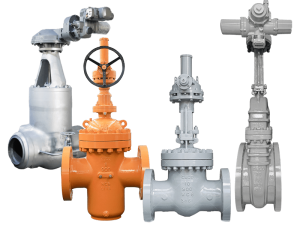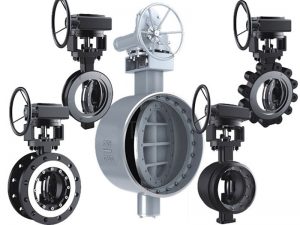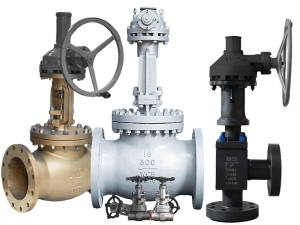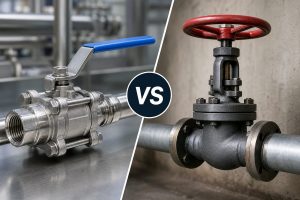
In a butterfly valve vs check valve comparison, a butterfly valve opens, closes, or adjusts flow on command, while a check valve automatically limits reverse flow. Use a butterfly valve for isolation or suitable throttling duties and a check valve for backflow protection; many pumping systems need both.
| Selection factor | Butterfly valve | Check valve |
|---|---|---|
| Primary job | Commanded isolation and suitable throttling duties | Automatic reverse-flow prevention |
| Operating mechanism | A shaft rotates a disc through roughly 90 degrees | Fluid forces move a disc, plate, ball, or other closure element |
| External operation | Lever, gearbox, or powered actuator | Ordinary designs need no external actuator |
| Flow direction | Many models support bidirectional service; verify the rating | Designed for forward flow and closure against reverse flow |
| Flow adjustment | Possible within the model’s specified control range | Not intended to maintain a commanded flow setting |
| Typical applications | Water distribution, HVAC, process isolation, and selected control duties | Pump discharge, parallel pump branches, and process lines needing backflow protection |
| Pressure and temperature limits | Depend on design, materials, seats, and pressure class | Depend on design, materials, seats, and pressure class |
| Cost comparison | Include actuator, controls, installation, and energy losses | Include closure performance, installation, maintenance, and energy losses |
How a Butterfly Valve Controls Flow
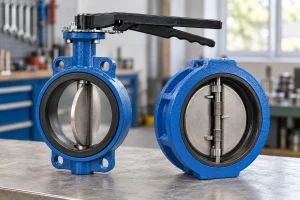
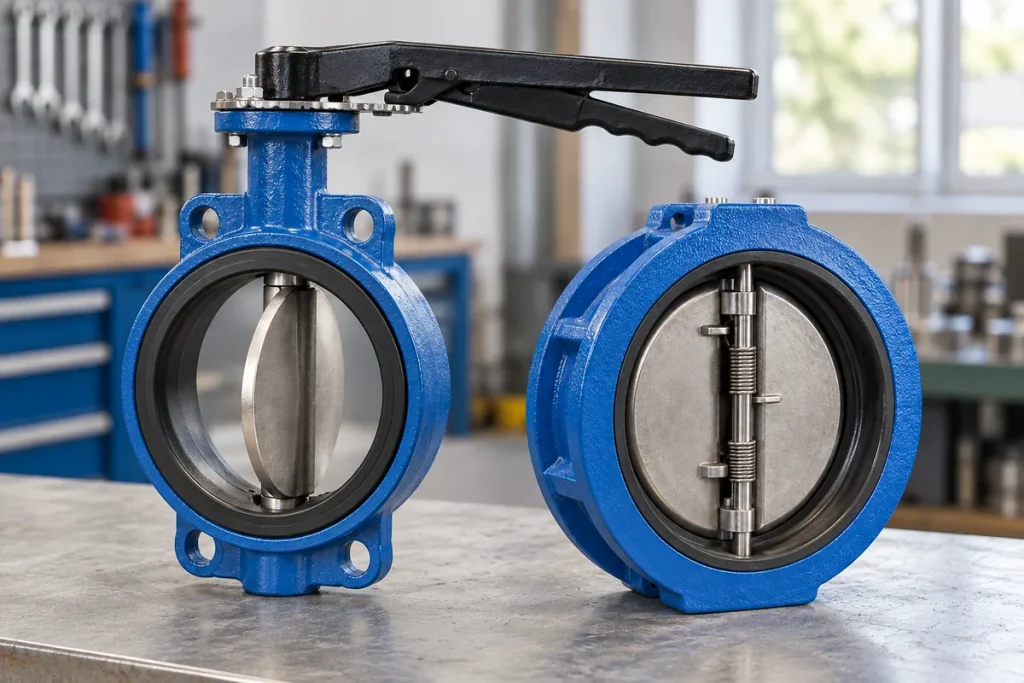
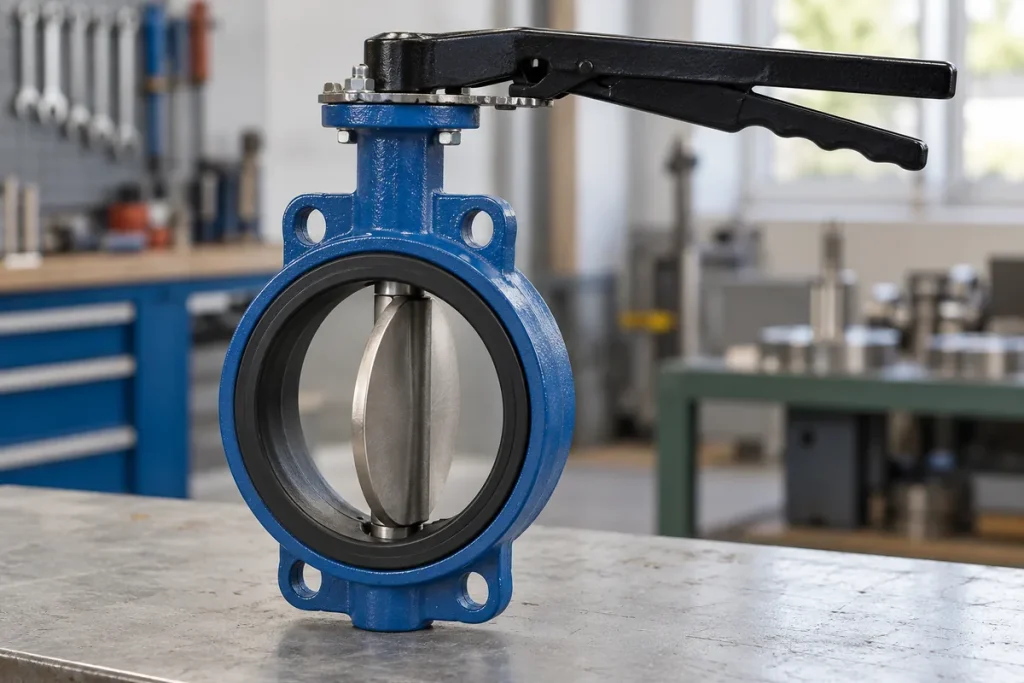
A butterfly valve controls flow by turning a disc inside the pipe. When the disc sits edge-on to the flow, fluid passes around it. Turn it toward the seat, and the passage closes.
The disc travels about 90 degrees, or one quarter-turn, from open to closed. A lever can operate smaller valves. For other sizes and service conditions, a gearbox or actuator supplies the required torque.
Even when fully open, the disc stays in the flow path. Fluid has to pass around it, so some restriction and pressure loss remain.
Spirax Sarco’s guide to rotary isolation valves describes this mechanism and the compact construction that makes butterfly valves useful in tight spaces.
Which Butterfly Valve Design Should You Consider?
Seat construction and disc geometry determine which butterfly valve can handle your service. A basic resilient-seated valve and a metal-seated triple-offset valve can have very different operating limits.
Common options include:
- Concentric, resilient-seated valves are common in water, HVAC, and general utility service, provided the seat compound suits the fluid and temperature.
- Double-offset valves reduce seat rubbing during operation. Suitable models handle more demanding process applications.
- Triple-offset valves add another geometric offset, commonly with metal sealing arrangements, for selected severe-service duties.
Wafer, lug, and double-flanged describe the body connections. You’ll still need the model’s specifications to establish its pressure capability and throttling performance.
Match the internal design and the connection style to your application. Bray’s butterfly valve selection guide explains how these design families differ.
How a Check Valve Prevents Backflow
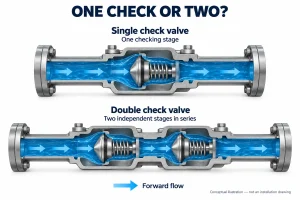
A check valve opens with forward flow and closes automatically as conditions change toward reverse flow. Gravity, a spring, reverse pressure, or a combination of these forces closes it, depending on the design.
Suppose a pump stops while the downstream line remains pressurized. Fluid may try to return through the pump. A suitable check valve closes to limit that reverse movement.
Different mechanisms suit different conditions:
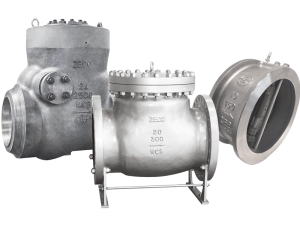
- A swing check has a hinged disc that swings open with forward flow.
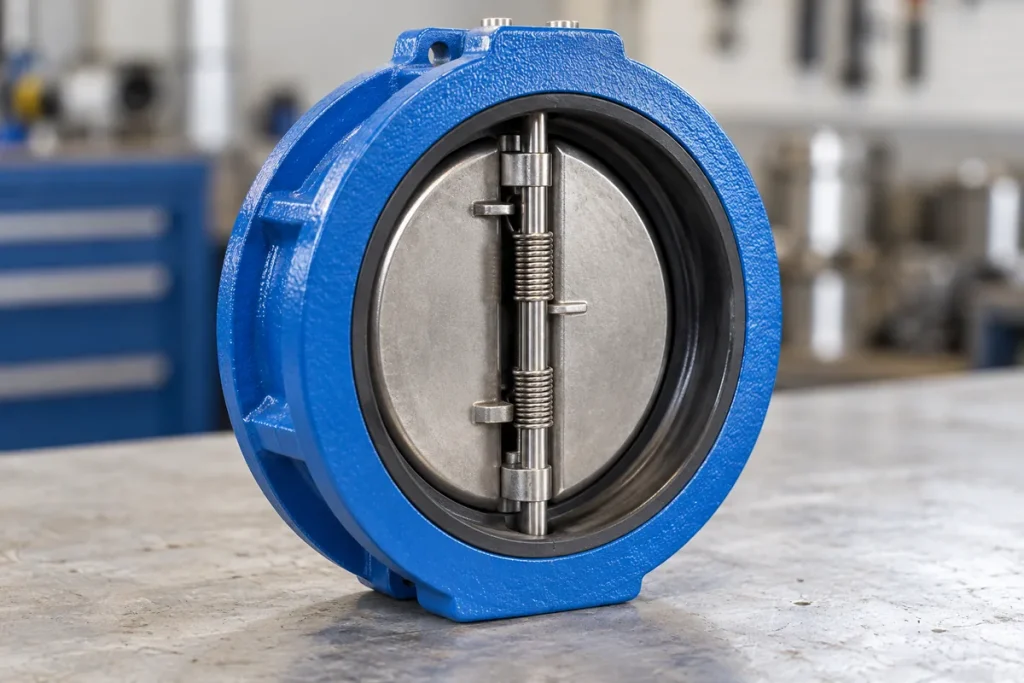
- A dual-plate check valve has two hinged plates, commonly spring-assisted, inside a compact body.
- A lift or piston check opens as its closure element lifts off the seat.
- An axial or nozzle check has a guided closure element that moves along the flow axis, often with spring assistance.
- A ball check opens when a ball moves off its seat. Some designs suit wastewater or other liquid services.
Choose among them by looking at the fluid, flow range, installation orientation, and closing behavior your system needs. Body size alone won’t tell you how a valve performs.
Why Cracking Pressure and Minimum Flow Matter
Cracking pressure is the differential pressure at which a check valve starts to open. It doesn’t tell you the pressure drop at every operating flow or whether the valve will stay stably open.
A valve may open, then chatter as flow fluctuates. If it’s oversized, it can spend too much time partially open, with repeated movement wearing the components.
Spirax Sarco’s check valve tutorial explains both the opening mechanism and the problems associated with incorrect sizing.
Give the supplier your minimum, normal, and maximum flow rates as well as the pipe diameter. Ask whether the proposed valve will operate stably across that range.
The Differences That Affect System Performance
Butterfly valves provide commanded control, while check valves respond automatically to the fluid. Both require model-specific checks for pressure, temperature, leakage, and behavior during a shutdown.
Commanded Shutoff Versus Automatic Closure
An operator or actuator moves a butterfly valve. The fluid moves an ordinary check valve. During a power failure or pump trip, those different triggers determine how each valve responds.
An open butterfly valve doesn’t detect and block reverse flow on its own. A fail-close actuator still needs an operating sequence and closing time suited to the system.
You also can’t use an ordinary check valve to select a flow setting. Its moving element may sit partly open, but the process conditions determine that position.
For maintenance, use the specified isolation arrangement and verify that the equipment is depressurized. A check valve can leak or stick, so its presence alone doesn’t establish safe isolation.
Pressure Rating, Sealing, and Flow Resistance
Pressure limits, leakage rates, and pressure drop vary by model in both valve families. Compare the actual valves at your fluid temperature and expected flow conditions.
For example, Bray lists ASME Class 150 to 900 options for its Tri Lok triple-offset butterfly valve, subject to the selected configuration’s pressure and temperature limits. Those specialized designs serve duties beyond the range of basic utility valves.
Many butterfly valves seal in both directions. Check that the required differential-pressure rating applies in each direction, along with the manufacturer’s preferred flow direction and shutoff specifications.
To compare pressure loss, request the manufacturer’s flow coefficient, usually Cv or Kv, or a pressure-drop curve. Use your operating flow and, for a control valve, the relevant opening position.
Water Hammer and Check Valve Slam
A fast-closing butterfly valve can create water hammer, and a poorly matched check valve can slam. Installing a check valve does not guarantee that damaging pressure surges will disappear.
Water hammer is a pressure wave caused by a rapid change in liquid velocity, such as the change produced when a butterfly valve closes too abruptly.
A check valve can slam when significant reverse velocity develops before its closure element reaches the seat. Spring-assisted designs with short travel can reduce that risk, provided their response matches the system’s flow deceleration.
For a long rising main or a demanding pump shutdown, ask for a transient assessment. A catalog’s “non-slam” description still needs to be backed by suitable closing behavior under your operating conditions.
When Your System Needs Both Valves
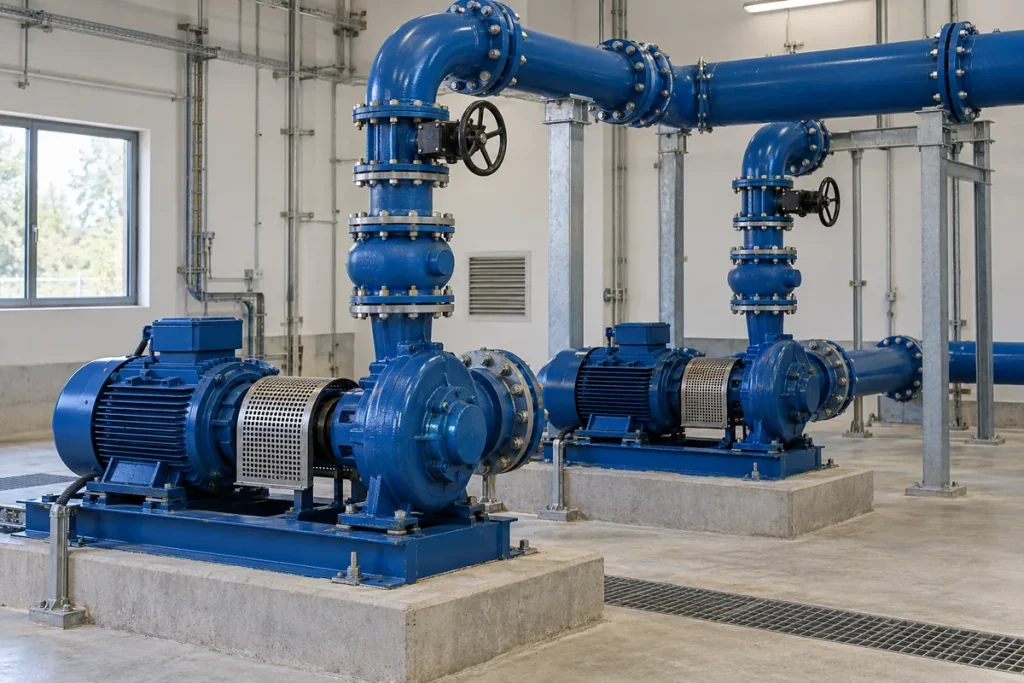
You need both valve functions when the system requires automatic backflow protection as well as isolation or control on command. Parallel pumps often have these separate requirements.
Consider a hypothetical installation with two pumps feeding the same header.
When one pump stops, the operating pump can maintain pressure in the common header. A check valve on the idle pump’s discharge branch helps prevent reverse flow through that pump.
A separate butterfly valve can provide the branch isolation function where its shutoff rating and the plant’s isolation procedures allow it. Maintenance may also require upstream isolation, draining, venting, or additional barriers.
Specify the check valve’s closing performance and the butterfly valve’s isolation requirements separately. Follow the piping design and manufacturer instructions for spacing and arrangement.
How Much Do Butterfly and Check Valves Cost?
Butterfly Valve Vs Check Valve Cost depends on the duty, construction, and complete installed package. Neither type is always cheaper.
A manual resilient-seated butterfly valve can be economical in a large water line. A motorized butterfly valve adds an actuator to the purchase. Positioners, switches, and control wiring can increase the installed cost further where those accessories are required.
Check valve prices vary across compact wafer, full-bodied swing, and engineered axial designs. The quote also depends on material grade, pressure class, testing, and the closing performance you need.
I recommend putting the same requirements beside every quote:
- Match the nominal size, pressure class, body material, trim, seat, and end connections.
- Include the gearbox or actuator, power supply, accessories, and required fail position.
- Allow for supports, access, lifting, flange work, and available pipe space.
- List the inspection, material certificates, applicable approvals, and testing required.
- Compare pressure loss, spare parts, inspection, repairs, and downtime over the valve’s service life.
When the system needs both functions, budget for both valves. Buying a cheaper isolation valve still leaves the backflow-protection requirement to be met.
A Worked Example of Pressure-Loss Cost
Additional pressure drop costs energy when the pump must supply extra head to maintain the same flow. The U.S. Department of Energy’s guidance on energy savings in control valves explains that the power needed to overcome a pressure drop depends on both flow rate and the size of that drop.
To compare two candidates doing the same job, consider these hypothetical inputs:
- Flow: 0.020 m³/s, or 72 m³/h.
- Additional pressure drop: 20,000 Pa, or 0.20 bar.
- Combined pump-and-motor efficiency: 70%.
- Operation: 6,000 hours per year.
- Electricity price: $0.12 per kWh.
Additional electrical power is approximately:
Flow × additional pressure drop ÷ efficiency
That gives 0.020 × 20,000 ÷ 0.70 = 571 watts, or about 0.57 kW.
Across 6,000 hours, the extra energy is approximately 3,429 kWh, costing about $411 per year under these assumptions.
These figures illustrate the calculation; they aren’t product ratings or a forecast for your plant. Your operating profile, pump efficiency, controls, and system response determine the actual cost.
How to Select the Right Valve in Five Steps
Start with the job the valve must do, then check fluid compatibility, ratings, flow behavior, and installation details. Give those requirements to suppliers so they can propose a suitable model.
1. Define What the Valve Must Do
Specify a butterfly valve for suitable isolation or throttling duties that need operator or actuator control. Specify a check valve for automatic reverse-flow prevention. Some systems need both.
Write the requirement in one sentence, such as “Prevent reverse flow through the idle pump.” Use it to screen the catalog options.
2. Describe the Fluid and Its Condition
State the fluid, temperature range, chemical concentration, solids content, and any abrasive or corrosive characteristics. These details affect every wetted component.
Check the seat, stem, spring, and seals as well as the body. For wastewater, ask about debris passage and fouling. For chemical service, request compatibility guidance at the actual concentration and temperature.
3. Check the Full Operating Envelope
Compare the proposed valve’s ratings with the maximum operating pressure, temperature, differential pressure, and credible transient conditions. A limit on any applicable component or service condition may govern the selection.
Include vacuum duty, cleaning conditions, and shutdown cases where relevant. A pressure-class designation doesn’t give you one fixed allowable pressure at every temperature.
For actuated butterfly valves, confirm the actuator has sufficient torque for the specified conditions and required fail action.
4. Size for the Flow Range
Check the valve at minimum, normal, and maximum flow, including startup and reduced-load operation. It needs to work at the conditions your plant actually runs, not only at the design point.
For check valves, request stable-opening and pressure-loss information. For throttling butterfly valves, check the usable control range, velocity, cavitation risk, and actuator requirements.
Halfway open doesn’t necessarily mean half the full-open flow. The valve characteristic and the rest of the piping system determine how much fluid passes through.
5. Confirm Installation and Service Access
Check permitted orientation, face-to-face dimensions, flange compatibility, disc clearance, and maintenance access before ordering. A valve that fits the nominal pipe size can still interfere with adjacent components.
For lug-style butterfly valves, get explicit confirmation of any proposed dead-end service rating. Threaded lugs alone don’t establish that the valve can retain pressure safely after downstream pipework is removed.
For a check valve, follow the model’s flow arrow and orientation instructions. Check the permitted installation positions even if the design is spring-loaded or wafer-style.
Installation and Maintenance Mistakes to Avoid
Incorrect orientation, insufficient clearance, unsuitable operating conditions, and neglected wear can all cause problems. Use the installation and maintenance instructions for the exact model you’re fitting.
Before commissioning, remove installation debris and confirm that moving parts can travel freely. Verify the butterfly disc clears the pipe bore and adjoining fittings.
During service, investigate new vibration, chatter, leakage, or shutdown noise. These symptoms can indicate an operating problem as well as damaged components.
On butterfly valves, inspect the seat, stem seals, actuator operation, and travel stops. Check for both external and internal leakage.
On check valves, inspect the seat, hinges or guides, and springs where fitted. Look for deposits and evidence of reverse leakage.
Set inspection intervals from the manufacturer’s guidance and your operating history, taking service severity and cycling frequency into account. Clean-water service and abrasive duty with frequent cycling won’t necessarily need the same schedule. A blanket six-month replacement rule misses those differences.
Before opening equipment, follow the site’s isolation, lockout, draining, and depressurization procedures. In U.S. workplaces covered by OSHA’s control of hazardous energy standard, hazardous stored or residual energy must be rendered safe, and an authorized employee must verify isolation before servicing begins.
Frequently Asked Questions
Butterfly valves and check valves aren’t interchangeable in ordinary service. Similar names, especially “butterfly check valve,” can make the distinction confusing.
Is a Butterfly Check Valve the Same as a Butterfly Valve?
No. A “butterfly check valve” commonly means a dual-plate check valve with two hinged plates that resemble wings. It closes automatically to restrict reverse flow.
A conventional butterfly valve has a shaft-driven disc operated by a lever, gearbox, or actuator. Check the operating mechanism and datasheet whenever a product name is ambiguous.
Can a Butterfly Valve Replace a Check Valve?
An ordinary butterfly valve can’t replace a check valve’s automatic function. It can allow reverse flow while open and doesn’t independently respond when the flow reverses.
An engineered actuated-valve system may manage pump shutdown. Its sensors, behavior during power loss, timing, and transient performance still need to be assessed together.
Which Valve Is Better for Throttling?
A butterfly valve designed and sized for control duty is the option to consider for throttling. An ordinary check valve has no commanded opening position you can use to set the flow.
Even with a butterfly valve, demanding control duties require a sizing review. Large pressure reductions or a wide flow range may justify a different control-valve design.
Which Valve Requires Less Maintenance?
Maintenance depends on the design and operating conditions. A check valve needs no normal operator input, but its components can still wear, foul, or stick.
Compare access to service parts, expected cycling, fluid cleanliness, inspection requirements, and the consequences of leakage. Automatic operation doesn’t remove the need for maintenance.
Choose the Valve by the Job It Must Perform
Choose a suitable butterfly valve for isolation or flow adjustment on command, and a check valve for automatic backflow protection. Specify both when the piping system needs both functions.
Before requesting a quote, put together the fluid details, operating envelope, flow range, allowable pressure loss, and installation constraints. Ask suppliers to name the exact model and provide its performance data, so you can compare function and total cost when evaluating butterfly valve vs check valve.